By: Nathan Anderson
Neuroscience is about far more than research for fourth-year student, Teel Walters. It is about mentorship, community, education, and making science accessible to the next generation. As a graduate student in the University of Alabama at Birmingham’s Behavioral Neuroscience PhD program, Walters has built a graduate career defined not only by scientific achievement but also by leadership in outreach, teaching, and science communication.
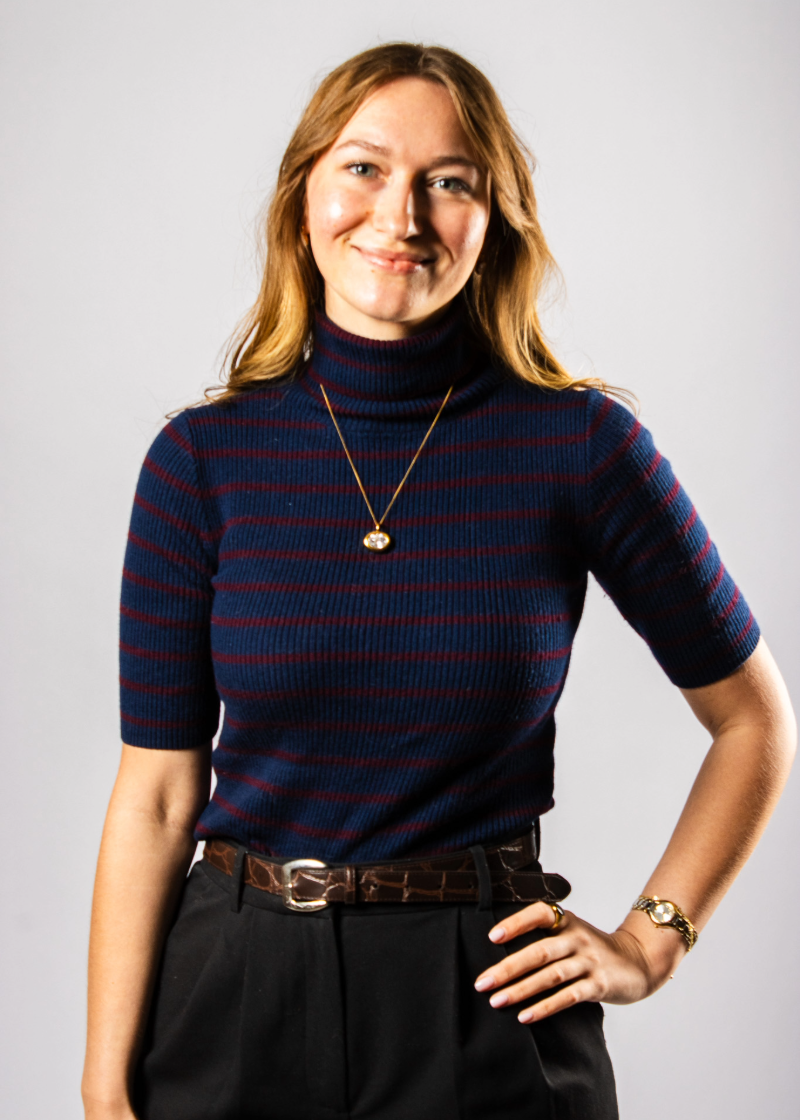 Originally from Asheville, NC, Walters grew up surrounded by the Blue Ridge Mountains and the historic Biltmore Estate. After high school, Walters moved to Nashville, TN, to attend Belmont University, where she earned a bachelor’s degree in neuroscience while also pursuing another lifelong passion: classical music.
“I am also a classical violinist,” Walters said. “During my time in Nashville, I had the opportunity to perform with my college’s symphony, which was even featured on the Public Broadcasting Service (PBS).”
Although Walters initially planned to pursue medicine and become a physician, a pivotal experience during college shifted her career trajectory.
“During the summer of my sophomore year, I worked in a lab full-time and realized that my true passion lies in research,” she said.
When it came time to apply to graduate programs, UAB quickly stood out. Walters was drawn to UAB’s nationally recognized neuroscience programs, strong NIH funding, and collaborative scientific community. Birmingham also held personal significance — Walter’s mother attended optometry school here, making the city familiar long before she arrived as a graduate student.
“Throughout the interview process, I felt a strong sense of belonging, and I was eager to begin my graduate career here,” Walters said.
Now entering her fourth year in UAB’s Behavioral Neuroscience PhD program, Walters has immersed herself in both research and outreach opportunities that align closely with her professional goals. She was particularly attracted to the program’s emphasis on scientific education and community engagement.
“I was looking for a program with a strong emphasis on outreach and scientific education,” Walters said. “Those are two core interests of mine that have greatly influenced my time outside of the lab.”
One of her most meaningful experiences has been leading UAB’s Brain Awareness Week for the past three consecutive years. Through the initiative, Walters has worked with children in the local community to introduce them to neuroscience and inspire curiosity about science.
Walters has also contributed to graduate education at UAB by assisting in the instruction of an introductory neurobiology course for incoming neuroscience graduate students.
“That opportunity allowed me to encourage students about how exciting graduate school can be,” she said.
Mentorship has played a central role in Walters’ development as a scientist. She credits her mentor, Dr. Briana De Miranda, with helping her build the confidence necessary to conduct and present high-level research while also fostering professional connections within the broader scientific community.
“The support of my mentor has been fundamental in building my confidence to conduct and share high-level research,” Walters said.
She also points to the Training Program in Neurodegeneration (TPiN) and the Killion Center for Neurodegeneration and Experimental Therapeutics (KCNET) as transformative parts of her graduate experience. Through workshops, collaborative meetings, and career development opportunities, Walters says these programs have helped prepare her for the next phase of her scientific career.
A defining milestone came last summer when Walters received the Parkinson’s Foundation Visiting Scholar Award. The fellowship funded research training at Rutgers University under epigenomics expert Dr. Alison Bernstein, where she learned advanced bioinformatics and single-nucleus RNA sequencing (snRNA-Seq) techniques.
“Mastering such complex techniques within a short timeframe was a monumental challenge,” Walters said. “I took great pride in learning how to successfully integrate into a new laboratory setting and bring these new skills back to UAB.”
The experience also allowed Walters to present her research at national conferences and build connections with researchers across the country.
Outside the lab, Walters has become a passionate advocate for science communication and accessibility. Early in graduate school, she joined Knowing Neurons, an international science communication organization led entirely by early-career scientists. Over the past three years, she has served on the executive team and helped increase the organization’s viewership by 175 percent. Early last year, Walters stepped into the role of CEO.
As she looks ahead, Walters plans to graduate in 2028 before pursuing a postdoctoral fellowship focused on expanding her technical expertise and research portfolio. Her long-term goal is to establish her own research lab while continuing to prioritize mentorship and education.
“Ultimately, I hope to open my own lab to investigate topics I am passionate about, while continuing to emphasize the teaching and mentorship that influence the next generation of scientists,” she said.
For students beginning their own graduate journeys, Walters emphasizes the importance of finding strong support systems early.
“The people you surround yourself with can truly define your graduate experience,” she said. “Finding a positive, uplifting support system is essential for curbing burnout and maintaining motivation through a challenging academic environment.”