As you come to the US to work or study, you have rights and are encouraged to report any violations of US laws, or abuses and seek assistance.
Reports of abuse or harassment are taken very seriously at UAB. You can make a confidential appointment with ISSS staff to discuss your specific situation and options.
Download the Wilberforce Pamphlet in your language
The pamphlet includes the number for the hotline and informs you of your rights as a nonimmigrant visa holder in certain employment- and education-based categories. The pamphlet also includes helpful tips for your stay in the United States, like how to keep a written record of all the time you work and keeping your travel documents in a safe place where you can always access them.
At UAB, you also have several resources available to you:
- UAB HR Policies – Handbooks are available on the HR webpage.
- UAB Employee Assistance & Counseling Center (EACC) – The EACC offers free, confidential support services for UAB employees and members of their immediate household. The EACC's dedicated team of certified counselors and an extensive collection of available services are designed to help you identify, understand, and resolve work-related and personal issues to help you achieve a successful work/life integration.
- UAB Cares – UAB cares deeply about the overall health and wellbeing of our entire campus community. In an effort to reach those in need, we’ve established the UAB CARES Suicide Prevention Initiative as a result from our leadership’s charge to be an effective resource for all.
- UAB Ombuds Office - The Ombudsperson office provides impartial conflict resolution services to staff, faculty, and postdoctoral fellows for university conflicts between two or more parties.
The Educational Commission for Foreign Medical Graduates (ECFMG) is the only institution approved by the US Department of State to issue the immigration document necessary for international medical graduates (IMGs) to enter or remain in the US on J-1 exchange visitor visas in the "Alien Physician" category to participate in clinical training for residencies and fellowships. ECFMG requires each host institution to designate Training Program Liaisons (TPLs) to be trained to coordinate the immigration process among stakeholders.
UAB’s TPLs work closely with residency and fellowship Program Directors and IMGs to ensure that all information is uploaded to the ECFMG portal to facilitate the timely arrival of J-1 residents and fellows. ECFMG dictates ALL requirements. ISSS cannot change the timing, order, or documents requested and serves only as a required liaison between ECFMG, GME, the UAB program, and the IMG.
-
Initial Application
(first application with ECFMG)Physician seeking ECFMG sponsorship for the first time and currently residing outside the US will need a form DS-2019 to apply for a J-1 visa to come to the US. There are many steps involved in obtaining this form, and all of them are controlled by ECFMG. ECFMG has created specific, detailed checklists describing exactly what needs to upload into their database (EVNET & OASIS). ECFMG has very specific requirements: each document must be uploaded as a separate PDF with a maximum file size of 500KB.
Here is the general process:
- First, the UAB program coordinator notifies ISSS TPLs that a physician will be joining UAB in J-1 status and the TPLs will contact the physician and the program coordinator.
- The physician and the Program Coordinator collect the necessary documents as described in the ECFMG checklist (see the table below to access the list).
- Once we received the necessary documents, the TPLs will create an online Appointment Profile for the physician on ECFMG’s portal (EVNet) and upload the documents. This step depends on how quickly and accurately the documents are sent.
- ECFMG will email the physician to complete his/her part of the application online and pay administrative fees through the physician’s portal (OASIS). Carefully review the information on OASIS and contact a TPL with any questions.
- After the physician completehis/her application and pay the fees in OASIS, ECFMG will review the application.
- If anything is missing from your application, ECFMG will issue a deficiency notice via email to both the physician and the TPLs. It is best to upload everything exactly as ECFMG wants it so that there are no delays in processing.
- After 4-6 weeks, ECFMG approves the application and mails the Form DS-2019 to the ISSS office here at UAB (via UPS or FedEx).
- We will email the physician with instructions to come collect your Form DS-2019 (if already in the Birmingham area) or mail the DS-2019 via UPS or FedEx if the physician is outside the US.
- The physician can make a visa appointment online at this point.
- The physician takes the DS-2019 and other supporting documents to the J-1 visa interview at the US Embassy/ Consulate.
ECFMG checklists table
Please read carefully the table below and click on the appropriate link to be directed to the official and complete ECFMG Checklist pertaining to your situation. Please note that all documents listed may not be required depending on your particular situation. Read carefully the checklists and instructions to determine which documents are required. ISSS is available to answer any of your questions.
Program Type Application Type When to Use Checklist ACGME - accredited Clinical Training Program Initial ECFMG sponsorship Applicant is not currently sponsored by ECFMG and seeks to engage in an ACGME-accredited training program. View Checklist Non-Standard Clinical Training Program NOTE – UAB and ECFMG must confirm that the Program can be sponsored by ECFMG Initial ECFMG sponsorship Applicant is not currently sponsored by ECFMG and seeks to engage in an ACGME-accredited training program. View Checklist -
Extension Application
(already sponsored by ECFMG)The application for physicians who are already in the US and already sponsored by ECFMG, will be considered as an extension/continuation. The process will be the same as the one described for the initial process. Please be sure to select the correct checklist below.
After we receive the extended DS-2019, we will either contact the physician to pick it up at our office (we do not use Campus mail for important immigration documents) or mail it to him/her.
ECFMG checklists table
Please read carefully the table below and click on the appropriate link to be directed to the official and complete ECFMG Checklist pertaining to your situation. Please note that all documents listed may not be required depending on your particular situation. Read carefully the checklists and instructions to determine which documents are required. ISSS is available to answer any of your questions.
Program Type Application Type When to Use Checklist ACGME - accredited Clinical Training Program Continuation of ECFMG sponsorship Applicant is currently sponsored by ECFMG and seeks to engage in an ACGME-accredited training program. View Checklist Non-Standard Clinical Training Program NOTE – UAB and ECFMG must confirm that the Program can be sponsored by ECFMG Continuation of ECFMG sponsorship Applicant is currently sponsored by ECFMG and seeks to engage in an ACGME-accredited training program. View Checklist -
Change of Category
(already in US in J-1 status)If the physician is currently working in the US in J-1 status as a Research Scholar and seek to engage in clinical training program (residency or fellowship) program, he/she has the possibility to apply for a Change of Category.
This means that the physician will remain in J-1 status but change his/her category from J-1 Research Scholar to J-1 Alien Physician.
The application requires additional documents (in addition to those listed under the Initial process) and is reviewed by the US. Dept. of State. Therefore, the processing time for this type of application is longer and it recommended to remain in US while in process.
The same process must be followed if the research program was completed within 6 months before the clinical training program start date.
Important Note – applicants for a change of category are NOT authorized to work until ECFMG has issued their document DS-2019. This does not take place more than 5 days before the start date listed on their contract.
-
Board Extension
For physicians who have finished their clinical training, there is an option to extend the J-1 status to sit for an ABMS member board exam.
This application is done directly by the physician him/herself and the TPL is not involved.
Work beyond the training program end date is not authorized.
-
International Travel during the Training Program
Physicians who wish to travel outside the US should visit ECFMG travel page and coordinate with ISSS to get their form DS-2019 endorsed for travel. A request for duplicate may be needed.
Please contact
This email address is being protected from spambots. You need JavaScript enabled to view it. for more details.
Immigration
-
What is the difference between my visa and my immigration status?
Visa
This is the stamp placed in your passport by the US Embassy. This is simply a document that allows you to travel to the US. Based on this document, and others (DS-2019, SEVIS record), the U.S. Customs and Border Protection (CBP) immigration inspector will authorize or deny your admission to the United States.
Your visa can expire while you are in the US as long as you maintain a valid immigration status.
You need a valid visa if you intend to travel and need to re-enter the US.
Immigration Status
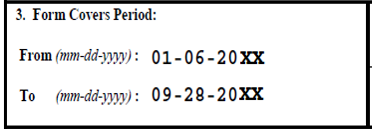
Your status is J-1. Your DS-2019 proves this. The DS-2019, combined with your I-94 and an active SEVIS record, are the documents that allow you to stay in the US. It determines your duration of status (D/S).
Your DS-2019 must remain valid during your entire stay in the US.
You must always be in between the start and end date listed on the form.
-
Can a J-1 Research Scholar enroll in classes at UAB?
Yes, but only as a part-time, non-degree seeking student.
-
Can a J-1 Research Scholar or Short-Term Scholar with a DS-2019 issued by UAB engage in graduate medical education/ training (i.e., residency or clinical fellowship)?
No. Only ECFMG can sponsor foreign medical graduates to pursue graduate medical education/training under a J-1 program.
-
Will I be subject to the two-year home residency requirement, also known as the rule/ Section 212(e)?
The Consular Officer/Department of State will determine if you are subject to this rule if you meet any of the following criteria:
- You received any funding from a foreign or US government.
- Your skill is listed on the Department of State’s current Exchange Visitor Skills List.
Note: The Exchange Visitor Skills list was recently updated in December of 2024. Please be sure to check the link above to determine if you are subject based on this list alone. - You are in the US for the purpose of graduate medical education/training (i.e., you are an ECFMG-sponsored medical resident or clinical fellow).
Note: If you are subject to the two-year home residency requirement, then your J-2 dependents are as well. This rule prevents you from changing your immigration status within the US (for example, from J1 to H1B).
-
How do I obtain a waiver of the two-year home residency requirement?
Waivers are available in very few situations. For detailed information, please refer to the Department of State website.
-
What is the 12 or 24-month repeat participation bar?
J-1 Exchange Visitors are subject to specific bars preventing them from re-entering the US as a J-1 Research Scholar or Professor after a previous participation in a J-1 Program.
These bars are completely separate from the two-year home residency requirement. NO waivers are available.
-
Can I hire an outside attorney to assist me with immigration issues?
Yes, but only for non-employment-based immigration processes. The attorney can represent only you — not UAB. All paperwork filed with a federal agency based on an employment-based petition must be reviewed by ISSS and receive the required signatures through routing.
-
What happens if my child is born in the US?
Your child will be a US citizen and receive all benefits and privileges afforded to US citizens.
-
What visa should my relatives obtain to visit me in the US?
J-1 can sponsor his/her direct dependents (i.e. spouse and children under the age of 21) for a J-2 visa. The J-2 status is appropriate for dependents who plan to come to the US and stay with the scholar during the entire program. Otherwise, a B-2 visa or ESTA is more appropriate.
Other relatives can apply for a B-2 visitor visa to enter the US. If you are from a Visa Waiver country, they can come on an ESTA.
-
Does the visa stamp in my passport need to be valid during my stay in the US?
No, the visa stamp in your passport is only your permission to enter the US. Your SEVIS record, non-immigrant documents (i.e., DS-2019) and most recent Form I-94 are your permission to remain in the US. See above question 1.
-
Can I travel to Canada or Mexico to obtain a new visa?
Yes, if you have maintained your status while in the US.
Citizens of countries other than Canada or Mexico must make an appointment with US consulates/embassies in Canada and Mexico.
Please consult ISSS prior to traveling abroad and visit our travel page.
General
-
Do I need a US Social Security Number (SSN)?
Anyone authorized by the US Citizenship and Immigration Services (USCIS) to work in the US, or is eligible to work incidental to their immigration status, can apply. This includes:
- J-1 Exchange Visitors
- J-2 dependents AFTER they have obtained a work authorization (or EAD).
You are required to apply for the SSN if UAB is paying you; otherwise, there is no obligation to apply
-
How do I obtain a US Social Security number (SSN)?
To apply, ISSS Office must validate your SEVIS record. This validation takes place after you come to J-1 Scholar Orientation.
The Social Security Administration in Birmingham is located at:
1200 Rev. Abraham Woods Jr. Blvd North
Birmingham AL 35285Open Monday through Friday from 9:00 AM to 4:00 PM (free parking available).
Please refer to the ISSS Social Security Number page.
-
Can my J-2 spouse work or volunteer in the US?
Yes, but only with proper work authorization. Your spouse must apply for an Employment Authorization Document with form I-765 in order to work.
“Volunteer” work is only applicable to things like helping the local animal rescue shelter, feeding the underprivileged at a local food pantry, or picking vegetables for the farmers market (charitable activities for a non-profit organization).
-
How do I apply for an Alabama Driver’s License?
If you do NOT have a social security number (SSN), you must obtain a “proof of denial” from the Social Security Administration in order to apply for a driver license or State ID.
To learn how to apply and what documents to bring, please visit the Alabama Law Enforcement Agency (ALEA) website and carefully review the list of documents required to apply. The office is located at:
908 Bankhead Highway
Birmingham. AL 35204
Phone: (205 252-7445Open Monday through Friday from 8:00 AM to 11:00 AM and 1:00 PM to 4:00 PM
Please refer to the Driver License page.
-
Can I work part time or participate in a clinical trial for compensation?
As a J-1 scholar, your main purpose in the US is to participate in the program described on your DS-2019. Part time employment outside of your original program is NOT authorized. In addition, we would strongly advise against you participating in clinical trials for compensation. It could be interpreted by DHS (Dept. of Homeland Security) in the future as unauthorized employment and is not worth the risk to your J-1 status. It could also have negative implications for future visa applications.
UAB Procedures
-
How many steps are there until I can have full access to UAB systems once I am on campus?
It depends… ISSS is not responsible for the entire process. Your Department must also accomplish their share.
- Attend a J-1 Orientation in the international center, where we will collect your documents and complete your Form I-9 (if you will be employed by UAB).
- Your department is responsible for the onboarding process and must submit the “ACT” document that must be approved before you can create a BlazerID and have computer and lab access.
-
How do I create a BlazerID?
Once your ACT document is complete, it will generate an employee ID number, which you can use to create your BlazerID.
-
How can I enroll with VIVA UAB for health insurance?
Not every J-1 Exchange Visitor is eligible for VIVA UAB. It depends on your HR status. Please check with your Department if you are eligible or not.
When eligible, you have to contact UAB Benefits to learn more about the enrollment process.
-
What about the immunizations?
To be able to access labs on campus and depending on the nature of your research, you are required to provide proof of immunizations.
This requirement is handle directly by UAB Department of Environmental Health and Safety (EHS). You must complete an enrollment form together with your supervisor at UAB before your arrival at UAB. If not, please do so as soon as possible.
Please follow the instructions listed on the 1st page of the enrollment form and communicate directly with EHS Department.
ISSS office is not authorized to receive any copy of your medical records or vaccination, please send them directly to EHS.
J-1 orientations are held virtually and will be scheduled by Alyette Nixon or Molly Stout according to your arrival date. You will receive an email regarding the details of the session shortly before your arrival.
Orientation sessions generally last about one hour. The Department of State requires all J-1 exchange visitors to review this Welcome Brochure outlining Exchange Visitor Program regulations. You may also want to review the Wilberforce Pamphlet concerning the rights of temporary workers in the United States. You will not be able to enter labs or other UAB workspaces to begin your research until after you attend an ISSS international scholar orientation. After orientation, your UAB department administrator is responsible for your onboarding process to give you access to your lab and set up payroll (if you are funded by UAB).
Please note that you will need to accomplish various administrative tasks upon your arrival at UAB. That is why we recommend that you arrive about 1 week or more before your official start date. You are authorized to enter the US up to 30 days before your official start date.