Case History:
A 69-year-old man presents with a painless testicular lump. Scrotal ultrasound shows a 3 cm mass above the testicle.
Which of the following is not part of the FNCLCC grade?
A. Tumor differentiation
B. Mitotic count
C. Tumor necrosis
D. Tumor size
Correct Answer: D. Tumor size counts toward stage, not grade.
Discussion:
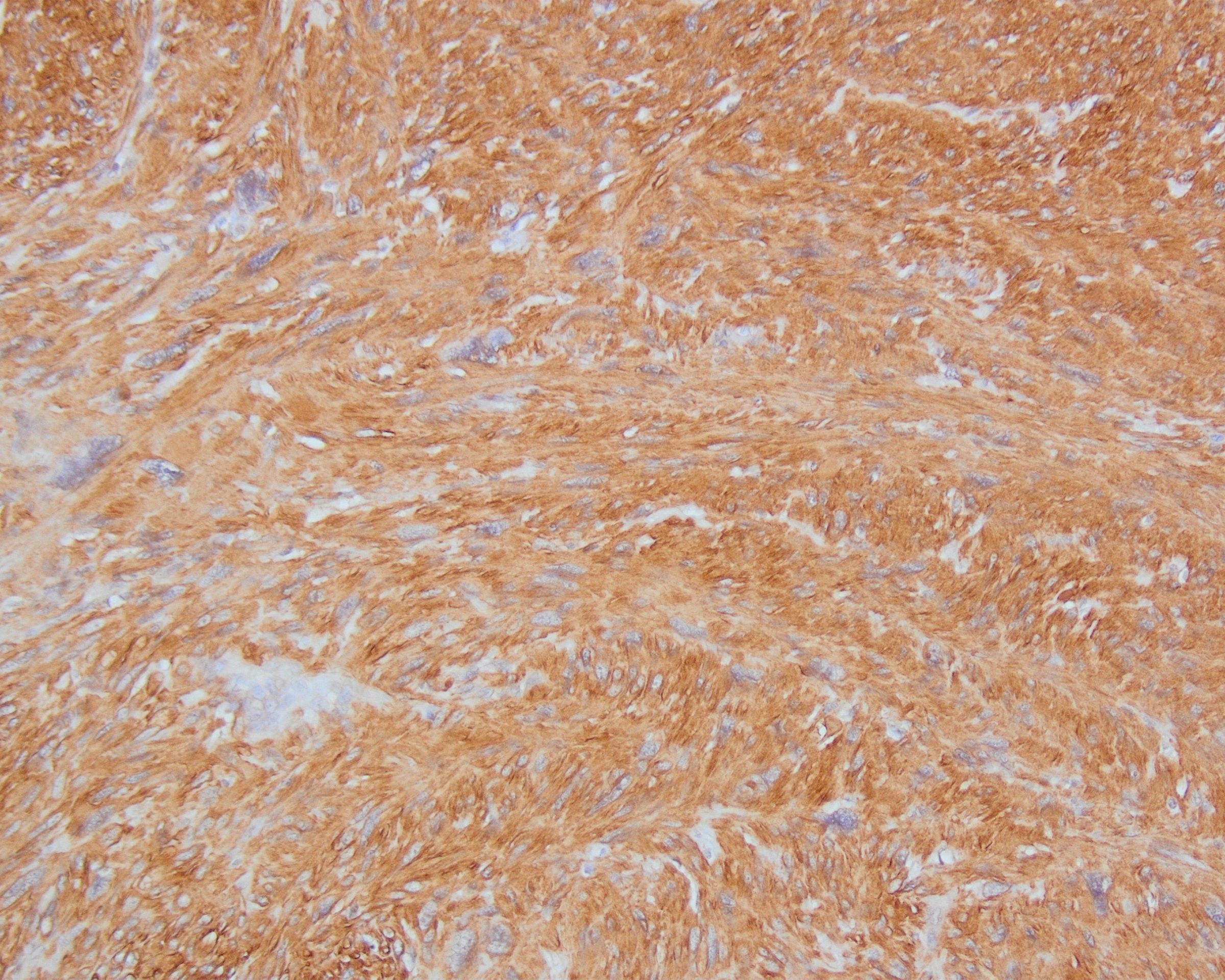
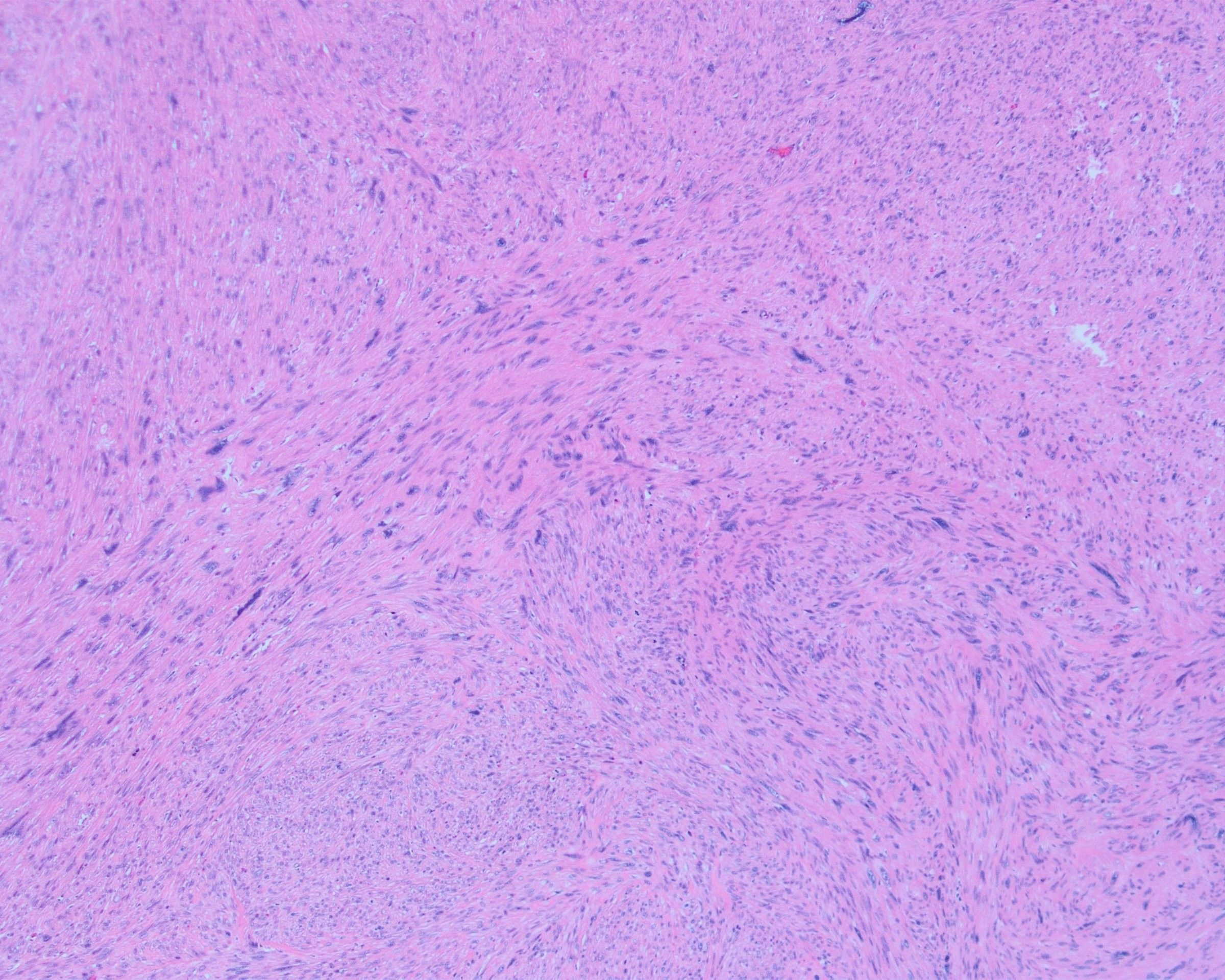
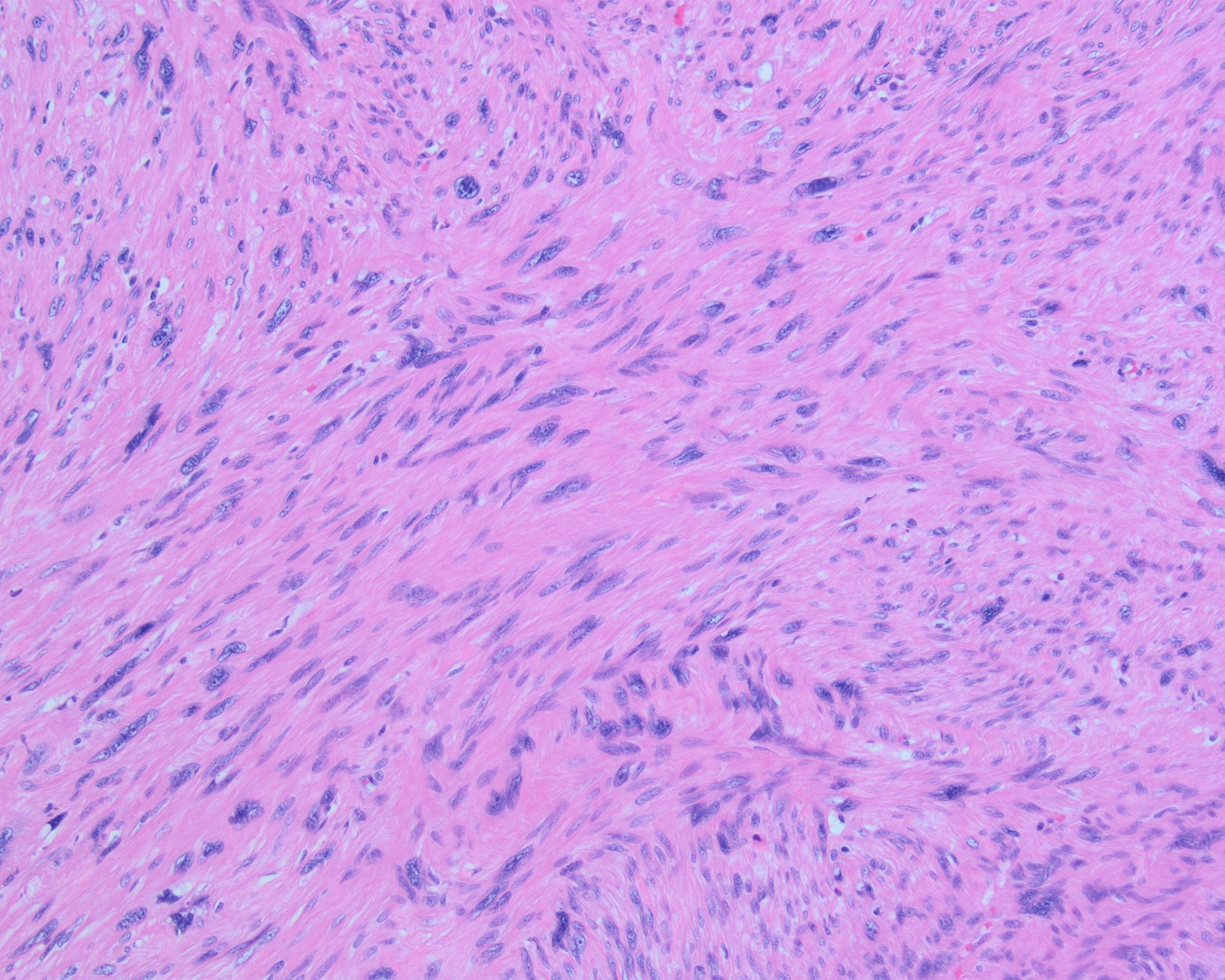
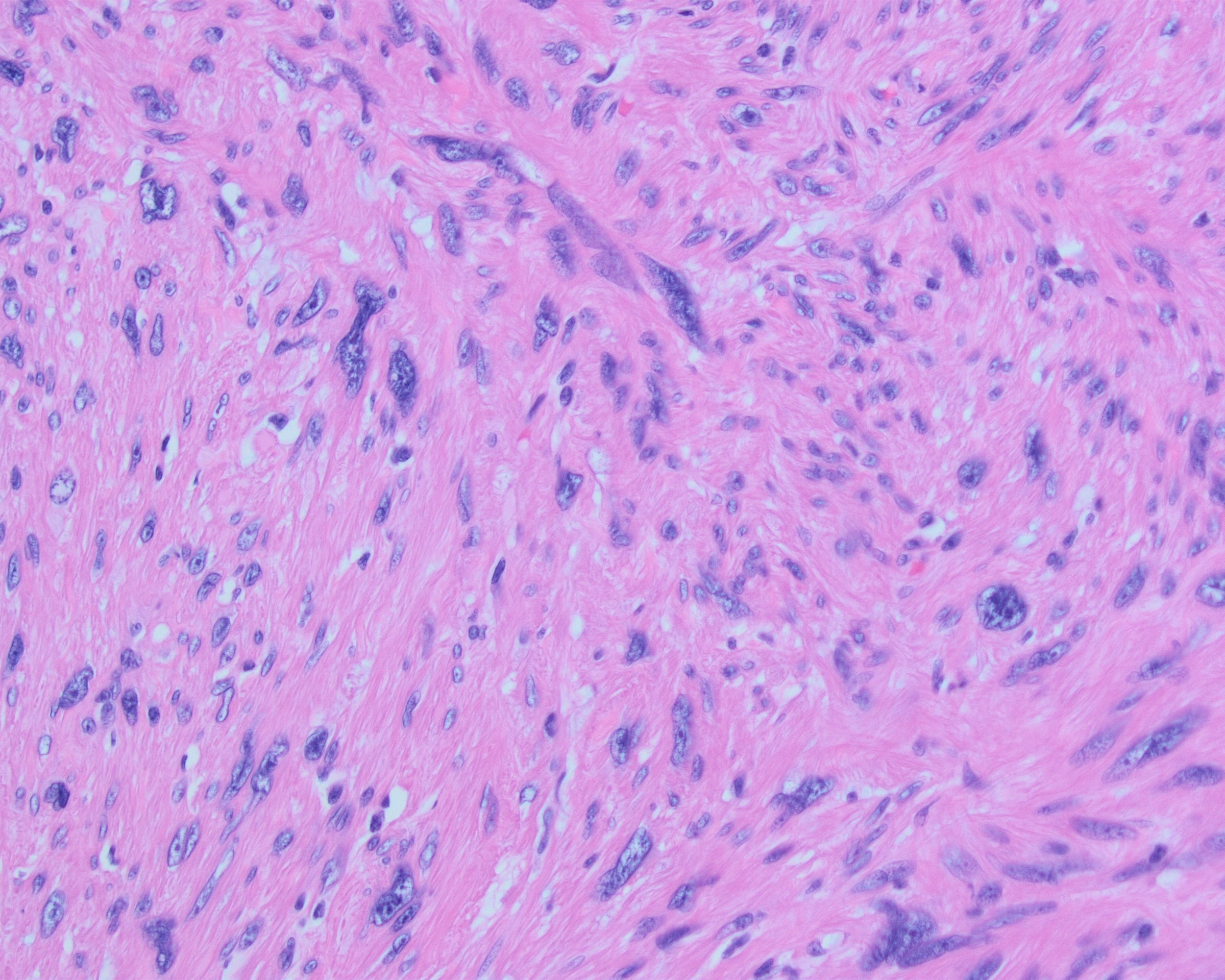
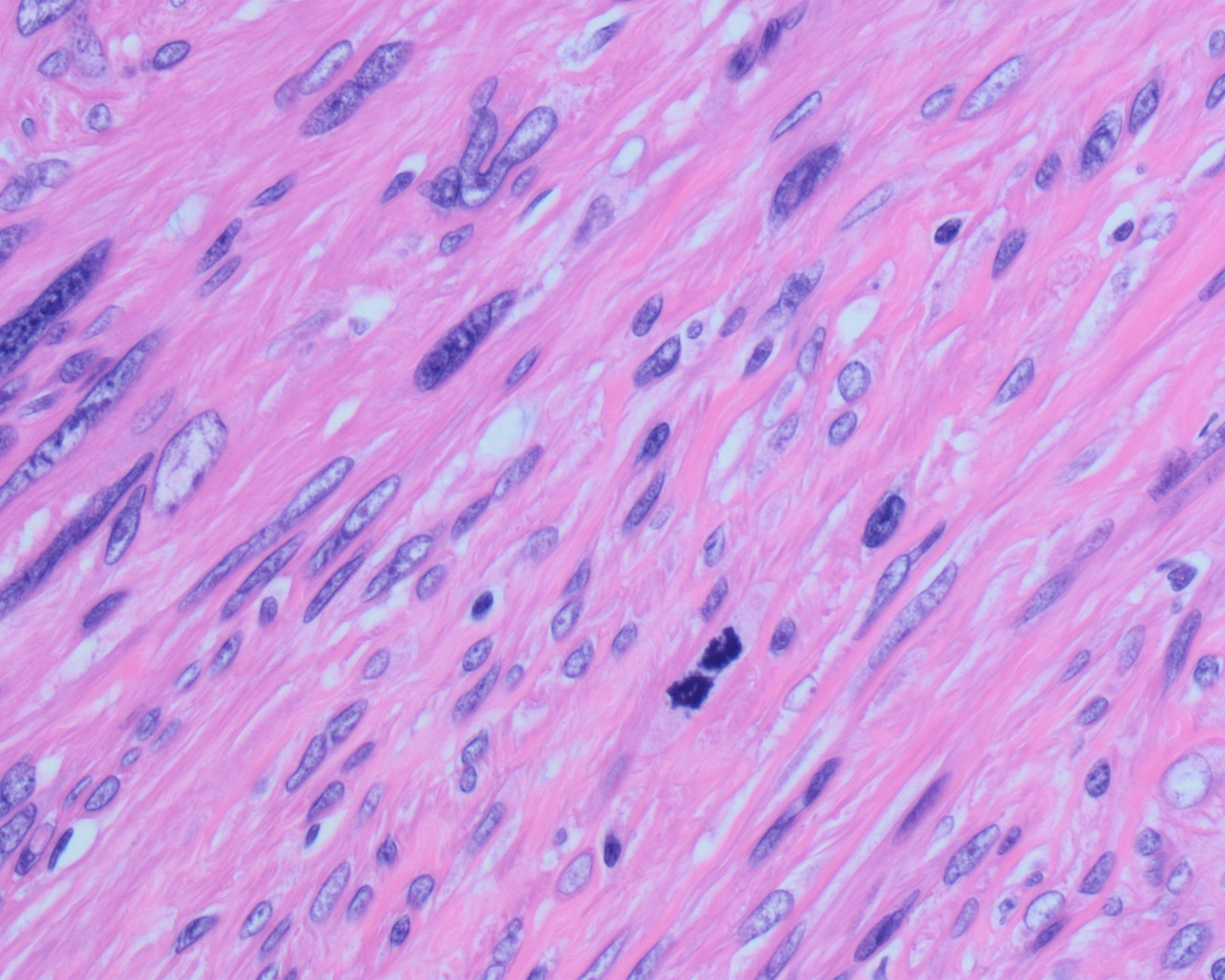
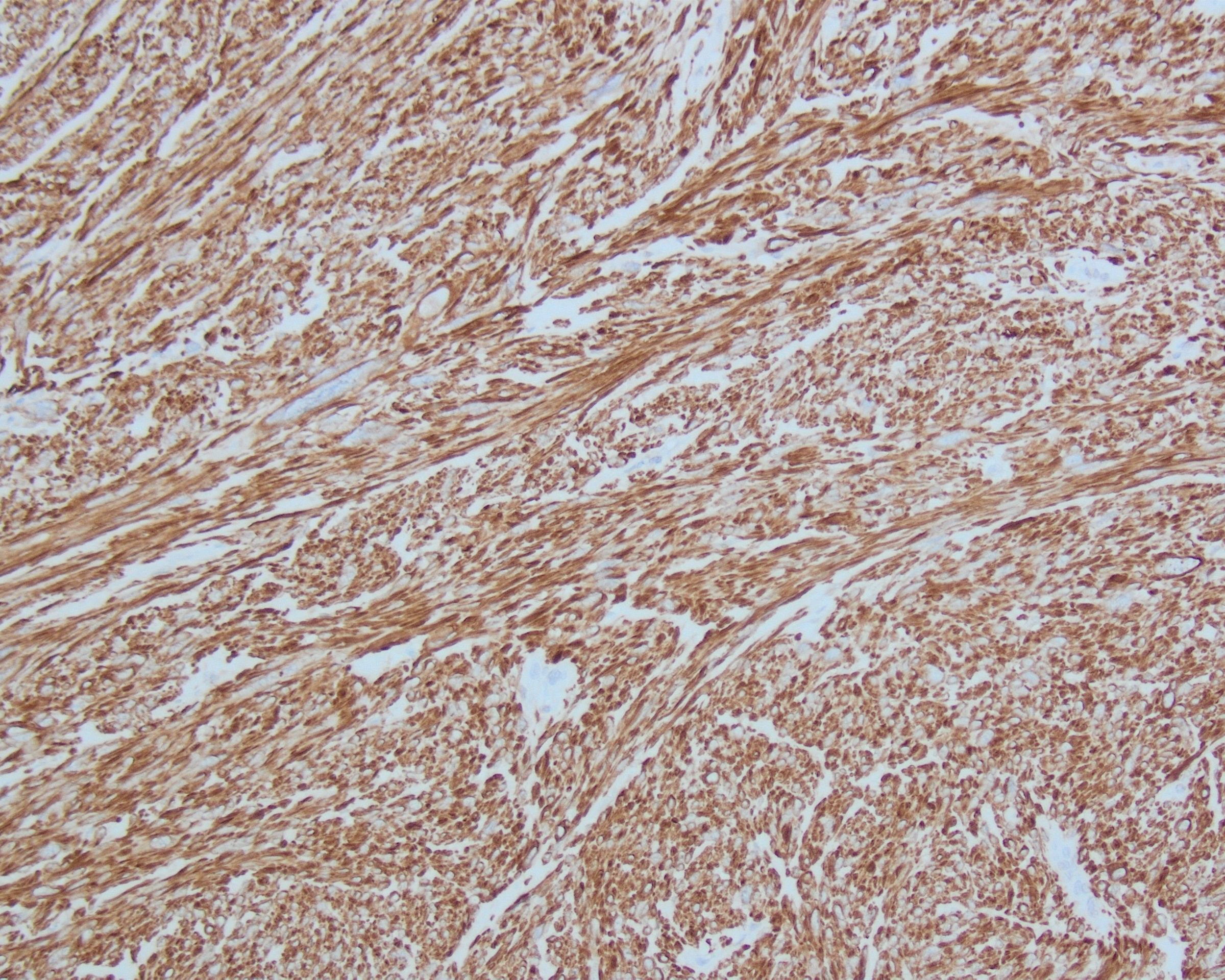
Leiomyosarcoma is the second most common sarcoma of the paratesticular region after liposarcoma. It makes up roughly 10–30% of paratesticular sarcomas. It usually affects older men (median age about 64) and most often arises in the spermatic cord, typically as a well-circumscribed mass. Histologically, it shows intersecting fascicles of spindle cells with eosinophilic cytoplasm and blunt-ended, cigar-shaped nuclei. The tumor cells express SMA, desmin and h-caldesmon and are typically negative for S100, myogenin and MyoD1. Liposarcoma (well-differentiated and dedifferentiated) is the most common sarcoma at this site, and it can occasionally show leiomyosarcomatous differentiation. For that reason, MDM2 FISH should be considered before calling a spermatic cord spindle cell sarcoma leiomyosarcoma. In this case, FISH for MDM2 gene amplification was performed and MDM2 amplification was not detected. Grading follows the FNCLCC system, which adds three scores:
Differentiation: 1 = well-differentiated; 2 = conventional; 3 = poorly differentiated/pleomorphic
Mitotic count: 1=0–9; 2=10–19; 3 ≥20 per 10 HPF.
Necrosis: 0 is none; 1 is less than or equal to 50%; 3 is greater than 50%.
Grade 1 is 2-3 points, grade 2 is 4-5 points and grade 3 is 6-8 points
Treatment is radical orchiectomy for resectable tumors.
References:
Case contributed by: Gopal Kumar, M.D., Assistant Professor, Anatomic Pathology