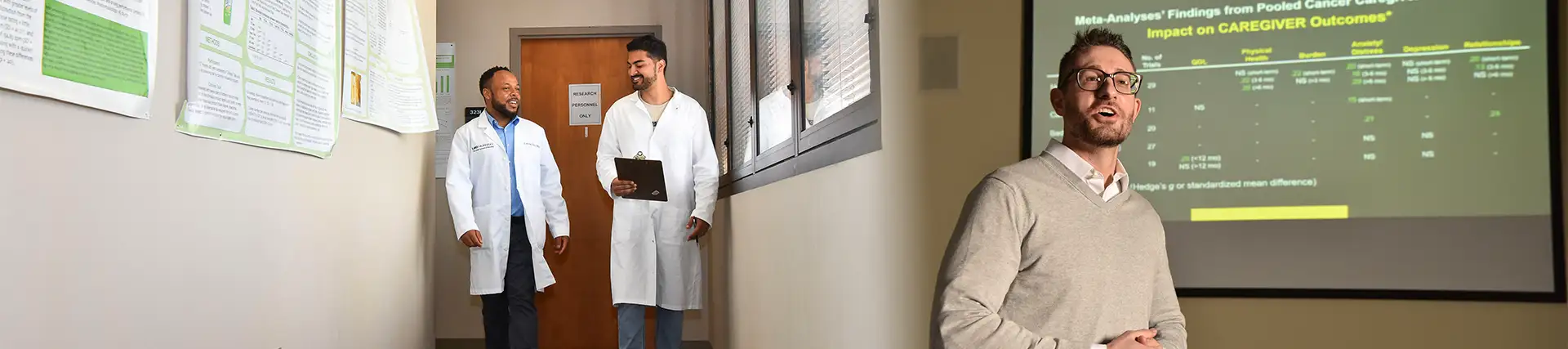
The focus of researchers in this area is understanding the study, promotion, and optimization of health and well being with a focus on cancer (prevention, caregiving, symptoms), metabolic disorders (prevention, epidemiology), and neurosciences (mental health, addiction, autism).

Edwin Aroke, PhD
Scholarly Projects
Epigenomic and Gene Expression Signatures of Racial Differences in Chronic Low Back Pain
NIH/NIAMS R079178
The purpose of this study is to compare DNA methylation patterns in 100 people with chronic lower back pain. We will also determine whether differential DNA methylation correlates with differential gene expression in our study participants.
Epigenomic and Gene Expression Signatures of Racial Differences in Chronic Low Back Pain
3R01AR079178-04S1
This project will foster a better understanding of the relative influences psychological, social, and epigenomic factors have on chronic lower back pain and will also give insight into the mechanism the drives racial disparities in chronic lower back pain. The proposed project is in response to NIAMS RFA-AR-20-001, Mechanistic Ancillary Studies to Ongoing Clinical Projects. This work lays the foundation for a long-term program of research in developing targeted interventions to reduce chronic lower back pain disability and improve outcomes for racial minorities.

Pamela Bowen, PhD
Scholarly Projects
An Exercise Intervention to Improve Overall Brain Health
The purpose of this project is to obtain preliminary data to demonstrate that exercise represents not only a direct impact on brain fitness but also results in a broader effect across other risk factors, thus improving overall brain health. Our primary outcome will be the McCance Brain Care Score (BCS), a composite index of 12 risk factors and behaviors known to affect brain integrity.
Learn more about the McCance Brain Care Score (BCS).Opens an external link.

Elizabeth Byrd, PhD
Scholarly Projects
Anosognosia for Hemiplegia and Stroke Rehabilitation Outcomes
Dean’s Scholar Award/Internal Funding
It is common for those who have suffered a stroke to overestimate their ability to perform activities of daily living. The purpose of this study is to understand the relationship between the presence and severity of anosognosia for hemiplegia (a condition that overestimates physical ability after strong) and the long-term effects of stroke rehabilitation.

Deborah Ejem, PhD
Scholarly Projects
Refinement and Pilot Testing of the “My Health Priorities Program” for Rural and Underserved Older Adults with Multiple Chronic Conditions in the Deep South (MyHP-South)
3U54AG093230-01S1 Ascent Consortium U54 from NIH/NIA
This two-year study will refine and pilot a patient-centered intervention to help rural and underserved older adults with multiple chronic conditions identify and communicate their healthcare priorities. Building on the Forge AHEAD-funded PPC-HEART study, this project aims to improve clinical communication, support shared decision-making, and ensure palliative care aligns with what matters most to older adults.
Reducing Disparities in the Quality of Palliative Care for Older African Americans through Improved Advance Care Planning (EQUAL ACP)
Patient Centered Outcomes Research Institute (PCORI) (R-1609-36381)
This study compares the effectiveness of two different approaches to advance care planning among older African Americans and older Whites living in the community. The two approaches are a structured approach with an advance care planning conversation led by a trained person using Respecting Choices (First Steps) and a patient-driven approach which includes a Five Wishes advance care planning form written in plain language. The study will determine which approach is more effective at increasing advance care planning within each racial group and reducing differences between the two groups in advance care planning.
Exploring Spiritual Concerns, Needs, and Resources in Outpatient Care: A Case for Spiritual Care as a Core Service in Facilities Serving Under-resourced Patients
Internal Award/Dean’s Scholar Award
The purpose of this small-scale pilot trial is to determine feasibility and acceptability of a culturally-responsive chaplain-led spiritual care intervention with African American patients with chronic illness and their family caregivers at Cooper Green Mercy Health Services Authority (CGMHSA).
Addressing Communication Challenges Confronting Older African Americans with Multiple Chronic Conditions and their Family Caregivers (Black Health Identification Program)
National Palliative Care Research Center
This study’s purpose is to conduct a formative evaluation of a Self-directed “My Health Priorities” Identification Program to determine cultural acceptability and feasibility of use in among AAs with MCCs in a primary care setting. The 2-phase study specific aims are to: Conduct a single-arm formative evaluation trial of "Self-directed 'My Health Priorities' Identification Program" to determine acceptability and feasitibility and 2) to examine the ability of the dyads to complete pre- and post-test measures of perception of care, treatment burden, shared decision-making, and communication exchange.
Learn more about the National Palliative Care Research Center (NPCRC)Opens an external link.

Shena Gazaway, PhD
Scholarly Projects
An Optimization trial of a stakeholder-enhanced intervention to improve the decisional partnership of Chronic Kidney Disease dyads using the multiphase optimization strategy: Project ImPart
NIH/NIDDK134756
The pilot will enroll 64 chronic kidney disease patients with stage IV disease and their family caregivers to assess the feasibility, acceptability and potential benefits of each component of the decision support intervention, including finding ways to optimally support and engage patients in active disease management and future planning.
ADAPT HF (Addressing pain through A navigator-led Palliative care optimized for Heart Failure)
UAB Integrative Center for Aging
Co-PI: Rachel Wells, PhD
Over 80% of the 6.2 million U.S. adults with heart failure (HF) report frequent pain with nearly 75% indicating that pain interferes with their daily living; yet pain is often unaddressed. The goals of this study are two-fold: 1) to develop and refine community-based, navigator-nurse led palliative care pain intervention components to address pain disparities in older Black adults with HF and 2) to determine feasibility, acceptability, and preliminary efficacy of the refined intervention components. These findings will directly inform a fully-powered optimization trial leading to an optimized palliative care pain intervention to improve older Black adults with HF’s pain outcomes.
Learn more about ICAR Pilot Funding ProgramOpens an external link.

Rita Jablonski, PhD
Scholarly Projects
Fewer Drugs & Bugs: Decreasing Antipsychotic Drug Use and Preventable Infections in Nursing Home Residents by Leveraging the Head-to-Toe Infection Prevention Program with Care-Resistant Behavior Dementia Training
Center for Medicare and Medicaid Services/C210620054
The primary objective of the proposed project is to reduce antipsychotic usage for persons with dementia residing in long term care facilities; the secondary objective of the proposed project is to reduce pneumonia, cellulitis, and urinary tract infections.
Coaching Dementia Caregivers to Master Care-Resistant Behavior: CuRB-IT
NIH/NIA/R01AG074255
This study is testing an evidence-based intervention, Care-Resistant Behavior Internet Training (CuRB-IT). CuRB-IT is designed to help family caregivers of persons living with dementia and who are experiencing care refusal behaviors. The intervention is delivered by specially trained coaches using Zoom, who work one-on-one with family caregivers.

Emma Kay, PhD
Scholarly Projects
Remote Fentanyl Test Strip Distribution and Education to Prevent Drug Overdose
R61DA065247 from NIH/NDA
This Type 1 hybrid effectiveness-implementation randomized controlled trial, Remote Fentanyl Test Strip Distribution and Education to Prevent Drug Overdose, aims to address the United States opioid crisis driven by fentanyl and other synthetic opioids by reducing overdose rates. Our study would be the first national, fully remote trial to assess the impact of fentanyl test strips on overdose outcomes, using a novel 2x2 design crossing fentanyl test strip distribution and education to determine which approach most significantly reduces overdose rates while minimizing costs. This research will inform scalability around mail-based fentanyl test strip distribution and education programs to address the nation’s opioid overdose crisis.
A Harm Reduction Approach to Addressing the HIV, Sexually Transmitted Infections, and Substance Use Syndemic Among People Engaging in Sex Work in Alabama
NIH/UAB Centers for AIDS Research/P30AI02776
There are currently no CDC-recognized evidence-based interventions focused on sex workers despite their dramatic vulnerability to HIV and other sexually transmitted infection (STIs). We intend to directly address the needs of this severely underserved population by leveraging the expertise of Birmingham AIDS Outreach (BAO), which has a compelling track record of reaching and providing services to individuals engaging in sex work. In response to “Ending the HIV Epidemic” EHE Priority 1a of this NOSI, we will use syndemic theory as our framework to develop a PrEP intervention for sex workers that responds to and addresses salient barriers as well as co-occurring health concerns.
Using Geospatial Mapping and Epidemiologic Methods to Identify and Support Persons Who Inject Drugs (PWID) at Risk for HIV in Alabama
NIH/UAB Centers for AIDS Research/P30AI027767
The objective of this application is to 1) leverage hospital and community-level data to identify AL counties at greatest risk for an HIV outbreak among people who inject drugs and 2) engage community partners to identify needs and opportunities to build community capacity. The overall goal of this proposal is to inform implementation strategies to integrate person-centered HIV, harm reduction, and addiction services for people who inject drugs in AL.
Drive to Zero: Developing a digital cohort to understand the drivers of non-sustained viral suppression in the Deep South
NIH/NIAID/1UG3AI176566-01
Leveraging our previous HIV surveillance work with health departments, the goal of this study is to refine an mHealth app based on community feedback, WiseApp, to recruit, screen, enroll, and retain a large digital cohort of people with HIV (PWH) aged ≥ 18 years old (n=1000) who are either virally unsuppressed or who have no evidence of HIV labs within the past 12 months. The study will be conducted in the Deep South, the area of the country with the highest rates of morbidity and mortality, including the states of Alabama, Mississippi, and Louisiana. The findings from this study will inform efforts to recruit large, digital cohorts of people with HIV, will be among the first to demonstrate effective methods of retaining digital cohorts for HIV as well as other health conditions, and help identify multilevel factors that contribute to non-sustained viral suppression in the Deep South, thereby elucidating areas for intervention in future research.

Mirjam-Colette Kempf, PhD
Scholarly Projects
Multicenter AIDS Cohort Study (MACS)/Women Interagency HIV Study (WIHS) Combined Cohort Study
2U01HL146192-08 NIH/NHLBI
This grant will sustain and expand the UAB/UMMC Clinical Research Site’s contributions to the national MWCCS platform by advancing research on HIV associated comorbidities such as cardiovascular disease, cancer, aging and cognition, while maintaining high quality data collection and supporting early stage investigators.
NIH RePORTER: MWCCS UAB/UMMC Clinical Research Site – Project DetailsOpens an external link.
UAB Center for AIDS Research – Core B – Developmental Core
NIH/NIAID/P30AI027767
The primary purpose of this center is to support interdisciplinary AIDS research efforts. This Center is responsible for the planning, evaluating, managing and documenting a broad array of research activities within the two institutions. The purpose of this project is linking clinical and basic science studies through the use of shared facilities and to translate as quickly as possible fundamental knowledge about AIDS and its related disorders into clinical treatment and prevention programs.Learn more about Developmental Core at UAB's Center for AIDS ResearchOpens an external link.
Examining social ecological and network factors to assess epidemiological risk in a large national cohort of cisgender women
Columbia University/NIH/NIAID/R01AI172469
Cisgender women account for approximately 20% of annual HIV diagnoses in the United States; yet, there is limited information on the combination of factors that contribute to HIV incidence in these women. In response, our study team proposes to develop a knowledgebase of integrated data including biomarker data from a cohort of cisgender women behaviorally vulnerable to HIV infection paired with network data and big data from disease surveillance and social determinants of health databases. At the conclusion of the knowledgebase construction and the cohort and network analysis, we will have identified individual, social network, geospatial, and public policy factors that increase a women’s risk for HIV and/or sexually transmitted infection acquisition, providing intervention opportunities to reduce women’s vulnerabilities to HIV infection.
PrEP Demonstration Project among Women at Risk for HIV Infection
NIMH/R34MH118044
The objective of this application is to pilot test PrEP implementation among African American women at high-risk for HIV-infection in the rural South, specifically those seeking care at a Federally Qualified Healthcare Center in rural Alabama, and to explore perceptions, facilitators, and barriers to the delivery and uptake of PrEP in this patient population.
Improving PrEP Uptake and Adherence among Minority Men who have Sex with Men through Tailored Provider Training and Adherence Assistance in Two High Priority Settings
Columbia University/CDC 6U01PS005229-02-01
Men who have sex with men (MSM), especially young Black and Latinx MSM, have the highest rates of HIV diagnoses in the United States. The goal of the proposed Type II Hybrid Study is to improve pre-exposure prophylaxis screening, counseling, initiation, adherence, and persistence in young Black and Latinx MSM in two high-priority settings.
Social Connections, Risk for COVID-Era Psychiatric and Substance Use Disorders, and HIV Control
SUNY Downstate Medical Center/NIMH R01MH128955-01
This project will examine understudied pathways linking social connections to substance use disorders and depression, and to HIV outcomes. A better understanding of these mechanisms will address a critical gap in the literature on social connections and will advance the ability to design effective interventions in this important area.
Stigma and the Non-Communicable Disease Syndemic in Aging HIV Positive and HIV Negative Men who have Sex with Men
Rutgers University/7R01HL160326
The non-communicable diseases diabetes, hypertension, and dyslipidemia are highly prevalent among people living with HIV (PWH), especially among multiply marginalized populations such as racial/ethnic minorities. We will study how intersecting stigmas contribute both directly and indirectly to the incidence, prevalence, and control of this comorbidity cluster in a diverse cohort of HIV positive and HIV negative sexual minority men. Our findings will provide valuable data for health providers, public health researchers, and policymakers to more effectively intervene across the complex pathways between marginalized social position, stigma, psychosocial health, and non-communicable disease outcomes.

Christian Ketel, PhD
Scholarly Projects
Rural Maternal Disparities Consortium (RMDC)
HRSA D04RH55114
Rural Maternal Disparities Consortium (RMDC) is a 2025-2029, Health Resources and Services Administration (HRSA) funded, statewide Alabama initiative to reduce rural maternal and infant morbidity and mortality through coordinated, nurse-led services, a mobile maternal health clinic, nurse home visitation, and a shared data/Clinical Quality Index backbone. With state agencies, rural providers, and communities, RMDC works toward integrating standardized referrals with closed-loop care coordination and rolls out from a Year-1 pilot in the Southwestern District to full statewide coverage by Year 4. Quarterly metrics include first-trimester prenatal care, preterm birth, breastfeeding initiation, postpartum depression screening/treatment, and 14-day referral completion. Long-term sustainability will leverage Medicaid reimbursement, value-based arrangements with rural hospitals/clinics, targeted grants, and formal Memoranda of Understanding.

Peng Li, PhD
Scholarly Projects
Dr. Li's major research interests include design, management, conduct, analysis and interpretation of clinical trials, epidemiologic studies and evaluation research, with particular expertise in cluster-randomized trials. He has broad collaborative experience with researchers from multidiscipline including clinicians and biologists, involving in study design, power and sample size calculation, data management and analysis.

James Nicholas Odom, PhD
Scholarly Projects
A Mixed Methods Exploration of the Values Elicitation Experiences of Patients with an LVAD and their Family Caregivers
Sigma/HPNA
Co-PI: Avery Bechthold
This convergent mixed methods dissertation study focuses on exploring facilitators and barriers to values discussions between patients with a left ventricular assist device (LVAD), their family caregivers, and the healthcare team.
BMT-Care: Randomized Trial of a Psychosocial Intervention for Caregivers of Patients Undergoing Hematopoietic Stem Cell Transplantation
R01CA282182/Massachusetts General Hospital
The purpose of this study is to test the effectiveness of a multimodal psychosocial intervention for improving quality of life and reducing caregiving burden for caregivers of patients undergoing hematopoietic stem cell transplantation.
Decision Support Training for Advanced Cancer Family Caregivers: The CASCADE Factorial Trial
NIH/NCI/R01CA262039
A priority focus in oncology and palliative care is preparing the 3.2 million US family caregivers of persons with cancer to effectively partner with patients in health-related decision making from diagnosis to the end of life, particularly in underserved settings. Over 70% of patients with cancer involve relatives, friends and partners in healthcare decisions, including choices about cancer treatments, surgery, transitions, location of care, accessing palliative and hospice care, and many others. Patients making healthcare decisions with unprepared family caregivers may experience inadequate family decision support leading to heightened distress and receipt of care inconsistent with their values and preferences, which may in turn increase distress for family caregivers.
Lay Coach-led Early Palliative Care for Underserved Advanced Cancer Caregivers
NIH/NCI/R37CA252868
The burden placed on family caregivers and the toll on their mental and physical health have never been greater and will continue to rise; by 2026 the number of individuals with cancer is expected to be over 20 million and in 2019, the number in their last year of life was over 600,000. Healthcare clinicians should be concerned with the health of family caregivers for their own sake, but also because these caregivers deliver over 80% of the home care to community-dwelling patients with advanced illness. It is thus imperative that interventions be developed that keep caregivers healthy and functioning, not only for their own sake, but also so they can provide the best care possible to patients with cancer.
Allison Shorten, PhD
Scholarly Projects
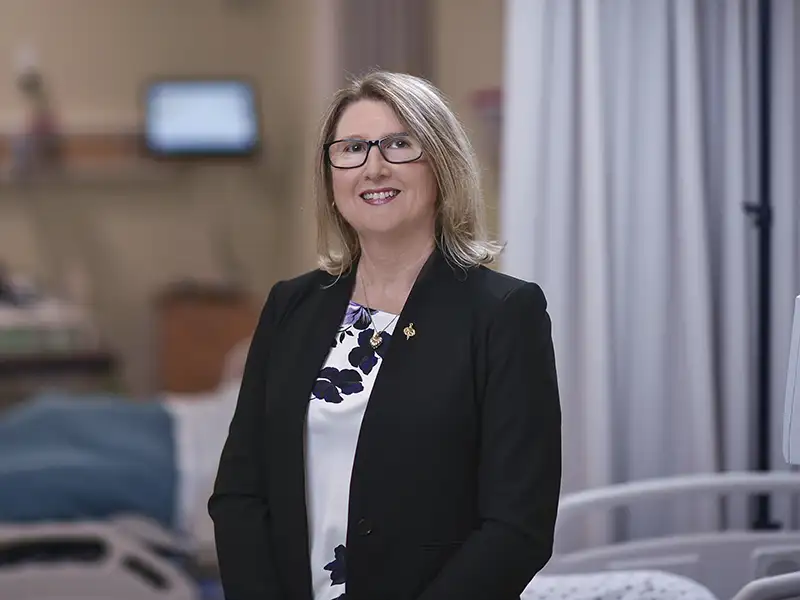
Dr. Allison Shorten, Professor in Nursing, serves as Director of UAB Office of Interprofessional Curriculum. An Australian registered nurse and midwife, Dr. Shorten is internationally recognized for her trailblazing Birth Choices decision aid research. A fellow of the Australian College of Midwives, she has made significant contributions to the midwifery profession and international research supporting shared decision making in pregnancy. Dr. Shorten, an expert in evidence-based curriculum design, is known for her dynamic and innovative approaches to support student learning, and dedication to teaching excellence and mentorship. In addition, her research interests include development, evaluation and implementation of patient decision aids, shared decision making in pregnancy and birth, using information technology to integrate decision aids into healthcare systems, identifying determinants of birth outcomes, promoting physiological birth, translating evidence into practice; using simulation in healthcare education, and developing interprofessional curriculum to promote high quality healthcare.

Ellen Smith, PhD
Scholarly Projects
Cancer Control and Prevention T32 Training Program Competitive Renewal: Focus on Health Disparities
2T32CA047888: Institutional Research Training Grant
The overall objective of the T32 Training Grant is to develop scientific research capacity through training of pre- and post-doctoral scholars with interest in building careers in cancer prevention and control research and addressing associated health disparities.
Duloxetine to Prevent Oxaliplatin-Induced Chemotherapy-Induced Peripheral Neuropathy: A Randomized, Double-Blind, Placebo-Controlled Phase II to Phase III Study
NIH/NCI/R01CA235726
This randomized controlled trial will test a well- tolerated, widely available, non-opioid, preventive treatment for a debilitating chemotherapy side effect (oxaliplatin-induced peripheral neuropathy (OIPN)) experienced by millions of cancer survivors, for which there is no good treatment.
ICE COMPRESS: Randomized Trial of Limb Cryocompression versus Continuous COMPRESSion versus Low Cyclic Compression for the Prevention of Taxane-Induced Peripheral Neuropathy
SWOG S2205 – NCT#05642611
The main objective of this 3-arm randomized study is to test ccyrocompression to prevent taxane-induced peripheral neuropathy in patients with breast and GYN cancers.
International Chemotherapy-induced Peripheral Neurotoxicity (CIPN) Assessment and Validation Study (CAVS)
UAB Intramural Funding
The purpose of this study is to test the psychometric properties of varied assessment approaches for chemotherapy-induced peripheral neurotoxicy in diverse neuropathy types.

Macy Stockdill, PhD
Scholarly Projects
Formative Development and Evaluation of a Palliative Care Intervention Concept for Individuals with Glioma Dealing with Uncertainty and their Family Caregivers
The goal of this qualitative, formative development and evaluation study is to develop a palliative care intervention that aims to help patients with grade 2-4 glioma and their family caregivers manage uncertainty related distress. Future directions will include incorporating patient, caregiver, and clinician input to pilot test the proposed intervention, titled ASSURED (Alleviating distreSS and UnceRtainty rElated to a glioma Diagnosis).

Michele Talley, PhD
Scholarly Projects
Behavioral Health Workforce Education and Training Program/ Experiential Learning for Psychiatry Residents, Psychiatric-Mental Health Nurse Practitioner Students, and Social Work Students - Interprofessional Collaborative Practice
HRSA/ Behavioral Health Workforce Education and Training Program for Professionals Grants/M0141994
The purpose of this project is to improve the distribution of the behavioral health workforce through development of new partnerships and expansion of existing partnerships between the University of Alabama at Birmingham (UAB) School of Nursing, Bibb Medical Center, UAB Hospital and the Nurse Family Partnership (NFP) of Central Alabama. To date, with Behavioral Health Workforce Education Training (BHWET) program funding, 10 master's level and 4 doctoral level psychiatric-mental health nurse practitioner students, 13 master's level social work students, and 8 post-doctoral Psychiatry residents were selected for training in high need, high demand underserved communities, providing integrated behavioral health services and expanding access to mental health. Patients across the lifespan are targeted with a special focus placed on the identification of children, adolescents, and transitional-aged youth at high risk for the development of mental and behavioral care disorders.

David Vance, PhD
Advancing Cognitive, HIV, and Olfactory Outcomes (ACHOO) Lab
Scholarly Projects
Evaluating Social Brain Health in HIV: An RDoC Based Approach
R01MH139613
Using a Research Domain Criteria (RDoC) approach, this project aims to evaluate a hypothesis that social brain function is compromised in people with HIV (PWH), which can in turn lead to inefficient social functioning. This hypothesis was developed by synthesizing evidence across multiple lines of work, including our own. With well-validated paradigms and state of the art fMRI tools, we will examine neural circuits and performance related to two core Research Domain Criteria recommended social cognitive constructs: Perceiving social cues (i.e. facial expression, prosody) and understanding others. We will also examine the relationships between social cognition, neurocognition and social functioning in PWH. By systematically evaluating this hypothesis using an Research Domain Criteria based approach, the findings of this project could offer mechanistic knowledge about HIV-associated CNS complications, insights into the heterogeneity of neurocognitive impairments in PWH, and novel treatment targets for improving brain health and quality of life of PWH.
Executive Function Training to Reduce Cognitive Intra-Individual Variability in Adults with HIV
NIH/NIA/R21AG077957
Compare adults who receive Executive Functioning Training to those who do not to determine whether they improve in global cognitive ability (i.e., clinical ratings & HAND diagnoses) and overall cognitive IIV

Rachel Wells, PhD
Scholarly Projects
Optimizing an Early Palliative Care Intervention for Advanced Heart Failure Patients
NIH/R00NR01984
The overall R00 goals are to gain advanced research training in developing behavioral interventions, conducting randomized controlled trials using the Multiphase Optimization Strategy (MOST), and advanced research ethics to refine and pilot test components of a lay navigator-led early palliative care intervention for underserved persons with advanced heart failure in the Southern U.S. The goal of the UPHOLDS intervention (Utilizing Palliative Care for Heart Failure Optimized using Lay Navigators to Decrease Suffering), will be to improve quality of life (QOL) by activating advanced heart failure patients through trained lay navigators coaching.
ADAPT HF (Addressing pain through A navigator-led Palliative care optimized for Heart Failure)
Alex and Rita Hillman Foundation
Co-PI: Shena Gazaway, PhD
Over 80% of the 6.2 million U.S. adults with heart failure (HF) report frequent pain with nearly 75% indicating that pain interferes with their daily living; yet pain is often unaddressed. The goals of this study are two-fold: 1) to develop and refine community-based, navigator-nurse led palliative care pain intervention components to address pain disparities in older Black adults with heart failure and 2) to determine feasibility, acceptability, and preliminary efficacy of the refined intervention components. These findings will directly inform a fully-powered optimization trial leading to an optimized palliative care pain intervention to improve pain outcomes for older Black adults with heart failure.
Learn more about ICAR Pilot Funding ProgramOpens an external link.

Pariya Wheeler, PhD
Scholarly Projects
Improving Health Across the Lifespan (iHEAL) T32 Training Program
NIH/NINR/ T32NR021681-01
This award is to establish the inaugural University of Alabama at Birmingham (UAB) School of Nursing T32 training program, Improving HEalth Across the Lifespan (iHEAL), which will be one of the first few Deep South nurse scientist training programs addressing comprehensive healthy living from a life-course lens. This program aims to cultivate the next generation of nurse scientists who can address a wide variety of health challenges through lenses of health disparities, social determinants of health, population and community health, prevention and health promotion, and systems and models of care. Through high-quality mentorship, experiential learning, and required coursework, pre- and postdoctoral trainees will acquire in-depth knowledge about transdisciplinary research, research ethics, professional development, and leadership skills.
Testing the Efficacy and Mechanisms of an Adapted Resilience Building Intervention in People Aging with HIV
NIH/NIA/R21AG076377
The proposed study will use an ecologically-valid approach to examine the efficacy and mechanisms of an optimized resilience intervention among older people living with HIV, which will ultimately provide implications for development of potent and scalable interventions for building resilience in people aging with HIV.
Evaluation of Neurobiological Mechanisms Mediating the Effect of Immune Activation on Neurocognitive Impairment and the Role of Psychosocial Factors Among Women Living with HIV
NIH/ NIMH/R01MH131177
Using existing data and bio specimen from the MACS WIHS Combined Cohort Study (MWCCS) this study will examine putative biological pathways involving immune activation and neurobiological pathways (i.e., depletion of neurotransmitters, increased neurotoxic metabolites, and neuronal damage) to identify the markers that can be tightly linked to the clinical course of cognitive impairment phenotypes in women living with HIV (WLWH). This project examines also the role of psychosocial factors in impairing cognitive functions by exacerbating immune activation and neurobiological pathways directly and indirectly through antiretroviral therapy levels adherence among women living with HIV.
Neurocognitive Trajectories in Older Adults with COVID-19 in the Deep South
Alzheimer’s Association
This study will examine whether cognitive and functional trajectories differ by COVID-19 diagnosis (vs. controls) and acute COVID-19 severity, and also examine sociodemographic and clinical risk factors, and biological mechanisms among a diverse sample of older adults.
Examining the Effect of High-Intensity Exercise to Attenuate Cognitive Function Limitations and Train Exercise Habits in Older People Living with HIV (HEALTH-Cog)
NIH/NIA/R01AG077987
People aging with HIV are at higher risk for Alzheimer’s disease and related dementias, and although physical activity is a promising target to mitigate such risk, this population engages in low levels of physical activity. Few studies have tested cognitive effects of exercise interventions or examined mechanisms of adherence to long-term exercise among diverse samples of midlife and older people with HIV. The current study will leverage an existing R01 to address these gaps and provide implications for development of personalized approaches for the treatment and prevention of cognitive impairment and dementia in older people with HIV.

Jenni Wise, PhD
Scholarly Projects
Adapting and Piloting a Stress Management Intervention to Reduce Cardiovascular Disease Risk among Women Living with HIV
NIH/NHLBI K23170826
During the first phase of this study, we will enroll 14 women living with HIV and 10 HIV care providers to systematically adapt an evidence-based stress management intervention in consideration of the specific needs, challenges, and preferences of women living with HIV in the Southern US. During the second phase, we will pilot the adapted intervention among 48 women living with HIV to assess the feasibility, acceptability, and preliminary impact of the adapted intervention to reduce stress and improve cardiovascular outcomes.