History and Location
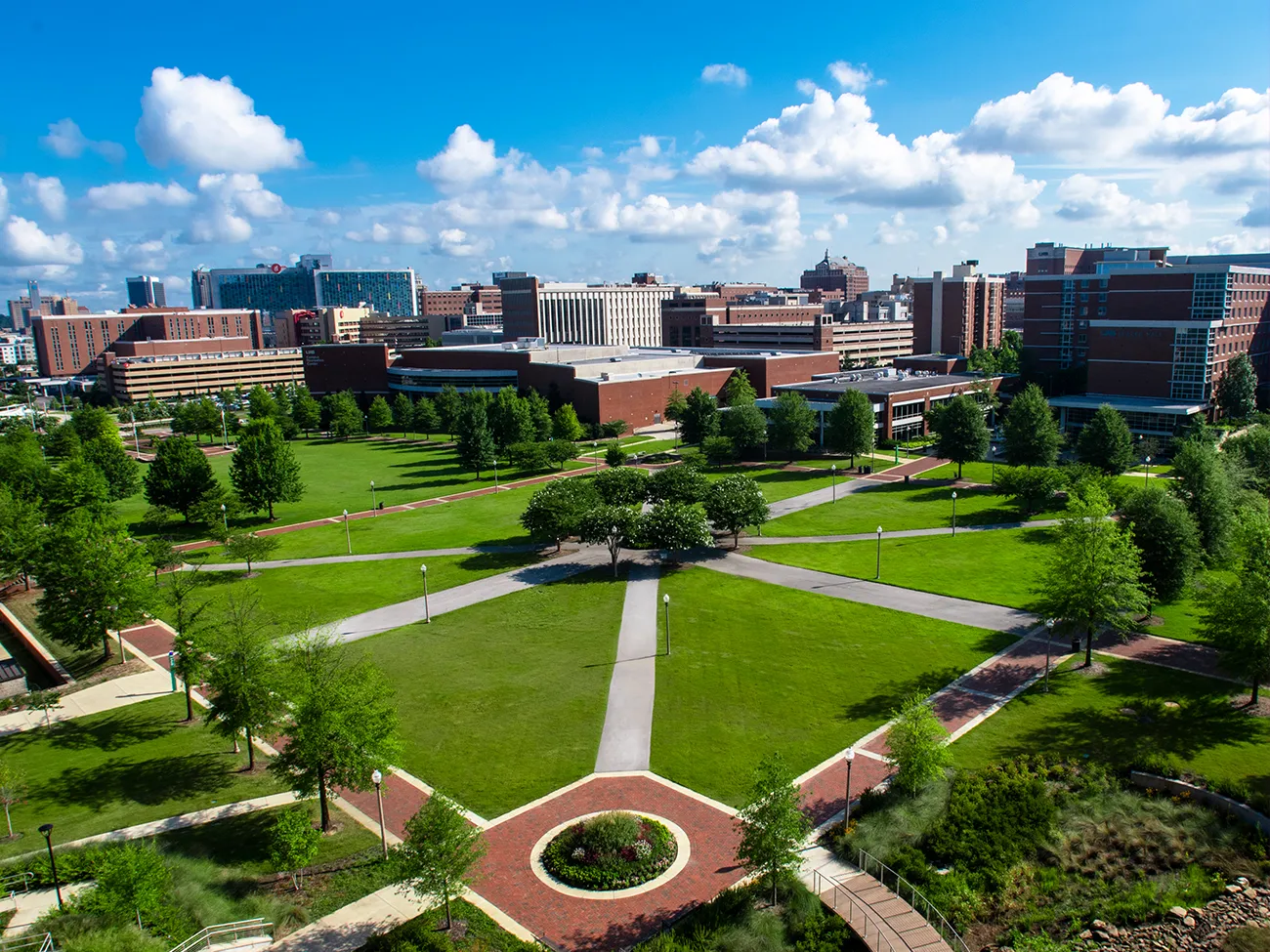
It’s only taken a little more than 50 years for the University of Alabama at Birmingham to establish itself as a national leader. UAB is the only public, four-year degree granting university in the state’s largest metropolitan area, the largest research institution in the state of Alabama, and the largest single employer in the state. Anchored in the 1859 founding of the Medical College of Alabama and the 1936 opening of the Birmingham Extension Center of the University of Alabama, UAB became its own independent institution in 1969. Today, our comprehensive R-1 university and academic medical center is proud to be located in Birmingham: home to 1.1 million metropolitan residents, the birthplace of the Civil Rights Movement, one of America’s most renowned culinary destinations, and nestled within the stunning natural landscapes of the Appalachian foothills and the Warrior and Cahaba River watersheds.
Vision and Values
At UAB, our goal is sustaining strategic growth that has a positive impact on people’s lives. From education to patient care to community engagement, the people of UAB are committed to improving the quality of life for the people of Birmingham, Alabama, the nation, and the world. We strive for collaboration, accountability, respect, and excellence in all we do.


Impact
At $12.1 billion annually, UAB has the largest economic impact on the state of any other academic institution. Decades of transformative gifts, including a successful capital campaign that raised $1 billion and a recent $100 million naming gift for the Heersink School of Medicine, have helped fuel UAB’s rapid growth via faculty and student support.

Culture and Community
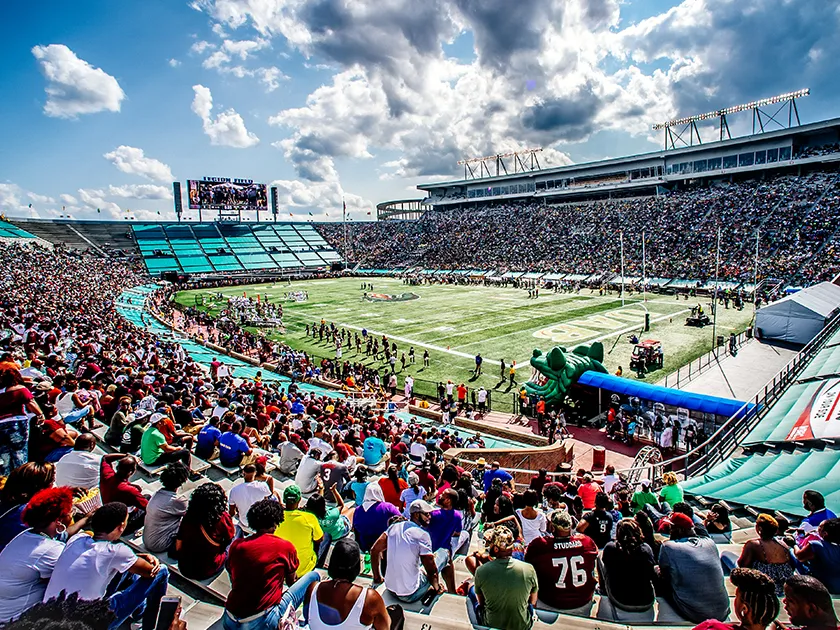
UAB’s students, faculty and staff hail from more than 140 countries, and in 2019 we were ranked the #1 Young University in the U.S. by Times Higher Education for the second year in a row and #12 worldwide. Our approximately 160,000 alumni live across the world and in every state in the U.S. We have a rich artistic community that produces dozens of major visual and performing arts events each season, and our Blazers athletics teams compete in 18 NCAA sports as members of the American Athletic Conference.