
School of Engineering Expectations
- Attend class.
- Be on-time for all commitments (class, etc.).
- Thoughtfully complete and submit all assignments by the due date.
- Use proper grammar in written and oral assignments.
- Present an appearance that is not distracting to others and reflects a professional image.
- Be courteous in the use of electronic devices: pagers, cell phones, laptops, etc.
School of Engineering Academic Conduct
Academic Misconduct
Academic misconduct undermines the purpose of education. Such behavior is a serious violation of the trust that must exist among faculty and students for a university to nurture intellectual growth and development. Academic misconduct can generally be defined as all acts of dishonesty in an academic or related matter. Academic dishonesty includes, but is not limited to the following categories of behavior:
-
Abetting
Helping another student commit an act of academic dishonesty. Allowing someone to copy your quiz answers, or use your work as their own are examples of abetting.
-
Cheating
Use or attempted use of unauthorized materials, information, study aids, the answers of others, or computer-related information.
-
Plagiarism
Claiming as your own the ideas, words, data, computer programs, creative compositions, art work, etc., done by someone else. Examples include improper citation of referenced works, use of commercially available scholarly papers, failure to cite sources, copying other’s ideas.
-
Fabrication
Presenting as genuine falsified data, citations, quotations.
-
Misrepresentation
Falsification, alteration or misstatement of the contents of documents, academic work or other materials related to academic matters, including representing work substantially done for one class as work done for another without receiving prior approval from the instructor.
Violations
Violations of the Academic Code of Conduct are punishable by a range of penalties from receiving a failing grade on an assignment or examination to an F in the course. Any course grade of F for academic misconduct supersedes any other grade or notation for that class.
In the event of a suspected violation of the Academic Code of Conduct, the following procedure is followed:
- Upon reaching the conclusion that academic dishonesty may have occurred and that action is warranted, the instructor should inform the student of the charge as soon as possible. The student has the right to hear the instructor’s reasons for making the charge, to inspect all relevant evidence in the instructor’s possession, and to respond to the charge. Based on the student’s response and all the evidence, the instructor will determine if a penalty is appropriate. If a penalty is deemed appropriate, the instructor informs the student of the action to be taken. If the student is not in agreement with the findings or the penalty, the instructor will provide the student with a written statement of the action taken and the basis for it. A copy of this letter will be sent to the department chair.
- Within two weeks of this notification of a judgment of academic dishonesty, the student may appeal the instructor’s decision by letter to the chair of the department. The chair or her/her designee, acting expeditiously, should take testimony from the student, the instructor, and all appropriate witnesses, and make a decision. If the chair or designee reverses the finding of academic misconduct, the instructor must re-examine the work in question and assign credit without prejudice. In the event that the chair or designee is the instructor in the course, the Dean or his/her designee will replace the chair in the appeal process.
- In those cases where a grade of F is assigned in the course and the student has utilized the appeal process described in (2) above, the student has two weeks to appeal the decision by letter to the Dean of the School responsible for the course. The Dean or his/her designee, acting expeditiously, should take testimony from the student, the instructor, the chair or appropriate designee, and all appropriate witnesses, and make the final decision.
- In cases where the final decision concerning an academic misconduct charge is an F for the course, a letter to this effect will be sent to the office of the registrar and kept on file.
A student who has received the grade of F for two instances of academic misconduct will be expelled from the University. The student will be duly informed of the pending expulsion and will be provided the opportunity to be heard. The student has two weeks after notification to request in writing a hearing with the Associate Provost for Undergraduate Programs and Faculty Affairs. Students expelled for academic misconduct will have it noted on their transcript.
Examples of Academic Misconduct
-
Assignments for Credit
Each student is expected to do his or her own assignments, homework, computer programs, design projects, and laboratory reports. Unless stated otherwise by the instructor, discussion of assignments between students is not permissible. In carrying out computer assignments, each student is expected to do his or her own preliminary calculations to establish the compilation required for an assignment, establish his or her own logic path to accomplish the task, and program that logic without assistance. Merely changing variable names, statement numbers, or the precise form of Input/Output statements (PRINT vs. WRITE, etc.) does not constitute a logic change. No student should submit as his or her own work, a solution copied from any source including, but not limited to, a solution manual, commercial or industrial documents, work of another student in the course, work of any person not in the course, or work of an instructor. The instructor has the right and the responsibility to decide if an unacceptable degree of similarity exists.
-
Tests and Examinations
It is absolutely essential that each student do his or her own work on tests and examinations. Therefore, the following rules apply:
- Talking, whispering, whistling, or tapping are not permitted during any test or examination.
- Looking at anyone else's test or examination paper or notes during a test or examination is not permitted.
- Passing notes or making written material visible to another student is forbidden. On a multi-page test or examination, all pages should be turned face down except the one currently being worked on.
- In the case of an "open book" or “open notes” test or examination, only those books or materials specified by the course instructor may be used. Solution manuals are not permitted.
- Student use of electronic devices (i.e., calculators, etc) during any test or examination is at the course instructor’s discretion.
- In the case of "closed book, closed notes" tests or examinations, a student may not have notes hidden in secret anywhere within the room or in the area.
- If for any reason a student must leave the room prior to completion of the test or examination, he or she must obtain the Instructor's (or proctor's) permission. No more than one person may be out of the room at any time.
- lt is the responsibility of the instructor to decide if any portion of a student's test or examination has been copied from an unacceptable source or from another student.
Enforcement
If the instructor observes academic misconduct, he or she will take the offending student's material, and communicate a charge of academic misconduct to the student and to the department or designee, thereby invoking the academic misconduct policy and procedures described in above. These rules are not to be construed as an all-inclusive list of rules pertaining to academic misconduct. lt is only reasonable to expect that situations will arise which are not explicitly covered here. Since academic misconduct will not be tolerated, it is the right and responsibility of the instructor to determine if academic misconduct has occurred in any situation. Both the instructor and student may use these explicit rules as guidelines in determining what constitutes academic misconduct in circumstances other than those detailed here.
Student Grievances
Judgments on academic matters can most appropriately be made by individuals with expertise in the particular academic discipline involved. For this reason, complaints by students on academic matters are the responsibility of the department and school involved. Normally, such complaints can be resolved quickly through discussions with the faculty directly involved. In rare situations where such resolution does not occur, the student should contact the chair of the appropriate academic department. If the matter cannot be settled within the department, it may be forwarded to the Dean or his/her designee for the school in which the department is located. At the Dean or his/her designee’s discretion, an advisory panel may be appointed to study the disagreement and make a recommendation to the Dean or his/her designee. However, it is the responsibility and prerogative of the Dean or his/her designee alone to make a decision on any academic disputes which have not been resolved at lower levels, and the decision of the Dean or his/her designee is final.
Nonacademic Misconduct
The university is a community of scholars and learners; therefore, all participants are expected to maintain conduct that:
- facilitates the institution’s pursuit of its educational objectives,
- exhibits a regard for the rights of other members of the academic community, and
- provides safety to property and persons.
Through appropriate due process procedures, disciplinary action will be taken in response to conduct which violates these principles. A more detailed description of non-academic misconduct can be found in the student conduct code. It is the student’s responsibility to be fully aware of the policies and procedures described in Direction. The Vice President for Student Affairs has the responsibility for coordinating policies and procedures regarding students’ non-academic misconduct.
If you cannot find the specific resource you are looking for through the resources below, contact your academic advisor or program director for advice.
One Stop Student Services
Undergraduate and Graduate information, including Blazer ID, ONE Card, BlazerBucks, financial aid forms and information, academic transcripts, change of major, degree application, and many other resources.
Graduate School Forms
Forms for graduate students, including application for graduate degree, candidacy application, committee forms, and other resources. You can also find other graduate resources in the Current Student section.
 Participating in student groups during your studies can help you build your resume, gain experience, and create a network. They can also be a great way to socialize, try new things, and just have fun. Following are some of (but not all) of the Engineering-relating student organizations on the UAB Campus.
- Alpha Sigma Mu
- American Foundry Society
- American Society of Civil Engineers (ASCE - Student Chapter)
- American Society of Mechanical Engineers (ASME)
- ASHRAE
- Biomedical Engineering Society (BMES)
- Biomedical Engineering Graduate Student (BMEGS) Organization
- Institue of Electrical and Electronics Engineers (IEEE)
- Institute for Transportation Engineers (ITE – Student Chapter)
- Material Advantage
- National Society of Black Engineers (NSBE)
- Pi Tau Sigma
- Society of Automotive Engineers (SAE)
- Society of Plastics Engineers (SPE) and Society for the Advancement of Material and Process Engineering (SAMPE)
- Society of Women Engineers
You can also discover other student organizations through Engage and look for interesting things to do on the UAB Events Calendar.
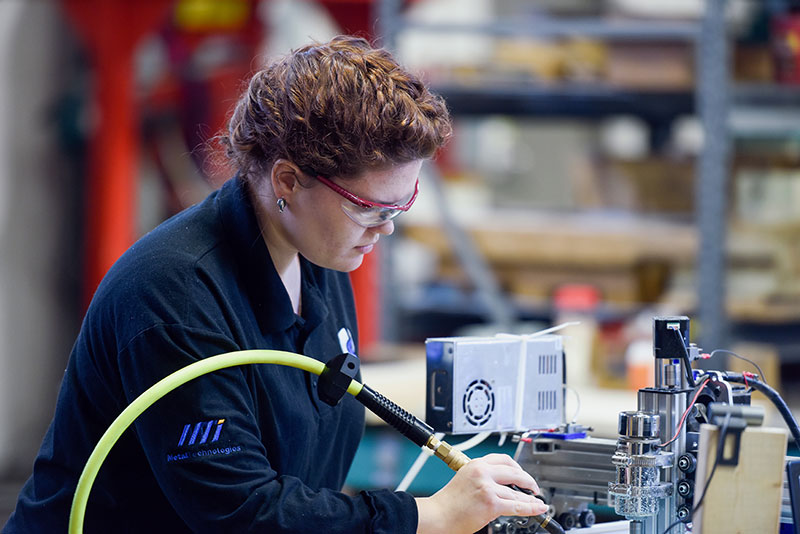
Engineering Career Services is housed in the Student Success Suite (Gorrie Hall 2212) and provides a hub for engineering students and alumni seeking career advising, industry networking opportunities, and job search assistance. Our team helps develop engineering students as young professionals and supports employer recruiting efforts at UAB.
Career Services
- Career Advising
- Resume Development
- Job Search Assistance
- Interview Coaching
- Networking Guidance
- Engineering Career Fair and other Networking Events
Engineering Career Fair
Engineering Career Services sponsors the Engineering Career Fair each fall and spring semester. This signature event is a targeted recruitment opportunity for organizations seeking to hire interns, co-ops, and entry-level engineering talent from our programs. New hiring partners should reach out to Neil Adams at
All engineering undergraduate and graduate students are strongly encouraged to participate in the Engineering Career Fair each fall and spring semester. UAB School of Engineering alumni job seekers are also welcome to participate. Attending the Engineering Career Fair each semester is a critical factor in building your network as a job seeker, and preparation is your key to success. Students should bring resumes and wear professional attire. Schedule an appointment with us to help put your best foot forward at this event and in your job search.
Check Handshake for real-time updates on this and other events, view participating employers, and schedule an appointment with our office.
UAB Handshake
Handshake is your portal to view on-campus and off-campus jobs, internships, co-ops, research opportunities, events, workshops, career fairs, and more. This resource is available to all UAB students and alumni. Please upload your resume and complete your Handshake profile items to ensure the best results when applying for jobs in Handshake. .
Students and employers, be sure to visit the UAB Engineering Career Services page in Handshake to view upcoming events including the Engineering Career Fair each fall and spring semester.
Internships & Co-ops
- Professional experience and hands-on learning are critical elements of an Engineering education at UAB. Internships and co-ops allow students to directly explore career opportunities, apply theoretical knowledge in a practical setting, and gain valuable experience that gives a keen advantage when seeking full-time work upon graduation.
- Internships typically take place full-time over the summer and must be professional in nature. Co-ops comprise full-time work with an employer over an academic semester (fall or spring) and over multiple semesters. Returning to the same employer over multiple semesters allows students to participate in long-term projects, development, and industry networking. Employers use internship and co-op programs to provide a talent pipeline for full-time engineering roles.
- UAB Engineering students who participate in an internship or co-op should enroll in the appropriate course to track their experience. Students must register before the work semester begins. Internship/co-op courses cannot be added retroactively.
- Students on a UAB scholarship must submit an “appeal form” through the Office of Undergraduate Scholarships no later than the Friday before the first day of classes for the semester of co-op work. That form is found in BlazerNET. Approval by the Office of Undergraduate Scholarships is based on registration in an appropriate internship/co-op course for that semester.
- Internship Course Listings: BME 011, CE 011, EE 011, EGR 011, ME 011, MSE 011
- Co-op Course Listing: COP 011
- The UAB School of Engineering Guarantees Internships to incoming students who participate in Internship Readiness workshops and career events through Engineering Career Services. Currently enrolled UAB Engineering students should visit here for program details.
Employers
Are you interested in recruiting UAB Engineering students and alumni? Please reach out to Neil Adams at
If you are a new employer to Handshake, please visit the following to get started.
Contact
If you are a current UAB Engineering student seeking career advising or Internship Readiness support please email Neil Adams at
Engineering Career Services is conveniently located in the Student Success Suite (Gorrie Hall 2212). We look forward to working with you!

Neil Adams
Director, Engineering Career Services

Dino Martinez
Assistant Director, Engineering Career Services

The School of Engineering is committed to providing scholarships to high-achieving incoming and current students. Most scholarships and awards range in value between $500 and $1,500. Support for UAB Engineering scholarships is provided by a number of corporate and private partners,including American Cast Iron Pipe Company (ACIPCO), BE&K, Dupuis Family Trust, and Vulcan Materials.
Students must apply through UAB’s online Blazer Scholarship Management and Resource Tool, BSMART, to receive consideration for School of Engineering scholarships. BSMART allow students to search, review requirements, apply, and accept awards for available scholarship opportunities, all within one easy-to-use site. For additional information or questions regarding engineering scholarships, contact Associate Dean
If you would like to contribute to an existing endowed scholarship, or if you are interested in endowing your own scholarship, contact Michael Wilson, Director of Development, at
Scholarships Offered by the School of Engineering
-
Murat M. Tanik Endowed Award in Electrical & Computer Engineering
The Murat M. Tanik Endowed Award in Electrical & Computer Engineering will be awarded to students meeting the following eligibility requirements:
- Applicants must be currently enrolled in or admitted to a degree-granting program in the UAB School of Engineering Department of Electrical and Computer Engineering
- Applicants should demonstrate solid academic promise and achievement and have earned at least an overall 3.0 grade point average in coursework completed prior to the time of application
- These funds shall provide support to students for whom affordability may be an obstacle and who might otherwise be unable to attend the University
-
David A. Conner Electrical Engineering Scholarship
The David A. Conner Electrical Engineering Senior Design Endowment Fund fund the Capstone Design Experience of UAB Seniors who are completing their degree in Electrical Engineering. It furnishes funding for components, subsystems, and student travel to events such as the IEEE Region 3 SoutheastCon Conference where the students' projects are entered in competition against other schools in the Southeast.
-
The Engineering Excellence Scholarship
The Engineering Excellence Scholarship is a competitive-based scholarship open to high-achieving incoming freshmen who are admitted to and enroll in the School of Engineering. To be considered, applicants must complete the general application on BSMART and have a minimum 27 ACT and an overall 3.5 high school GPA. Evidence of community involvement, strong leadership qualities, and financial need is also considered.
The Engineering Excellence Scholarship is renewable annually for up to four years, provided that recipients maintain a 3.00 overall GPA, completes at least 24 semester hours during each academic year, and maintain enrollment in a School of Engineering degree program. Students must apply through BSMART by February 1 to receive consideration for this scholarship.
-
Adam Telle Memorial Endowed Award Scholarship in Mechanical Engineering
The Adam Telle Memorial Endowed Award Scholarship in Mechanical Engineering is open to deserving students who are enrolled in the Mechanical Engineering degree program in the School of Engineering. Those considering applying for this scholarship should demonstrate solid academic promise and have earned at least an overall 3.0 GPA in coursework completed prior to the time of application, and demonstrate financial need for the scholarship assistance.
-
Clayton V. Reuse/Birmingham ASHRAE Endowed Scholarship
The Clayton V. Resue/Birmingham ASHRAE Endowed is open to deserving students who are enrolled in the Electrical and Computer Engineering or Mechanical Engineering degree program in the School of Engineering. Those considering applying for this scholarship should demonstrate solid academic promise and have at least a 3.0 GPA in coursework completed prior to the time of application.
-
Leah McCraney Memorial Endowed Scholarship in Advanced Safety Engineering and Management
In April of 2013, friends of Leah McCraney and the Advanced Safety Engineering and Management Program established this endowed scholarship in memory of McCraney, the inaugural program manager for the master of engineering graduate track. McCraney showed an unwavering commitment to academic excellence throughout her career and was a staunch supporter of the ASEM Program and UAB until her passing in 2012.
Those considering applying for this scholarship should be currently enrolled in the ASEM Program at UAB, demonstrate solid academic promise, have completed at least six credit hours in ASEM and have earned at least a 3.0 GPA in coursework completed prior to the time of the application, and demonstrate financial need for scholarship assistance. Applicants do not have to qualify for federal financial assistance in order to be considered for this award.
-
Dr. Martha Bidez Endowed Memorial Scholarship
The Dr. Martha Bidez Endowed Memorial Scholarship was created in memory of Dr. Martha Bidez, the first Graduate Program Director of the Master of Engineering in Advanced Safety Engineering and Management. Her career spanned more than 35 years and helped make the world safer place. After earning multiple engineering degrees from UAB, Dr. Bidez led a distinguished career in both the academic and private sectors that established her as one of the nation’s foremost authorities in safety engineering.
TThose considering applying for this scholarship should be currently enrolled in the ASEM Program at UAB, demonstrate solid academic promise, have completed at least six credit hours in ASEM and have earned at least a 3.0 GPA in coursework completed prior to the time of the application, and demonstrate leadership in the safety field. Applicants can show leadership through work initiatives, leadership positions in professional societies, or other leadership roles that advance the field of safety engineering.
National Alumni Society Awards
For more information about the following awards, engineering students should contact the UAB National Alumni Society:
- Mobolaji O. Kukoyi, P.E. UAB National Alumni Society Scholar Award
- Dr. Ray Watts Textbook Scholarship UAB National Alumni Society Scholar Award
- UAB National Alumni Society Brandon Keith Jacobs Memorial Scholarship
Other Scholarships and Financial Aid
More information about scholarships and financial aid can be found on the UAB Paying for College website for undergraduates and the Financing Your Degree site for graduate students.
Outside Scholarships
The following is a limited list of annual scholarships UAB engineering students have received in the past. UAB and the School of Engineering are not involved in the awarding of these scholarships or the selection of recipients. Please check this page frequently as deadlines and other information may be updated throughout the year.
- Alabama Road Builders Association
- Alabama Space Grant Consortium Undergraduate Scholarship
- American Coal Ash Association Educational Foundation (ACAAEF)
- American Council of Engineering Companies (ACEC) Research Institute
- American Society of Civil Engineers (ASCE)
- Alabama Society of Professional Engineers (ASPE)
- American Society of Mechanical Engineers (ASME)
- Fulbright
- International Society of Automation (ISA)
- Marshall
- Medtronic Spark Scholarship
- NSF Graduate Research Fellowship Program
- Goldwater
- Rhodes
- Society of Women Engineers Birmingham
- Science, Mathematics, and Research for Transformation (SMART)
- Sinto-AFS Future Leaders of Metalcasting Scholarship
UAB Admission Requirements
There are standard admission requirements for undergraduate and graduate students at UAB.
School of Engineering Requirements
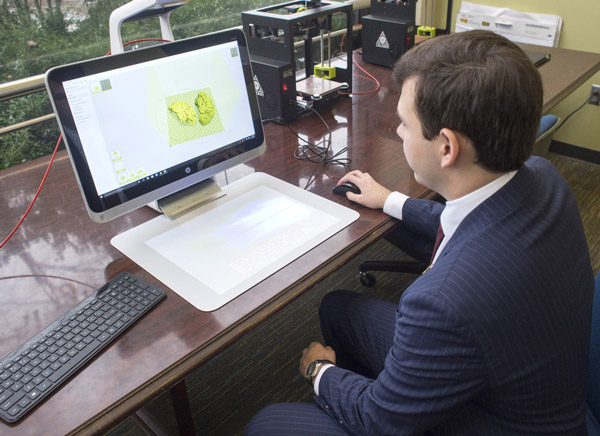
In addition, the School of Engineering has its own admission requirements.
-
 Biomedical Engineering Requirements
Civil Engineering Requirements
Electrical and Computer Engineering Requirements
- Master of Science in Electrical and Computer Engineering program
- Ph.D. in Computer Engineering program
Engineering Management Requirements
Materials Science and Engineering Requirements
Mechanical Engineering Requirements
Neuroengineering Requirements
-
First-Term Freshman
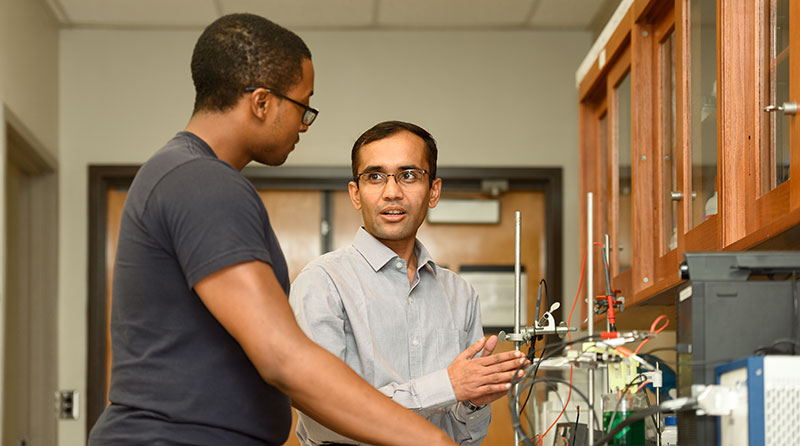 In addition to satisfying the general requirements for admission to UAB listed in the Undergraduate Catalog, individuals must have an ACT Math sub score 22 or higher (or SAT equivalent) and high school GPA 3.0 or higher to be admitted into an engineering major.
Students who do not meet the above criteria may be admitted as Undeclared – Interest in Engineering students in the Vulcan Materials Academic Success Center.
Students who are undecided on an engineering major but meet the criteria above can be admitted as undeclared engineering students.
Transfer/Returning Students
To be admitted to the School of Engineering, all transfer and returning students must:
- be eligible to enroll in MA 105: Pre-Calculus Algebra or higher in the pre-calculus sequence,
- have a cumulative GPA of 2.20, and
- have a minimum UAB GPA of 2.20 (if applicable).
You will be admitted as civil, electrical, engineering design, materials, or mechanical engineering majors based on your intended program. You will be admitted to biomedical engineering only if you have a cumulative GPA of 3.20 and, if applicable, a UAB GPA of 3.00.
Students who are seeking admission to the School of Engineering and are currently enrolled in other UAB schools or divisions must have a GPA (cumulative and UAB GPA) of 2.20 (3.0 for biomedical) or greater.
Academic advising is required for all UAB Engineering students. Students must have a Registration Access Code (RAC) in order to register for courses. RACs will be given to students only after meeting with their advisor.
Questions about financial aid, housing, and other topics should be directed to One Stop.
Prospective Undergraduate Students
If you are interested in becoming an engineering student and would like to speak with a school advisor in the Dean’s Office, you may use the buttons below to schedule an appointment, or you may call 205-934-8400 for assistance.
Current Undergraduate Students
First-term students must meet with a school advisor in the Dean's Office. You can schedule an appointment using the buttons below.
Students with majors in Biomedical, Civil, Electrical & Computer, Engineering Design, Materials, or Mechanical Engineering
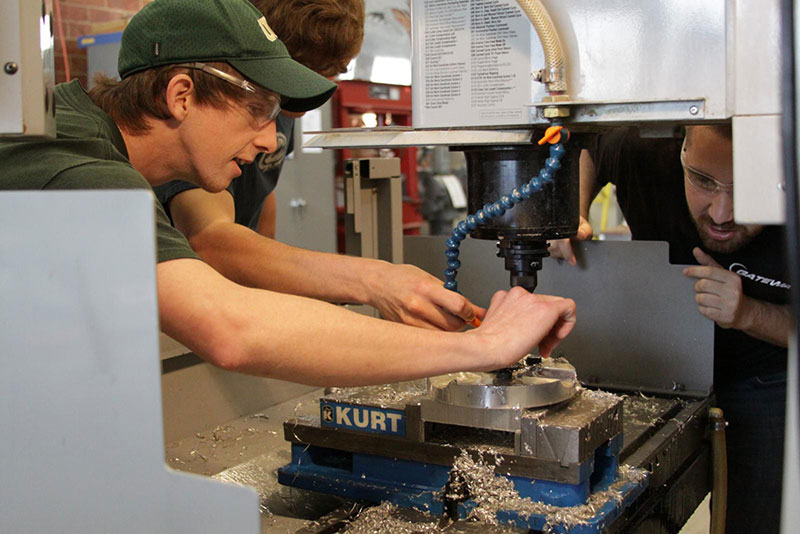 When you have met requirements to enter one of the six engineering programs, your advising will be conducted in your new department. You are encouraged to set an appointment for next semester's academic advising early in the current semester. Contact your department directly by calling the appropriate number:
- Biomedical Engineering:
This email address is being protected from spambots. You need JavaScript enabled to view it. , (205) 996-0165 - Civil, Construction, and Environmental Engineering:
This email address is being protected from spambots. You need JavaScript enabled to view it. , (205) 934-8430 - Department of Electrical and Computer Engineering:
This email address is being protected from spambots. You need JavaScript enabled to view it. , (205) 934-8440 - Engineering Design:
This email address is being protected from spambots. You need JavaScript enabled to view it. , (205) 934-8422 - Mechanical Engineering:
This email address is being protected from spambots. You need JavaScript enabled to view it. , (205) 934-8460 - Materials Engineering:
This email address is being protected from spambots. You need JavaScript enabled to view it. , (205) 996-7390
Programs of Study
Biomedical Engineering
Civil Engineering
Engineering Design
Electrical Engineering
Materials Engineering
Mechanical Engineering
Graduate Students
Graduate students are advised by faculty in their program. All students must have a Registration Access Code (RAC) in order to register for courses. RACs will only be given after meeting with the advisor. If you have questions, please contact your graduate program director.
INTO UAB Students
 If you are graduating from Pathways to an engineering department, you should contact your department's graduate program director at least four weeks before the end of the semester. The director will advise you on courses for the upcoming semester as well as proposed thesis topics (if applicable). UAB's International Admissions Department will readmit you to degree-seeking status (after verifying you meet all progression requirements) within two days of official grades being posted. After you are readmitted, you must receive a Registration Access Code (RAC) from your engineering advisor, and then you will register yourself in courses. You will not receive a Registration Access Code (RAC) until you have met with your advisor. Your INTO UAB Advisors will email you with important progression dates and information that you should refer to during this process. If you do not meet progression requirements, you will receive an email from your INTO UAB Advisor with instructions.
 UAB has many degree programs (both on-campus and online) that can lead to professional licensure or certification (PLC). Licensure requirements vary from state to state and by professional organization. UAB is working to develop an online, publicly accessible database, to assist in providing this state-by-state information. In the meantime, if you are interested in learning about potential professional licensure requirements in your state for a specific degree program, please contact the UAB State Authorization office at
The specific requirements for engineering licensure can differ from state to state. For information on the licensure process in each state, consult the National Society of Professional Engineers (NSPE) website.
NSPE does not license Professional Engineers. Licensing authority and requirements for PEs fall under the jurisdiction of the licensing board for the state, district, or country in which an engineer practices. The national organization that represents the state boards is the National Council of Examiners for Engineering and Surveying (NCEES).
UAB exists to make a positive difference in as many lives as possible by serving all people and promoting the success of each of our students. Here are eight easy tips for you to follow:
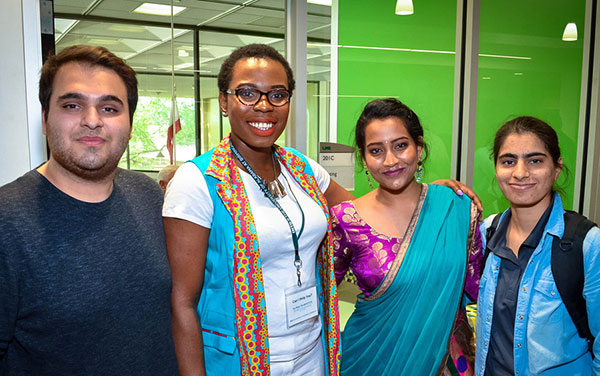
Are you an international student interested in studying engineering at UAB?
- Visit the UAB International Student and Scholar Services website. They have all sorts of forms, guides, and helpful links to make your life easier.
- Don’t be shy. Let your instructors know that English is your second language.
- Take advantage of class study groups. They let you go over material at your pace.
- Record lectures (with your instructors’ permission). Transcribe your recording to notes.
- Meet regularly with your advisor. They are experts and can help!
- Visit the UAB English Language Institute. They will give you assistance with both oral and written English.
- Visit the UAB Writing Center. They have tutors and instructional workshops.
- Frustrated and out of options? UAB counselors are there for you.
We invite you to explore all of the programs and services offered to international students. International Student and Scholar Services will be able to advise you about how to apply and who to contact for information. Please visit their website, or send general questions to
And remember — you are not alone! There are other international students/non-native English speakers in just about every class you take! Share your stories and help each other!

At UAB, engineering fundamentals are put to the test in projects that teach undergraduate students how to design and build, beginning with freshman engineering courses and extending to Senior Design—with plenty of opportunities in between. You'll have opportunities to see engineering concepts in action in your very first classes.
Graduate students may choose from a variety of academic paths. This includes traditional research-based M.S. and Ph.D. programs that pair graduate students with world-renowned engineering faculty and clinicians, as well as a completely online Master of Engineering program that has a range of tracks geared toward working professionals.
Need even more flexibility? UAB's Interdisciplinary Engineering Ph.D. program offers opportunities to explore innovative projects in areas of convergence among more than one scientific discipline, whether that be other engineering disciplines or other academic or medical fields from across the UAB campus.
Join Us
Undergraduate
Questions about our Undergraduate programs? Contact Andy Sullivan, Associate Dean for Undergraduate Programs,
Graduate
Questions about our Graduate programs? Contact Chastity Malcolm, Graduate Program Director, c