
The University of Alabama at Birmingham School of Dentistry (UAB SOD) is committed to the principle that all persons shall have equal access to its educational programs. The School of Dentistry encourages qualified individuals to apply for admission to the Doctor of Dental Medicine (DMD) program.
The UAB SOD recognizes that the award of the Doctor of Dental Medicine (DMD) degree carries with it the full authority of the institution and communicates to those who might seek the services of the bearer that he or she is competent to practice dentistry. The DMD degree is a broad degree, unique in that the graduate is prepared and, upon licensure, may practice all disciplines of the dental profession. Dental students must acquire the didactic knowledge, hand skills, and responsibilities identified by the faculty as essential to the practice of dentistry. Cognitive, technical, and interpersonal skills are required to be successful.
The UAB SOD is mindful of the unique nature of the dental curriculum. Applicants for admission must possess the skills and abilities that will allow them to successfully complete the course of study and, thus, receive the full benefit of the professional program. Students are required to direct or perform treatment on patients of the UAB SOD dental clinics and its affiliates safely and within the time allowed. With this in mind, all students must be able to meet the following technical standards with or without reasonable accommodation.
1. Motor Skills
GENERAL: Candidates and students should have sufficient motor functions such that they are able to execute movements reasonably required to provide general care and treatment to patients within an acceptable amount of time.
SPECIFIC: It is required that a candidate and student possess the motor skills necessary to directly perform palpation, percussion, auscultation and other diagnostic maneuvers, basic laboratory tests, and diagnostic procedures. Such actions require coordination of both gross and fine muscular movements, equilibrium, and functional uses of the touch and vision senses.
SPECIFIC: A candidate and student must be able to perform basic life support (including CPR), transfer and position disabled patients, physically restrain adults who lack motor control, and position and reposition one’s self relative to the patient. The candidate must be able to operate controls utilizing fine movements, operate high and low speed dental instruments within a space of less than one millimeter, and utilize hand instrumentation (including scalpels for surgical procedures).
2. Sensory / Observation
GENERAL: A candidate and student must be able to acquire a defined level of required information as presented through demonstrations and experiences in the biomedical, clinical, and behavioral sciences.
SPECIFIC: This includes, but is not limited to, information conveyed through physiologic and pharmacological demonstrations in animals and microbiological cultures and microscopic images of microorganisms and tissues in normal and pathologic states. A candidate must be able to acquire information from written documents and to visualize information presented via paper, films, slides, video, and digital images. A candidate must be able to interpret radiographs (x-rays) and other graphic images, with or without the use of assistive devices. A candidate must have functional use of visual, auditory, and somatic sensation while being enhanced by the functional use of sensory modalities.
GENERAL: A candidate and student must be able to observe a patient accurately, both at a distance and close at hand, and observe and appreciate non-verbal communications when performing dental operations or administering medications.
SPECIFIC: A candidate and student must be able to perform visual and tactile dental examinations and treatment including use of visual acuity, accommodation, and vision to discern differences and variations in color, shape, and general appearance between normal and abnormal, soft and hard tissues. Use of tactile senses may be either direct palpation or indirect through instrumentation. A candidate must also possess the visual acuity to read charts, records, small print and handwritten notation, and distinguish variations in colors intra and extra orally.
3. Communication
GENERAL: A candidate and student must be able to communicate effectively and appropriately with patients and/or guardian(s), convey or exchange information at a level allowing development of a health history, identify problems presented, explain alternative solutions, and give directions during treatment and posttreatment. For effective patient treatment, the candidate must be able to communicate effectively and efficiently with all members of the health care team. Communication includes oral, nonverbal, and written modalities.
SPECIFIC: A candidate and student must have the following skills: sufficient facility with the English language; capability to retrieve and synthesize information from literature, computerized data bases, and lectures; ability to effectively communicate concepts on written exams and patient charts; account for various patient backgrounds and life experiences; describe patient changes in moods, activity, and posture; coordinate patient care with all members of the health care team.
4. Cognitive
GENERAL: A candidate and student must be able to measure, calculate, reason, analyze, integrate, and synthesize.
SPECIFIC: A candidate and student must be able to comprehend three-dimensional relationships and to understand the spatial relationships of structures. Problem solving, a critical skill demanded of a dentist, requires all of these intellectual abilities. A candidate must be able to perform these problem-solving skills in a timely fashion for effective patient treatment.
5. Behavioral
GENERAL: A candidate and student must possess the emotional health required for full utilization of his or her intellectual abilities, the exercise of good judgment, maintenance of patient confidentiality, the prompt completion of all responsibilities attendant to the diagnosis and care of patients, and the development of mature, sensitive, and effective relationships with patients.
SPECIFIC: A candidate and student must recognize that the curriculum is physically, mentally, and emotionally taxing. He or she must be able to tolerate demanding workloads, effectively function under stress, adapt to changing environments, and display adaptability and acceptable function in the uncertain environment inherent to patient care. Compassion, integrity, empathy, interpersonal skills, interest, and motivation are all personal qualities that will be assessed throughout the admission and educational processes. Further, a candidate must be able to manage apprehensive patients with a range of moods and behaviors in a tactful, congenial, personal manner so as not to alienate or antagonize them. A candidate must accept critical feedback and respond by appropriately modifying behavior.
The University of Alabama at Birmingham School of Dentistry will consider for admission any applicant capable of acquiring the necessary knowledge with the ability to perform or learn to perform the skills specified in these standards. These technical standards are also required to successfully complete a set of competencies developed by the School and required for graduation. These competencies are available upon request through the Associate Dean of Academic Affairs, The University of Alabama at Birmingham School of Dentistry, 405 School of Dentistry Building, 1919 7th Avenue South, Birmingham, AL 35294-0007.
Questions regarding this document should be directed to the Assistant Dean of Admissions, The University of Alabama at Birmingham School of Dentistry, 125 School of Dentistry Building, 1919 7th Avenue South, Birmingham, AL 35294-0007.
Revised 12/2020
Why practice in a rural community? Because there are plenty of pros.
Small town life has many unique advantages. The local dentist is viewed as a pillar of the community, benefitting from stronger connections. They face less practice saturation and less competition, while incurring relatively low overhead costs. And they can develop a broad range of clinical skills by engaging in a wide variety of procedures. Small town dentists make a huge difference by being a big fish in a small pond.
If you are considering rural practice, here is one more big reason: $200K.
The Board of Dental Scholarships considers candidates for an upfront award of $200K in return for five years of service in an Alabama small town/rural community in need of a dental professional (qualifying counties below). In addition to the monetary award, Board of Dental Scholarships personnel are available to provide practice and mentorship support as needed. The award money is in addition to any regular earnings – it does not replace or constitute an awardee’s practice income. D1-D4 dental students are eligible to apply. In-state residency for UAB is not required. Service requirement is 5 years.
Qualifying Counties (subject to change depending upon workforce metrics): Bibb, Blount, Bullock, Butler, Chambers, Cherokee, Chilton, Clay, Cleburne, Conecuh, Coosa, Crenshaw, Elmore, Fayette, Franklin, Geneva, Greene, Hale, Henry, Lawrence, Lowndes, Macon, Marion, Monroe, Perry, Pickens, Randolph, Russell, Sumter, Washington, Wilcox
Interested in applying to the Board of Dental Scholarships?
A call for applications is announced twice a year, with applications due in both July and January. Selected candidates will interview with the Board of Dental Scholarships -- the BDS conducts interviews twice a year (February and August). Applications should be submitted via the link below. Additional materials should be submitted to Wendy Scripps atApply Here Opens an external link.
Learn more about the Alabama Board of Dental Scholarships administrative rules.
Alabama Board of Dental Scholarships Administrative Rules Opens an external link.
Also view the Alabama Board of Dental Scholarships law and inventory.

Important Dates
Application opened in AADSAS on May 12, 2026. Students should initiate applications as early as possible.
Applications received by AADSAS after October 31, 2026, cannot be considered for admission to the incoming first-year class.
- October 31, 2026 - Last date for applications to be submitted through AADSAS
- November 15, 2026 - Last date for all supplementary/remaining materials and deposit to be submitted to UAB
- December 15, 2026 - UAB SOD Offer Day
The UAB School of Dentistry offers equal educational opportunities to all qualified individuals who are interested in the study of dentistry. Interested individuals should contact the Admissions Office.
Preference is given to bona fide residents of Alabama who apply for admission to the School of Dentistry. However, applications are considered from all students who have superior academic records.
AADSAS Application
In an attempt to facilitate the application process, UAB School of Dentistry participates in the American Association of Dental Schools Application Service (AADSAS) application service. Through AADSAS, the applicant files only one application for admission to any of the participating dental schools. Extreme care should be exercised to make certain that the application form is filled out accurately and completely. Errors or omissions will delay processing. AADSAS will process the application for distribution to each of the participating schools designated by the applicant. Applicants will be required to pay an initial application fee through AADSAS upon submitting their application.
Apply through AADSAS Opens an external link.
Supplemental Application
All Alabama applicants and those out-of-state residents whose AADSAS applications indicate they can be given serious consideration will be requested to file a supplemental application. This form requests additional information that is not part of the AADSAS material. This supplemental application, along with all transcripts, letters of recommendation, and other specified documents, should be received by the Admissions Office no later than November 15 of the year for which admission is sought. A nominal non-refundable fee of $75.00 is required to file this supplemental application. See payments section below.
Reapplication
Those applicants who are reapplying must file new and complete applications through AADSAS, as well as an updated supplemental application. Applicants reapplying will be charged the non-refundable application fees.
 Admissions Process
Applicants whose credentials indicate they may qualify for admission will be invited for an interview with the Admissions Committee. Interviews will be conducted virtually, at least in the beginning of the cycle.
Applicants will be notified of acceptance or rejection via the AADSAS website.
Deposit
Applicants who are approved for admission to the incoming freshman class are required to make a $1,000 deposit to “UAB” to reserve a place in that class. This deposit is credited to the account of the matriculate at the time of registration and is non-refundable unless admission is revoked by the Admissions Committee for any valid reason as determined by the committee.
Payments
Payment for the supplemental application fee and deposit may be made online.
Please note that you should only submit the supplemental application fee if you have received an invitation to complete the supplemental application via AADSAS.
-
Residency Determination for UAB SOD Tuition Purposes
Residency Determination for UAB SOD Tuition Purposes
Residency Determination for UAB SOD Tuition Purposes
Purpose: To determine if incoming dental students are considered “resident-students” or “non-resident-students” for UAB SOD tuition purposes.
The Office of the Registrar, the Graduate School, and the admissions/registration offices of the professional schools, as appropriate, are designated as the offices empowered at UAB to determine and certify "resident" or "non-resident" student status. Pursuant to applicable state law, The University of Alabama System Board Rule 202, and UAB policy, UAB SOD residency determinations are made at the point of admission. Admission is defined as the official extension of an offer to enroll in the UAB SOD educational program. The state of legal residence listed in AADSAS will be utilized to determine official residency.
The UAB SOD Admissions Office makes residency decisions in line with the Board of Trustees policy. The residency decision for all UAB SOD students is recorded in AADSAS as either “Alabama” or “Out-of-State” in the designated custom field.
Applicants must declare/confirm residency at two points in the application process for the sake of establishing tuition rates: state of legal residence listed in AADSAS and via the UAB SOD supplemental application. If a student admitted to the UAB SOD requests that their residency classification be reviewed or re-classified for tuition purposes, they must submit the UAB reclassification form along with appropriate documentation. Students are notified via email of residency reclassification decisions if they requested the reclassification or were asked by the office to provide additional documentation. Applicants’ residency status is included in the official interview invitation email.
Note that if a student is in Alabama solely or primarily for educational purposes (as demonstrated by registering for a full-time course load within the last 12 months), applicants will not be eligible for resident classification, regardless of the length of time in Alabama. Residency determinations made at the point of admission to UAB shall continue unchanged through all subsequent registrations unless a residency reclassification request is submitted and approved.
Students may appeal the residency decision. Students can file an appeal by submitting the residency reclassification application and associated materials by the posted deadline to the UAB SOD Registrar’s Office.
Ready to apply?
Begin your application through AADSAS.
 Helpful Resources:
- UA System Rules Regarding Residency for Tuition Purposes
- UAB Student Residency Website
- Application for Residency Reclassification (PDF)
 Have Questions?
- Contact the Admissions Office at
This email address is being protected from spambots. You need JavaScript enabled to view it. to request more information. - Find answers to common questions about our D.M.D. program on our FAQs page.
Request More Information
Have questions?
Find answers to common questions about admissions requirements, the application process, DAT preparation, residency status, and life as a future UAB dental student.
Application process
-
How many people apply each year?
Around 1,400.
-
How many people are accepted each year?
Approximately 84.
-
If I get accepted, when will I hear?
December 15 is Dental Offer Day. Additional offers may be given after that date to complete the D1 class.
-
How do I get an application?
UAB School of Dentistry participates in the American Association of Dental Schools Application Service (AADSAS) application service. Through AADSAS, the applicant files only one application for admission to any of the participating dental schools. Extreme care should be exercised to make certain that the application form is filled out accurately and completely. Errors or omissions will delay processing. AADSAS will process the application for distribution to each of the participating schools designated by the applicant. Applicants will be required to pay an initial application fee through AADSAS upon submitting their application.
For more information on AADSAS:
AADSAS
1625 Massachusetts Avenue, NW
Suite 600
Washington, DC 20036-2212Phone: (800) 353-2237 or (202) 667-9433
Fax: (202) 667-4963
E-mail:This email address is being protected from spambots. You need JavaScript enabled to view it.
Academic preparation
-
Are three college years enough to gain acceptance?
Technically yes. However, competitive applicants are earning or have earned an undergraduate degree.
-
What kind of GPA does the average accepted applicant present?
Typically, average overall GPA is a 3.78. Average Science GPA is a 3.72
-
Is the GPA the most important thing?
Academics are very important. UAB SOD uses a holistic application evaluation process that includes non-academic as well
- What courses count toward the requirements?
DAT
-
What is the average DAT score?
Typically, it is around 21 Academic Average. 20 Total Science (old scoring) and 440 Academic Average, 420 Survey of Natural Sciences (new scoring).
Please See Table 1: DAT Concordance Table (Old to New)
-
When should I take the DAT?
Most students take the DAT during their Junior year of college. We recommend that you work with your Academic/ Pre-Dental Advisor to determine the best time.
Residency
-
Are Alabama residents given preference?
Yes. As a public state institution, UAB SOD gives preference to in-state applicants.
-
Are out-of-state residents considered?
Yes. About 30% of our incoming class are out of state students.
- How is residency determined?
Other questions
-
Do I need to get a job in a dental office to be considered?
No.
-
What is the difference between a D.M.D. degree and a D.D.S. degree?
D.M.D. (Doctor of Dental Medicine) and D.D.S. (Doctor of Dental Surgery) degrees are equivalent degrees. The University of Alabama at Birmingham School of Dentistry awards the D.M.D. degree.
-
Do I have to be a US Citizen to apply?
You must be a US Citizen or US Permanent Resident.
Didn't find your answer?
Contact the Admissions Office.
Investing in your future
A UAB dental education combines early clinical experiences, research opportunities, leadership development, and preparation for practice. Review tuition and fee information below.
Tuition (per year) for 2025-26
Tuition and fees for the next academic year will be posted in early July. These values typically increase around 3% each year for planning purposes but are tentative pending Board of Trustees approval.
| Alabama residents | $34,862 |
| Non-residents | $81,258 |
Student Health Program
| Student Health Service (deductible per academic year) | $500 |
| Prepaid Dental Health Program (per academic year) | $102 |
| Hospital Insurance paid per term (some form of insurance is required for all students per year) | $3,146 |
Equipment and Laboratory Fees (per academic year)
| Anatomy Lab Fee (first year students) | $450 |
| Preclinical technical laboratory (first and second year students) | $4,192 |
| Preclinical technical laboratory (third and fourth year students) | $25 |
| Prosthetic laboratory per year (third and fourth year students) | $300 |
| Technique gold | Variable (purchase of approx. 20 d.w.t. gold at current market value by second year students for use in preclinical courses in operative dentistry and removable prosthodontics) At cost. |
| Breakage fee (Seniors only) | $15 |
Miscellaneous Fees
| Integrated National Dental Board Examination (fourth-year students) | At cost |
| Clinic Fee -- First and second year (per academic year) | $126 |
| Clinic Fee -- Third year (per academic year) | $4,296 |
| Clinic Fee – Fourth year (per academic year) | $4,296 |
| CPR fee (first year students) | $38 |
| Advanced Cardiology Life Support (ACLS) Third year | $38 |
| ASDA Dues (per academic year) | $119 |
Special Fees Paid Only When Applicable
| Cap and gown rental for Doctor of Dental Medicine (fourth-year students) | At cost |
| Graduation and diploma fee (fourth-year students) | $60 |
Additional Expenses
The estimated cost of books, equipment, and supplies (exclusive of tuition and fees shown on preceding schedule) for four years at the School of Dentistry is $10,000. This amount includes approximately $650 for books and $250 for supplies. The above costs vary from year to year due to changes in prices and curriculum. Students should be aware that dental kits must be paid for at the time of purchase. *This fee schedule is subject to change at the beginning of each academic year.
Cost planning note
Tuition and fees are reviewed annually and may change. Applicants should consult the Admissions Office regarding residency classification and current tuition rates.
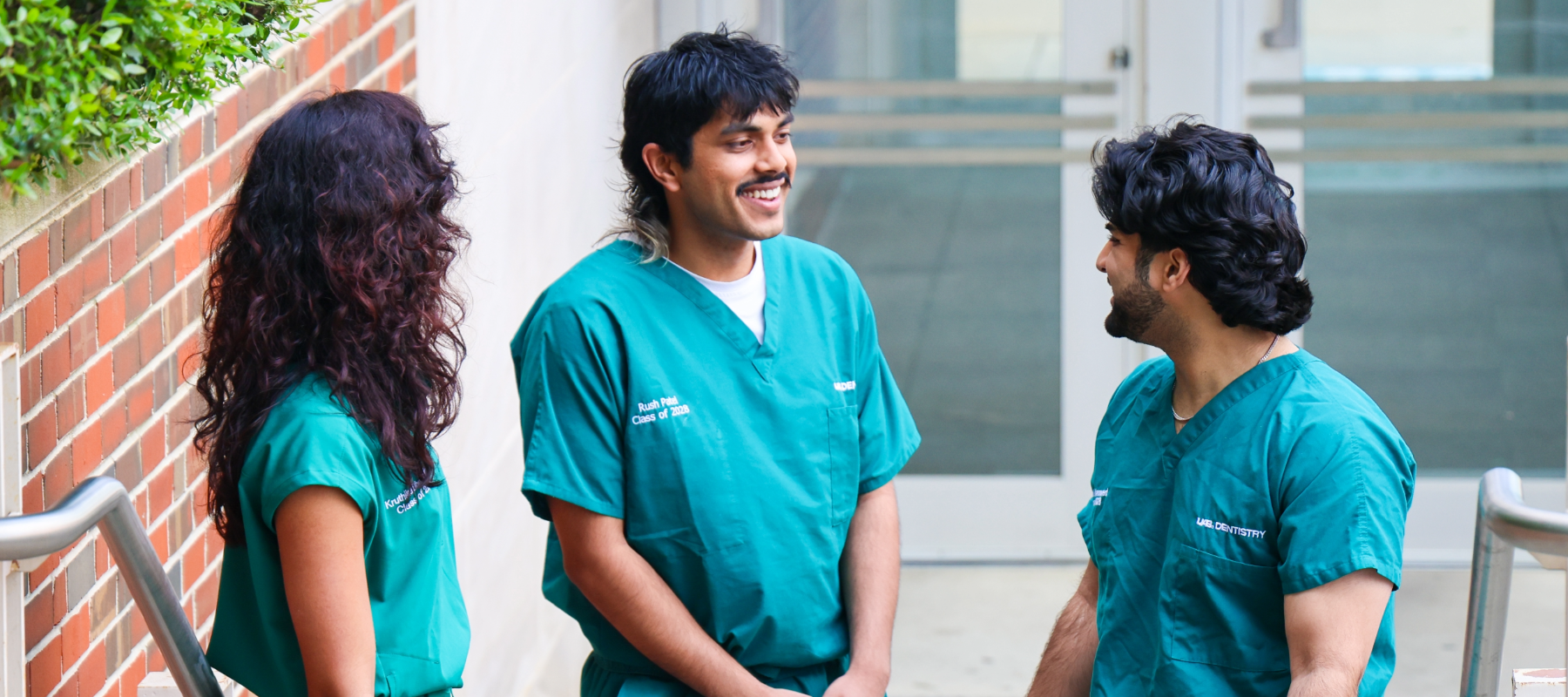
Academic Preparation
Preparation for dental school begins with a strong foundation in the biological and physical sciences, as well as effective communication skills. Coursework in the social sciences and humanities can also provide valuable perspectives for working with patients and understanding oral health care.
Students are encouraged to work closely with their pre-dental advisors when planning coursework and preparing for the admissions process. Applicants should also review the minimum technical standards for admission and matriculation.
Application requirements at a glance
Before applying to the UAB D.M.D. program, review these key application requirements:
- Predental study
- Required coursework
- Dental shadowing
- Dental Admission Test (DAT)
- Letters of recommendation
- Application through AADSAS
Predental Study
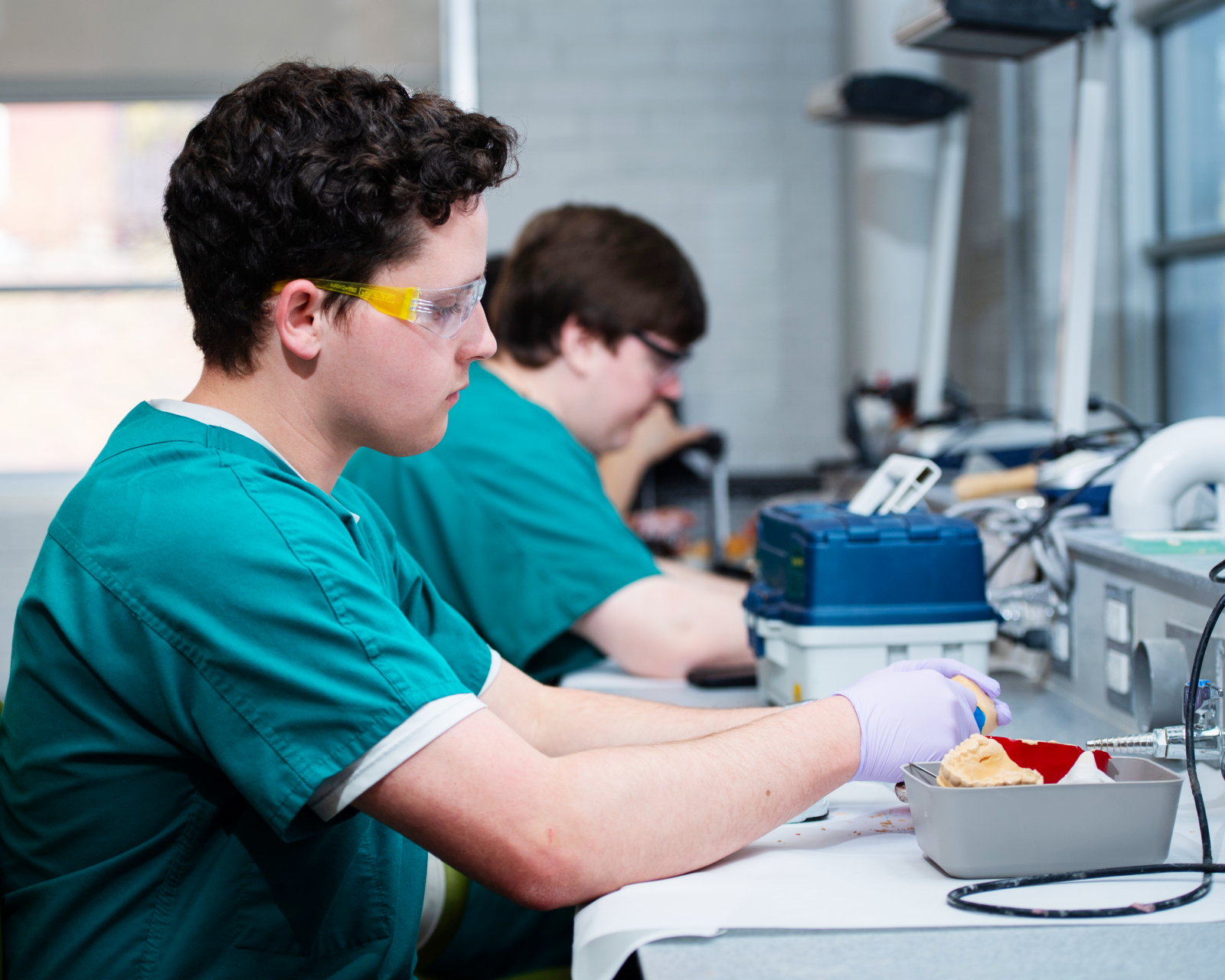 Applicants educated at a college or university not regionally accredited in the U.S. should complete a minimum of 24 credits in biomedical sciences (biology, chemistry, physics, and/or math) at a U.S. accredited institution and submit a course-by-course evaluation from a NACES.org evaluation service for education completed outside the U.S. It is strongly recommended that students complete the last year of predental study at 4-year institution. This is preferred but not required. Extenuating circumstances will be considered.
Currently some colleges are developing new curricula, new grading systems, and modified entrance requirements, and some students may be admitted to college with advanced standing and therefore may be exempt from (CLEP) some elementary courses that are required for admission to dental school. Applications from students enrolled in such predental programs of study are considered; however, these students can qualify for admission only if the Admissions Committee is satisfied that these programs provide predental preparation at least equal to the minimum entrance requirements outlined in the section:
Pass/Fail grades are accepted but standard letter grades are preferred. Course prerequisites remain unchanged.
Application path
- Apply through AADSAS
- Submit required materials
- Complete supplemental application if invited
- Interview if selected
- Receive admissions decision through AADSAS
Specific Course Requirements
-
Biology (12 semester hours)
Twelve semester hours of general biology or zoology. Additional upper level human/animal biology courses are recommended. These courses may include cell biology, physiology, comparative anatomy, embryology, histology, human anatomy, microbiology and others.
-
Chemistry (16 semester hours)
Eight semester hours of general inorganic chemistry which includes qualitative analysis and laboratory work. Eight semester hours of organic chemistry with laboratory work. Biochemistry is strongly recommended.
-
Physics (8 semester hours)
Eight semester hours of physics. Mechanics, heat, light, sound, and electricity, with appropriate laboratory work, should be included in the courses.
-
Mathematics (6 semester hours)
Analytic geometry and differential and integral calculus are recommended.
-
Non-Science Courses (30 semester hours)
The requirement that at least 30 semester hours of non-science coursework be included in the predental program of study assures a broad general education which is the best preparation for a career in dentistry. Such non-science courses as English (six semester hours) and courses in the social sciences and humanities are recommended strongly to meet this requirement. Courses to enhance manual dexterity (sculpting, painting, etc.) also are encouraged.
All required courses must be taken within the last 5 years.
Physical education, military science, and similar courses are not acceptable as part of the minimum non-science requirements.
We will honor online courses and pass/fail courses due to the COVID-19 changes in instruction and grading.
All required courses must be taken within the last five years.
Questions about requirements?
Your Academic Pre-Health Advisor at your college/university can best assist with course requirement questions.
- Work with your academic pre-health advisor.
- Find answers to common questions about our D.M.D. program on our FAQs page.
- Contact the Admissions Office for application-specific questions (
This email address is being protected from spambots. You need JavaScript enabled to view it. ).
References
We will accept 4 letters of recommendation uploaded to your AADSAS application.
- Two letters minimum from instructors that taught you in a science course, but no more than three.
- One letter from a dentist that you have shadowed.
- One letter of your choice (from Pre-Health Committee, Pre-Health Advisor, Supervisor, Club/Organization Sponsor, Research Professor, etc.).
Shadowing Hours
UAB does not have a required number of shadowing hours - this is an individual decision, but it is very important that an applicant understands first hand what they will do as a dentist and has the opportunity to interact with various dental professionals. Shadowing should consist primarily of shadowing general dentists. Many recent applicants seem to shadow 50-100 hours, some do more. Massive numbers of hours are not needed for a competitive application.Shadowing/volunteer hours will be looked at on a case-by-case basis and will focus on consistency of experience rather than accumulation of hours.
Shadowing insight
Quality and consistency matter more than accumulating hours.
Dental Admissions Testing Program
 Each applicant is required to participate in the Dental Admission Testing (DAT) Program conducted by the Council on Dental Education of the American Dental Association (ADA) and to request that test results be sent to the UAB School of Dentistry Admissions Committee. Learn more about how to apply to take the DAT.
For more information on the DAT:
Division of Educational Measurements
American Dental Association
211 East Chicago Avenue
Chicago, Illinois 60611
(312) 440-2500
ada.org
DAT application information is usually available at the applicant's undergraduate pre-health careers advisory office. Applicants are strongly advised to seek all available help from their pre-health advisor(s).
DAT test scores must be taken within the last 3 years.
Citizenship
Only U.S. citizens and permanent residents are considered for admission.
 Before you apply
- Review prerequisite course requirements
- Review technical standards
- Confirm DAT timing
- Prepare letters of recommendation
Contact
UAB School of Dentistry
SDB 125
1720 2nd Avenue South
Birmingham, AL 35294-0007
Phone: (205) 934-3387
Fax: (205) 934-0209
E-mail:
AADSAS
American Dental Education Association
1400 K Street, NW, Suite 1100
Washington, DC 20005
Phone: (617) 612-2045 or (202) 289-7201
Fax: (202) 289-7204
E-mail:
Request More Information