
 We live in a media-rich world, and our society needs people who can quickly and effectively create engaging digital content for all kinds of media platforms: websites, streaming video, print, social media, podcasts, and others. The BA in Writing and Media is designed to develop the skills you need to produce written media content, and market studies predict strong growth in this jobs sector.
Students in this bachelor’s program will develop the ability to:
- Write effectively in a variety of contexts: creative, professional, technical, and others
- Compose multimodal texts that combine different elements of communication: verbal text, graphics, audio, video, etc.
- Use creativity to edit, produce, and promote digital and non-digital content
- Develop proficiency with industry-standard technologies
In the BA in Writing and Media, you will take courses in both Professional Writing and Creative Writing to improve your ability to write precisely and imaginatively and to learn how to speak to different audiences. You will combine these writing courses with electives—such as graphic design or screenwriting or documentary filmmaking—so you can tailor your degree around your own interests.
For more information on the BA in Writing and Media, see the UAB Undergraduate Catalog.
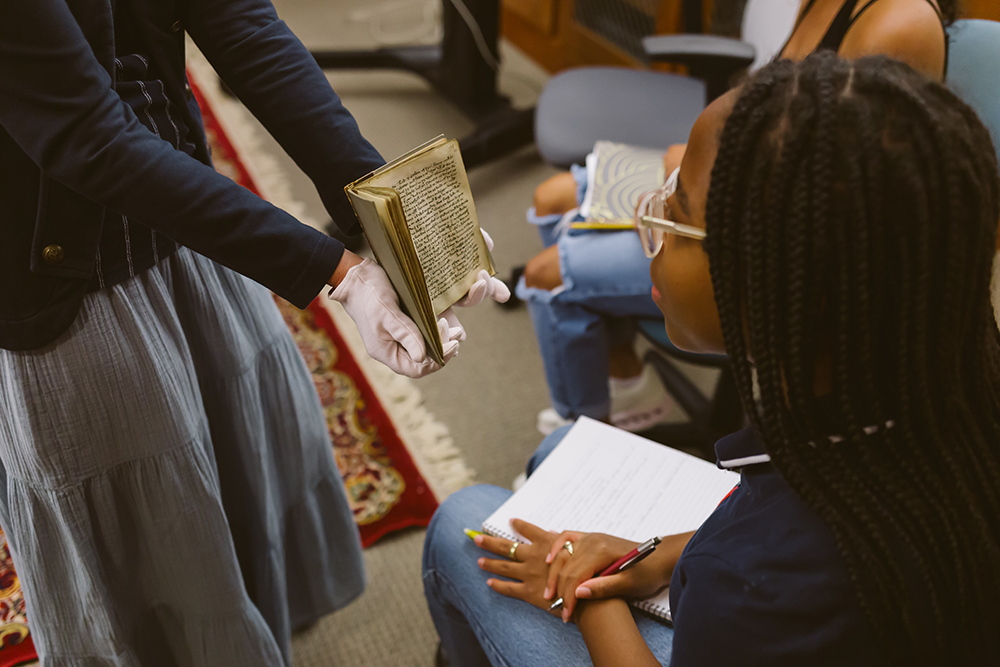 The Bachelor of Arts in English is designed for students with a passion for reading, writing, and thinking about language. The BA is an excellent choice for students interested in fields such as teaching, librarianship, law, creative writing, editing, linguistics, advocacy, non-profits, higher ed, and many others.
All students in this degree program take shared foundational classes, and then they select one of the following four concentrations for more in-depth study.
This BA program is for students who would like a wide exposure to the various aspects of English studies, and it’s particularly good for those with interests in literature and linguistics.
Students pursuing this degree also have the option to enter our departmental Honors track and, in close collaboration with a faculty mentor, to write an honors thesis on a subject of their choosing. This is excellent preparation for those considering future graduate work. See our Honors program page for more information.
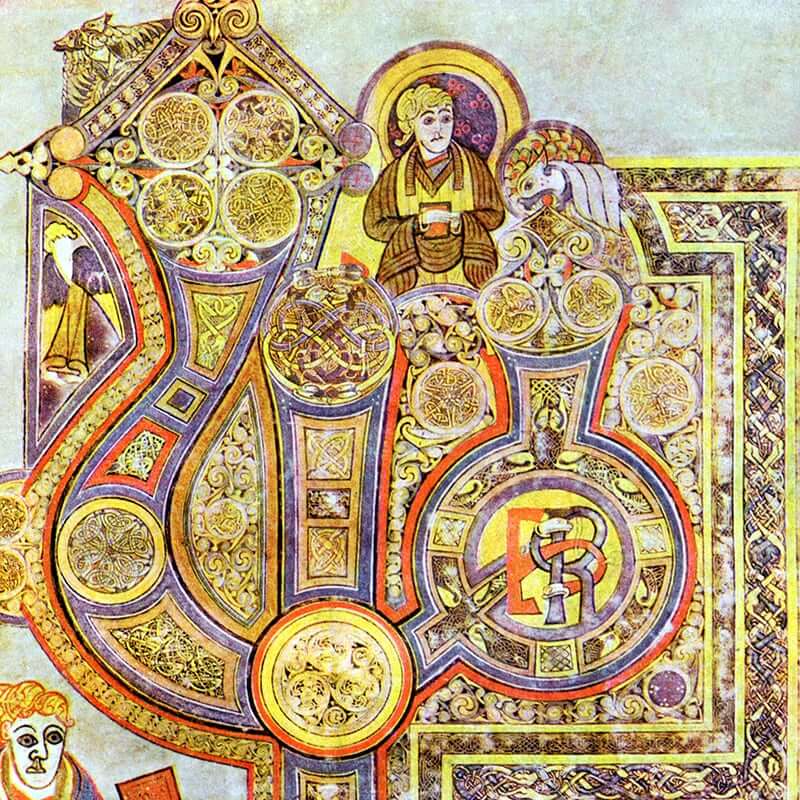 Pyramids! Vikings! Gladiators! Explore the Wonders of the Pre-Modern World!
This interdisciplinary minor is focused on material, intellectual, sociopolitical, literary, and linguistic approaches to the Ancient, Medieval, and Renaissance periods. You’ll learn current theories and methods for working with a range of source materials and objects, from archaeological finds and architecture to historical documents and poetry. Visit the UAB Course Catalog to learn more.
For more information, reach out to Dr. Jill Clements (
Following are the courses being offered in upcoming semesters. Please check the online class schedule listing for the most accurate scheduling information
-
Fall 2026 Courses
200-Level Courses
-
EH 203 1D: Writing in Birmingham, The Birmingham Experience
Instructor: Halley Cotton
Come explore what it means to be a Birminghamian. We’ll be using writing and research as tools of discovery alongside creativity and self-expression. Students will experience the culturally vibrant layers of Birmingham including why the city is a food destination, how it birthed civil rights, its industrial founding, stunning outdoors, and more.
-
EH 204 2E CAC: Reading in Birmingham
Instructor: Lauren Slaughter
This course is an introduction to the practice of creative writing, with a focus on flash fiction and flash creative nonfiction. "Flash" refers to writing in short forms, usually between 250 and 2,000 words. (This class will not cover poetry.) By the completion of the course students will:
- Understand the various elements of a successful work of flash fiction/flash creative nonfiction
- Practice and apply a range of techniques to write original, energetic, image-driven and voice-driven flash fiction and flash creative nonfiction
- Revise their writing and recognize that successful creative writing is always the result of a lot of hard work. To this end, expect to devote considerable attention to strategies for observation and focus, modeling, accurate language choice, achieving a precise image, and the elements of structure
-
EH 205 1E: Intro to Creative Writing
Instructor: Melba Major
This course introduces students to the fundamentals of creative writing. In this class, we’ll explore the genres of flash nonfiction and poetry. Students will develop their unique voices while experimenting with brevity, imagery, and lyricism. A basic premise of this course is that powerful writing often emerges from attentive reading, fearless writing, and rigorous revision. Through close reading of contemporary works, in-class exercises, discussions, and peer feedback sessions, students will learn to craft compelling prose and evocative verse. By the end of the course, students will have a portfolio of original work and a deeper understanding of the creative process. No prior experience is necessary—just a willingness to explore, create, and engage with language in new ways. This course meets Blazer Core Creative Arts with a Flag in Post-Freshman Writing.
-
EH 213 1B: Lit Ideas: Comics and Graphic Novels
Instructor: Anamaria Santiago
We’ve come a long way from the moral panic induced by comics in the 1930s, when literary gatekeepers denigrated comics as a lesser form, dangerous for literacy and intellectual development. Now, of course, we know that the graphic narrative medium—less pretentiously, comics—is sophisticated storytelling that is not only worthy of study but also especially adept at tackling the kinds of critical questions we so value in the humanities. In this discussion and analysis-heavy course, we’ll examine how a variety of graphic narratives use visual language (signs) and the comics form (sequencing) to generate textual meaning (sense). We’ll review the history, evolution, and cultural significance of the form and read celebrated classics as well as contemporary texts spanning from fantasy and sci-fi to historical fiction and autobiography. We’ll see how diverse authors have used the form to explore a multitude of topics, from war and violence to identity and relationships. Students should bring to this course the expectations they have of any other 200-level literature course, as we will rely on close reading, analysis, and theory to better understand and appreciate the basics of the genre.
-
EH 213 1C: Lit Ideas: Time Travel
Instructor: Amy Cates
Our preoccupation with imagining alternate timelines and revisiting the past is evident in many forms of storytelling and throughout pop culture. But it is within imaginative literature that we will dig in and explore how time travel is a portal into some of humanity’s most universal questions. What if time is not linear but something we can bend or even escape? Are other possible parallel versions of our lives obtainable? If we could revisit the past, would it change anything other than our own understanding?
This course travels its own timeline, as it examines a variety of fictional works and poetry selections as we seek to understand how time travel reflects changing cultural anxieties and wide-reaching philosophical questions. Students will also be exposed to academic research that offers accessible explanations of scientific ideas that frequently appear in speculative fiction. Through in-class discussions and a mix of reflective and analytical writing, students will explore how literature and science work together to shape our understanding of time travel. As with many works of serious literature, some assigned texts may include difficult subject matter. Students should expect to encounter political and social perspectives that may differ from their own, as well as scenes that include violence or sexual content.
-
EH 213 2B: Lit Ideas: Science Fiction Literature and Film
Instructor: Ronald Guthrie
Over the course of the semester, we will discuss what it means to be human in the 21st century by analyzing science fiction short stories and films from both past and contemporary authors and directors. We will also read several nonfiction pieces, including news stories, to give context to the fictional readings and movies. During the first half of the semester, we will look at works focused on robotics and artificial intelligence with an eye toward the possible ramifications of giving machines “human” rights or imposing laws to control them, especially if they become self-aware. During the second half of the semester, we will focus on cyborgs by examining how society has already adapted and will have to adapt even more to people who are both human and machine in light of the predictions made by speculative fiction and film.
This course will require considerable reading, writing, and classroom discussion. Students should be aware that some of the texts and films include uncomfortable and controversial subject matter, such as prejudice and discrimination, religion, sex, drug use, and violence.
-
EH 213 2EA (HON): Lit Ideas: Witch Narratives
Instructor: Aparna Dwivedi
“People think that stories are shaped by people. In fact, it is the other way around” (Pratchett). Witches have long been trapped in such narrative contraption, which held them captive as broomstick-borne bearers of misfortune and practitioners of magic. In this class, our purpose is to study folklore/fairy tales and literary narratives to understand the transformation in the representation of witches. After starting out with the context of folklore and fairy tales, we will go on to read several short works (available on Canvas) and two novels (I, Tituba and Circe) to see how authors have resisted the established discourse on witches and appropriated the witch narrative in their own writing. Except for the two novels, all materials will be made available on Canvas. For instance, we will situate Maryse Conde’s I, Tituba within the context of the Salem witch trials and Arthur Miller’s representation of Tituba in The Crucible and gather other narratives, to consider the many appropriations of Tituba’s voice in present times. In tracing such parallel narratives, our purpose is to understand the complex ways in which stories exist and operate. The semester will be divided into three segments, each culminating with a major assignment: an essay, exam, and a multimodal group project.
300-Level Courses
-
EH 301 QLA: Reading, Writing, and Research for Literature
Instructor: Jill Clements
This course provides students with the essential elements of literary research, including approaches to textual interpretation, the conventions of literary analysis essays for structure and content, and research methods and tools. We’ll focus on how to make claims that are rooted in close-reading and situate those claims in the broader scholarly conversation about a primary text. To that end, we will work through research strategies using specialized library databases, examine various models of literary analysis, and developing techniques for writing convincing and compelling arguments about literature. (Our topic and base texts for EH 301 this fall will be tales of medieval knights' quests and Arthurian lore, and this course can count toward the minor in Ancient, Medieval, and Renaissance Studies.)
-
EH 329 QLA: Literature of the Vikings
Instructor: Jill Clements
The corpus of texts from medieval Scandinavia tells the stories of the Norse gods, legendary heroes, and colorful families of the Viking Age. Focusing particularly on sagas, this course introduces Old Norse-Icelandic literature in translation and fosters skills in close reading and interpretation. We will also discuss the historical milieu in which these texts were composed and transmitted, and how the literature represents various aspects of medieval culture, including such topics as travel abroad and raiding, settlement, love and marriage, feasting, law, warrior ethics, blood feud, cosmology, and religious rituals. This course counts toward the minor in Ancient, Medieval, and Renaissance Studies.
400-Level Courses
-
EH 401/501 2B: Tutoring Writing
Instructor: Jaclyn Wells
Students will study the complex process of learning to write. Students will also learn practical strategies for teaching writing one-on-one. The course will balance reading and discussion with hands-on experience and observation in the University Writing Center. Course readings will include articles about writing pedagogy, practical tutoring guides, and real tutors’ published reflections about their work. Course projects will include observation write-ups, tutoring reflections and philosophies, and research about a topic of the student's choice. Undergraduate students must take this course to qualify for employment in the University Writing Center; however, due to a limited number of available positions, taking EH 401 does not guarantee employment in the UWC.
-
EH 415/515 QLA: Forms of Fiction Special Topics: Character
Instructor: James Braziel
Our goal for the semester will be to explore and create different types of characters. We will look at the basic ingredients that go into inventing every character (motives, history, reputation, habits, preferences, choices, etc.), and we will look at different types of characters from flat to dynamic, comical to serious in model stories. We will write brief character sketches from the photographs in the book American Photobooth. Then we will create scenes for these characters and ultimately create full-length short stories with these characters for the workshop and portfolio.
-
EH 427/527 2D: Special Topics: The Gilded Age
Instructor: Margaret Jay Jessee
This course explores American literature and culture from the end of the Civil War through World War I, a period often referred to as the Gilded Age. The term is borrowed from Mark Twain and Charles Dudley Warner’s 1873 satire, which captures the glittering surface and deep structural inequality of the period: rapid industrial growth, staggering concentrations of wealth, political corruption, labor exploitation, anti-immigrant backlash, racial violence, and the consolidation of corporate power. Many of these issues remain strikingly familiar today, from widening wealth gaps and labor struggles to debates over immigration, media influence, corporate accountability, voting rights, and whose histories get remembered or erased.
We will examine how literature and popular culture responded to the pressures of modernization, urbanization, mass media, and social upheaval. Along the way, we will consider questions that still resonate now: What can writing do in times of political crisis? How do stories shape public opinion? What is the relationship between art, journalism, entertainment, and activism? And how do writers imagine both the problems and the possibilities of American life?
Authors may include Henry James, Mark Twain, Edith Wharton, Charles Chesnutt, Zitkala-Ša, Jacob Riis, and William Dean Howells.
-
EH 436 7P: Writing for Young People
Instructor: Kerry Madden-Lunsford
This workshop will focus specifically on writing stories for young people. Students will be presented with a range of children's authors from picture books to early readers to middle-grade novels to young adult novels. From Maurice Sendak to Ann Whitford Paul to Jane Yolen to James Marshall to Kwame Alexander to Judy Blume to Sophie Blackall to Jerry Craft to Nikki Giovanni to Jaqueline Woodson to Linda Sue Park to Rainbow Rowell to Laurie Halse Anderson to Irene Latham to Pam Muñoz Ryan and many others, students will read a range of diverse stories and styles and learn about writing for children. Students will write three picture books, including a draft of a fractured fairy tale and/or a nonfiction picture book, one chapter of a middle-grade novel, and one chapter of a young adult novel. They will also be expected to revise their work based on feedback in the workshop. A visiting author will come to the workshop in person or via Zoom during the semester to discuss writing and children's literature.
The class will culminate in a visit to Epic Magnet or Glen Iris School near campus for UAB students to read their stories developed in the workshop to the children in grades K-5 at Epic or Glen Iris and submit their work to a children’s publisher. They will also be introduced to SCBWI.ORG – the Society of Children’s Book Writers and Illustrators, and the local chapter “Southern Breeze,” with local and online networking opportunities for internships, contests, and meetings with professionals working in the industry today.
-
EH 442/542 1C: Literary Theory and Criticism from the 20th Century to the Present
Instructor: Gale Temple
This class will survey selected writings of Marxist theory, which (broadly speaking) seeks to connect the ways people think to the economic conditions in which they live. We will focus on the concept of “ideology,” which the French Marxist Louis Althusser defined as “the imaginary relationship of individuals to their real conditions of existence.” Ideology, in Marxist thought, is the meshwork of assumptions and beliefs that enable a given way of life to seem “natural” or “normal,” and as such it functions both to reproduce existing economic and cultural systems, and to maintain the power and influence of those who benefit most from them. Ideology conditions the way we see the world – our goals and aspirations in life, our views of proper sex/gender roles, our tastes in art and literature, our beliefs about animals and other nonhumans – and one of the goals of Marxist theory is to help us step out of our limiting ideological frames in order to better understand the pictures we’re in. By studying writers such as Karl Marx, Walter Benjamin, Hannah Arendt, Eve Sedgwick, Judith Butler, and Michel Foucault (among others), we will think in this class about how ideology has conditioned us to accept the norms that structure our lives, and about how Marxist theory helps us to rethink (and potentially resist) them.
600-Level Courses
-
EH 693 9I Special Topics: Mean Girls in Literature
Instructor: Margaret Jay Jessee
Mean Girls in Lit is a graduate seminar devoted to the pleasures and provocations of the “bad woman” in literature: the sharp-tongued heroine, the social climber, the manipulator, the narcissist, the woman whose selfishness, cruelty, ambition, or refusal of feminine virtue makes her difficult to admire and impossible to ignore. Moving from Emma and Vanity Fair to Wuthering Heights, The Custom of the Country, and Sula, the course examines how literary texts construct female unlikability and why such figures so often become central to questions of desire, power, class, race, sexuality, morality, and social performance.
Rather than treating these characters as merely “toxic” personalities or psychological case studies, we will approach them through sustained literary analysis, attending closely to form, narration, irony, genre, historical context, and critical scholarship in order to ask what these women do within their texts and what cultural anxieties they expose. Across the semester, students will investigate how literature makes room for women who are disruptive, transgressive, glamorous, cruel, or defiantly unreadable, and how reading them critically can illuminate the gendered stakes of judgment itself.
-
EH 203 1D: Writing in Birmingham, The Birmingham Experience
-
Spring 2026 Courses
200-Level Courses
-
EH 205 QLA: Intro to Creative Writing
Instructor: Kerry Madden-Lunsford
This course is an introduction to the practice and craft of creative writing. Since it is an introductory course, you will have the opportunity to focus on different genres of creative writing. From the nuts & bolts of fiction to mining your life for material in creative nonfiction to looking at the language of poetry, we will be discussing, writing, and workshopping all genres of creative writing. We will use writing prompts to spark the plot, character, setting, and story. We will have mini-intensive online workshops, including creative nonfiction, poetry, screenwriting, playwriting, and picture book writing. You will get to explore your voices as writers and discover the stories you want to tell. Guest speakers will also drop in from time to time to talk about their work as professional writers.
-
EH 210 2B & 2C: Interpreting Film
Instructor: Anamaria Santiago
What makes a movie good? Why do some films earn shiny red tomatoes while others splat à la Rotten Tomatoes’ Tomatometer®? In this discussion and analysis-heavy course we will survey a variety of critically acclaimed films while we learn to recognize and interpret the formal techniques and conventions filmmakers use to craft these cinematic spectacles. Our primary focus will be film aesthetics, and we’ll examine closely the relationships that exist between the cinematography, narrative, acting, soundtrack, editing, and so much more; we’ll also examine each film’s social context, cultural significance, and critical reception.
Students should bring to this course the expectations they have of any other 200-level literature course, as we will rely on close reading, analysis, and theory to better understand and appreciate the basics of the medium and the specific genres we encounter this term. Students should also bring snacks.
-
EH 213 1B HON: Lit Ideas: Sci-Fi Lit & Film
Instructor: Ron Guthrie
Over the course of the semester, we will discuss what it means to be human in the 21st century by analyzing science fiction short stories and films from both past and contemporary authors and directors. We will also read several nonfiction pieces, including news stories, to give context to the fictional readings and movies.
During the first half of the semester, we will look at works focused on robotics and artificial intelligence with an eye toward the possible ramifications of giving machines “human” rights or imposing laws to control them, especially if they become self-aware. During the second half of the semester, we will focus on cyborgs by examining how society has already adapted and will have to adapt even more to people who are both human and machine in light of the predictions made by speculative fiction and film.
This course will require considerable reading, writing, and classroom discussion. Students should be aware that some of the texts and films include uncomfortable and controversial subject matter such as prejudice and discrimination, religion, sex, drug use, and violence.
300-Level Courses
-
EH 301 1G: Reading, Writing, and Researching for Literature
Instructor: Margaret Jay Jessee
As an introduction to literary studies, English 301 is intended to answer the question: What are we doing when we critically analyze literature? This course will act as an introduction to engaging critically with literary texts. We will read many articles from current academic journals and analyze their methods and approaches. We will read about and discuss various terminology and methods used in critical analyses of literature, and students will be asked to write brief analyses of different critical approaches to literature throughout the semester, analyzing the way various critics approach literary texts. The course will culminate in a researched academic essay on a literary text. EH 301 will offer students a sound introduction to analysis and research in upper-level literature courses.
-
EH 307 QLA: Beginning Creative Writing Nonfiction Workshop
Instructor: Kerry Madden-Lunsford
This workshop is designed for beginning students of Creative Nonfiction. Through Dinty Moore’s books, The Truth of the Matter and Crafting the Personal Essay, we will be discussing the basic forms of Creative Nonfiction. We’ll read as many examples of the various forms of Creative Nonfiction as time will allow, both in and out of class. Our objective will be to grasp the techniques and issues of craft and to practice them in the writing of our own Creative Nonfiction. We’ll be doing “free writes” in the workshop to spark ideas for the different forms of Creative Nonfiction. We’ll focus on techniques, writing in scene, forms, ethics in researching, interviewing, reporting, writing about place, writing about things and processes, voice, and the writing life.
-
EH 326 2C: Pre-1800 ST: Global Heros
Instructor: Joseph Wood
This course is a global perspective on of one literature’s most timed-honored forms: the heroic epic. In our present-day world, heroes come in various forms, whether they be blockbuster-movie protagonists of super-human (almost cartoonish) strength, or ordinary people rising to the occasion of extraordinary circumstances. But where did these templates emerge from and why? Was the hero archetype globally constructed, a common trope bandied and modified across oceans and time or are there numerous local archetypes, each staying locked in their culture’s values and mores? To consider these questions, students will encounter literature and orature from the Americas, Europe, the Middle East, West Africa, and Eurasia.
400/500-Level Courses
-
EH 424/524 1F: AfAm Special Topics: Toni Morrison
Instructor: Margaret Jay Jessee
A Nobel laureate, a Pulitzer Prize winner, and a regular presence on the New York Times best-seller list, writer Toni Morrison belongs to that special class of novelists whose books garnered both critical acclaim and commercial success. Her works capture black identity through a striking use of magical realism. Often reading as much like poetry as it does prose, Morrison’s fiction manages to capture the most traumatic and ugly in the human condition within language that is stunningly beautiful. Her works will lead us to engaging class discussions about both identity and aesthetics.
In this course, we will read and discuss some of Morrison’s most important novels such as The Bluest Eye (1970), Sula (1973), Song of Solomon (1977), and Beloved (1987). We will read her only work of short fiction, “Recitatif,” and we will read sections from her celebrated works of critical nonfiction.
-
EH 426 2F: Special Topics: The History of the Book
Instructor: Alison Chapman
When we say, “I enjoy books,” we usually mean the contents of books. This course is about a different aspect of the enjoyment of books: books as objects, as material artifacts.
The book is one of the most transformative inventions in human experience, and we’ll spend a semester tracing its fascinating history, from stone inscriptions, through medieval manuscripts, and on into the world of the printing press. We’ll also consider the material substances that make up books: paper, ink, bindings, etc. Students will get to work with rare books in the Reynolds Historical Library, and we’ll hear presentations from librarians, artists, writers, and scholars about books as objects. Assignments will include reading tests, an editing project, and a Biography of a Book in which students trace the publication history of a book of their choosing.
-
EH 427 7P: Psychoanalysis and Literature
Instructor: Gale Temple
This course will introduce the principles of psychoanalytic theory and explore its potential as a tool for literary and cultural analysis. We will begin by reading Freud’s Five Lectures on Psychoanalysis (1910), where he introduces such concepts as the psychical personality (the id, ego, and superego), the unconscious, and repression, as well as his theories about infantile sexuality, the significance of dreams, and neuroses. Throughout the semester, we will also read a number of other important psychoanalytic works that expand upon, revise, and sometimes contradict Freud’s theories.
Our goal will be to apply psychoanalytic theory to a selection of (primarily gothic) literary works by writers such as Edgar Allan Poe, Herman Melville, Henry James, Shirley Jackson, and Stephen King. Course requirements include careful and committed reading, midterm and final project assignments, and weekly study questions. Although the basic requirements will be the same for graduate and undergraduate students, graduate students will be expected to produce more theoretically nuanced and carefully researched (and consequently longer) midterm and final projects.
-
EH 429 7M: Poetry in Form
Instructor: Adam Vines
In EH 429, you will explore poems in received and modified forms by master and established poets and write drafts in forms such as syllabics, blank verse, the sonnet, the pantoum, the triolet, the ode, and the folk ballad. In addition, you will write critically about the required texts and poems I will supply you with, and we will workshop your poem drafts during class.
-
EH 429 QLA: Memoir and Spoken Word
Instructor: Kerry Madden-Lunsford
"What would you write if you weren't afraid?" asks Mary Karr in her book, On Memoir. This is a memoir class. You will be mining your life's stories to create a memoir. We will be reading personal essays, memoir excerpts, podcasts, and watching films, some based on memoirs, so you will also get to see the possibilities of shaping your life into different narratives. Your memoir may be about a single period in your life or a series of connected stories. Through weekly writing sparks and readings of essays and micro-memoirs, you will discover the stories you want to tell.
This is an advanced course in writing memoirs with explorations into film and spoken word artists. Each week, a new module will be published on Sunday with a piece of music or song, a film, an excerpt of a memoir or personal essay, and a discussion board. We’ll explore different voices in creative nonfiction through our textbook, The Writer's Portable Mentor, by Priscilla Long, and watch clips from filmmakers and how they tell a story on film or focus on a specific memoir. Our objective will be to grasp the techniques and issues of craft in memoir and to practice them in our writing. We’ll be doing “free writes” in the modules to spark ideas, focusing specifically on a memoir, a sense of place, writing in a scene, ethics in researching, reporting, publishing, writing about things and processes, voice, and the writing life. Guest speakers will also drop in from time to time to talk about their work as professional writers.
-
EH 431 2D: Multicultural Film
Instructor: Danny Siegel
This class will look at movies from different cultural contexts, both within the United States and internationally. The course will introduce you to a number of films and artists that you may not have encountered before, and we’ll think together about the ways that these movies deal with questions of identity, difference, and belonging. We’ll also practice analyzing movies as works of art and appreciating the nuances of visual storytelling. Filmmakers will likely include Robert Altman, Julie Dash, Spike Lee, Claire Denis, Lynne Ramsay, Pedro Almódovar, Kelly Reichardt, Ciro Guerra, Asghar Farhadi, Hirokazu Kore-eda, Alice Rohrwacher, and others.
You are welcome and encouraged to take the course even if you’ve never studied film before! Every week students will view films outside of class and write informal responses. You’ll also learn how to use video editing tools to create your own documentary analysis. Your formal work will include two written essays and a video project.
-
EH 442 2E: Literary Theory
Instructor: Rebecca Bach
This class will introduce students to some of the most significant theory that has been published and is being used to read and write about literature. Theories studied will include psychoanalytic theory, Marxist theory, care and disability theory, feminist and gender theory, queer theory, ecocritical theory, animal studies, critical race theory, and postcolonial theory. Together we will look at short pieces of literature and discuss how theories can illuminate texts.
Students will read primary texts by the theorists so that they can learn key terms and concepts from the sources, not from summaries. They will keep a reading journal. Undergraduate students will take three short exams.
-
EH 470 1B: Arthurian Legend
Instructor: Jill Clements
This course covers the literary foundation of King Arthur and his knights, from the medieval formulation of these legends to modern adaptations. We will be discussing the historical foundation for the Arthurian “myth” in Roman Britain and then read some of the 12th-century tales that popularized (and sometimes totally invented) ideas about the Round Table, Avalon, the sword Excalibur, and the knights themselves. We'll then turn to translations of the more popular Arthurian legends from across the medieval world, including Old Norse, Dutch, and Hebrew texts and, in our final unit, we will discuss the modern uses of Arthuriana in literature and film, and its continued iconic status in 21st-century pop culture.
-
LING 453 1D: History of the English Language
Instructor: Jill Clements
Have you ever wondered where English came from? how English is related to languages like Latin or German? why American pronunciations (and spelling!) are different from British English? or why the donkey in Winnie the Pooh was called “Eeyore”?
This course traces the history of English from its ancient past to the present, including the Viking Age, the Shakespearean stage, and the invention of Twitter. We’ll explore not only the changes in the sound, spelling, and use of English over time, but how the language responds to social, political, and technological changes. This course will introduce you to the nature of English in earlier periods and help you gain familiarity with original texts, including works in Old and Middle English. By the end of this course, you’ll be able to recognize characteristics of English in the different stages of its history, pronounce lines of Beowulf like a pro, and weigh in on the ideological stakes of “grammar” and standardization in English today.
-
EH 205 QLA: Intro to Creative Writing
-
Summer 2025 Courses
-
EH 205 QLA and QLB
Instructor: Lauren Slaughter
This online course engages with many of the different forms of creative nonfiction. Students will:
- Practice and apply a range of techniques to write original, energetic, polished, image-driven and voice-driven creative nonfiction
- Discover and utilize some of the many different forms of creative nonfiction
- Revise their writing and offer feedback on the work of peers, recognizing that successful creative writing is always the result of a lot of hard work
- Write a "Lateral Re-Vision" as a culminating project, due finals week
-
EH 456/556 RG Visual Rhetoric
Find out how mems and other visual artifacts have the power to make us laugh, make us cry, and/or inspire us to do something. This course offers intensive studies in the rhetorical characteristics of image communication, especially as it intersects with verbal communication. Students will learn strategies for incorporating persuasive images into verbal texts, thus enhancing the overall impact of any document.
-
EH 693 O4 Creative Writing Special Topics: Flash Fiction
Instructor: Adam Vines
In EH 693, we will read, discuss, and deliver presentations on flash fiction pieces from the required texts, write flash pieces, and critique our peers' flash pieces. Flash, for our writing purposes, will be fiction between 100-1000 words, depending on my prompt. Flash occupies a strange place between poetry and literary prose, which is why this workshop thrives with folks who lean toward any genre.
-
EH 205 QLA and QLB
Placement
Information about course placement can be found on the university’s Course Placement Information page.
Transfer Credit
Students who have taken Freshman Composition courses at a different college or university may be eligible to transfer credit for EH101 and/or 102 at UAB. If the student has taken Composition at any of the schools listed by the Alabama Articulation and General Studies Committee, which includes most two and four year institutions in the state, their credit for the qualifying course (EH 101 or EH 102) should be automatically granted.
Students attempting to transfer credit for Composition courses taken at colleges or universities outside of the state or outside of the Alabama Articulation Agreement should speak with their academic advisor, who will contact the Director of Freshman English about the possibility of transferring credit for these courses.
Courses
Freshman composition courses include the following.
-
EH 101: English Composition I
EH 101 focuses on analytical writing and the development of effective writing processes, with special attention to critical reading, revision, and writing for academic audiences. Students’ rhetorical knowledge is fostered through instruction in purpose-driven writing and the rhetorical moves of academic writing in the university. Students develop critical thinking, reading, and writing capacities through instruction in strategies of textual analysis, analysis of multiple genres and mediums of communication, and through analytical writing assignments that challenge them to think critically about the meanings and implications of persuasive texts. Like all UAB Freshman English courses, EH 101 promotes the development of students’ writing processes through an emphasis on revision throughout the course. Students learn to see writing as a process and develop critical strategies for invention or developing ideas, drafting, revising, and editing their work. Knowledge of the conventions of academic writing is promoted through instruction in the use of sources, academic argumentation, and academic genres.
-
EH 102: English Composition II
EH 102 focuses on argumentation for academic and public audiences, with a particular emphasis upon academic research. Students develop rhetorical knowledge through analysis of various genres and their persuasive strategies, as well as through instruction in argumentation. Students’ Critical Thinking, Reading, and Writing is fostered through instruction in academic research and critical reading of academic sources, as well as through instruction in writing for varying audiences, purposes, and contexts, and in different genres and mediums. Students develop important writing processes through an emphasis on revision throughout the course, which includes writing workshops for each individual project, as well as significant revisions of two essays. Students’ metacognitive understanding of their writing processes is also facilitated through a reflective argument on the development of their writing throughout the course. Knowledge of conventions is developed through instruction in citation practices for both print and visual texts, analysis of multiple genres and mediums of communication, and through workshops, instructor and peer response, and direct instruction.
-
EH 106/096L: Introduction to Freshman Writing I
EH 106/096L are designed to tap into students’ knowledge, experiences, and abilities as writers in order to help them gain confidence writing for an entirely new community—the university. Students find that this course is neither a lecture course nor a drills and skills course but a course where they can develop their abilities as a writer by writing, getting feedback from other writers, and revising. A key part of becoming a stronger writer is learning how to use feedback. This is why EH 106 has an additional writing studio, EH 096L, attached to the class. In addition to meeting with the EH 106 class, students meet once a week with their writing studio and visit the University Writing Center eight times during the semester. Their weekly writing studio and meetings with writing center tutors give students fresh perspectives on their work and strategies for revision. Ultimately, the goal of EH 106 is to empower students as writers and to enable them to find confidence in their voice and use their voice to engage in the important conversations that shape university and public life.
-
EH 107/097L: Introduction to Freshman Writing II
EH 107/097L builds on students’ development as writers in EH 106/096 by challenging students to choose and define a research project they feel passionate about and to communicate the importance of their project and ideas to a variety of different audiences. EH 107/097 seeks to tap into students’ power as a writer by placing their own ideas in conversation with the ideas of others. The course does this by immersing students not only in research but also in the process of expressing their ideas and arguments for a variety of audiences. Like EH 106/096, students will meet once a week with their classmates in a writing studio session and visit the University Writing Center eight times during the semester. The weekly writing studio and meetings with writing center tutors give students fresh perspectives on their work and strategies for revision. Ultimately, students’ experience in EH 107/097 will enable them to not only be an informed writer but also an adaptive writer, one who can use their voice to not only write effective research papers but also to engage in the life of their communities and work for the public good.
-
EH 108: English Composition I for Second Language Writers
EH 108 supports the writing and revision processes of second language writers. EH 108 follows the same curriculum and pursues the same goals of EH 101 and provides the same course credit as EH 101. Students work with faculty who are experienced teaching second language writers. While EH 108 follows the same curriculum and achieves the same goals as EH 101, more time is given in the course to foster students’ understanding of writing in different genres, cultural contexts, and for a variety of different audiences. Ultimately, the goal of EH 108 is to build on the important literacies and knowledge that multilingual and international students bring to our classrooms and to provide an environment that supports their growing confidence as writers.
-
EH 109: English Composition II for Second Language Writers
EH 109 builds on the skills of analytical and academic writing developed in EH 108 in by fostering the research writing processes of second language writers. EH 109 introduces vital research processes and information literacy skills, as well as challenging students to write in a variety of genres and mediums for a variety of audiences. EH 109 follows the same curriculum and pursues the same goals as EH 102. Students work with faculty who are experienced teaching research writing to second language writers. Significant time is given to helping students analyze the contexts of academic research and writing, as well as the contexts of writing for a variety of public audiences. Ultimately, EH 109 seeks to give students effective practices of academic research, confidence in writing with sources, and the rhetorical knowledge to communicate their research and writing to a variety of audiences.
The following are guidelines for students and faculty involved in Honors Thesis Committees through the UAB English Honors Program.
The English Honors Thesis is the final project for an English major enrolled in the departmental English Honors Program. Students may write a creative thesis or a critical thesis in the areas of literature, professional writing, or linguistics. The Honors Thesis should present a student’s original research and writing. It should demonstrate a student’s ability to think critically and write clearly and originally about the thesis subject, and, for critical theses, should demonstrate the student’s familiarity with published research in the thesis subject area.
The Honors Project receives final approval by a thesis committee consisting of the faculty mentor and the director of English Honors. All completed theses are kept on file in the English Department.
-
Deadlines
- Hand in Application Form and Senior Thesis Committee Form to Honors Director — prior to 494 semester
- Hand in Thesis Proposal to committee — during 494 semester:
- November 29 (Fall)
- April 11 (Spring)
- July 26 (Summer)
- Hand in Thesis to committee — during 495 semester:
- November 23 (Fall)
- April 5 (Spring)
- July 20 (Summer)
- Send electronic copy of thesis to Undergraduate Director — before Defense
- Participate in Honors Symposium — during 495 semester: last week of classes or exam week
- Submit electronic copy to committee before Honors Symposium
-
Meetings
The faculty mentor and student should decide how often to meet. Usually a meeting every week or two is sufficient. Faculty mentors and students should keep in touch frequently in order to make sure that students are making good progress on their projects.
-
Forms and Documents
There are three central documents that students must submit to the Director of English Honors before completing the English Honors Program. These documents are:
- the Application Form and Senior Thesis Committee Form, which must be handed in before the student is accepted to the program;
- the Thesis Proposal, which must be completed during EH 494 and approved by all members of the thesis committee; and
- the Thesis, written during EH 495: Honors Thesis, and approved by all members of the thesis committee.
Application Form and Senior Thesis Committee Form
The Application Form and the Senior Thesis Committee Form are available on the English Department website. Students should complete the forms and hand them in to the Honors Director at least two weeks before they plan to register for their first term of thesis work. One semester is needed for the writing of the thesis proposal (EH 494); another term (EH 495) is needed for the writing of the honors thesis.
Thesis Proposal
In their first semester of honors work, students should write a thesis proposal under the direction of their Faculty Mentor.
The proposal of a critical thesis should run from five to eight pages; should clearly state the thesis claim and argument of the proposed study (the “what”) and the significance of the study in relation to existing research (the “why”); should include a short synopsis of proposed chapters or content of the thesis; and should include a bibliography of sources to be consulted, usually at least 15.
For a creative thesis, the proposal should include substantial work in progress, along with a concise (one-to-three-paragraph) explanation of the project. The explanation should describe the work’s genre, prospective length, subject, voice, style, and/or other significant characteristics.
The completed proposal is due to the committee on November 29 (Fall), April 11 (Spring), or July 26 (Summer). Before handing in the proposal, the student should already have revised and polished it in consultation with his or her Faculty Mentor. After receiving the completed proposal, the committee may approve it as is, or they may request further revisions.
Honors Thesis
At the end of the capstone semester (EH 495), the student will turn in a completed thesis. Literature, professional writing, and linguistics students will turn in a critical thesis (at least 30 pages) with an extensive list of works cited (15 or more sources). Creative writers will turn in a substantial creative project—short stories, a section of a novel, essays, a body of poetry, or a play—along with a one- or two-page reflection on their writing experience.preliminary pages, to the Defense.
A complete, error-free, paginated manuscript should be turned in to the committee on November 23 (Fall), April 5 (Spring), or July 20 (Summer). Before handing in the thesis, the student should already have revised and polished it in consultation with his or her Faculty Mentor. After receiving the thesis, the committee may approve it as is, or they may request further revisions.preliminary pages, to the Defense.
As soon as students have handed in their manuscripts, they should work on assembling the “preliminary pages” (see "Format the Honors Thesis"). The student should bring a final, bound version of the thesis, complete with preliminary pages, to the Defense.
-
Honors Symposium
Each semester, in consultation with their faculty mentor and the Director of English Honors, students in EH 495 will be asked to present their research and writing at our English Honors Symposium. Students will present their work to an audience of English department faculty and students. An electronic copy of the honors project should be submitted to the committee prior to the Symposium.
-
Grading
The student must earn an A or B in EH 494 in order to proceed to EH 495. To receive departmental Honors, the student must earn an A in EH 495. The presumption is that all students who successfully complete and present work from a thesis at the Honors Symposium will receive an A and earn Honors.
If the student does not satisfactorily complete a thesis, but if the advisor still believes the student deserves credit for the course, the advisor may assign a grade other than A. By earning a C or above in EH 495, the student receives capstone credit.
-
Format for Honors Theses
The English Honors thesis is a document that is longer that an average undergraduate term paper but not as long or involved a study as a Masters thesis. Generally, honors theses are about 30 pages long, excluding notes and bibliography. A critical thesis generally falls into three main parts: preliminary pages, text, and reference materials. A creative writing thesis may contain the first two or all three parts.
Formatting
The thesis should be typed in one primary font, preferably 12-point Times New Roman. Typeface should be black. Underlining and italics should not exist together within the document; students should choose one (italics is recommended) and stick with it throughout the text. The left margin should be 1.5 inches; right, top, and bottom margins should be 1 inch.
The text should be printed on one side of the page only. Standard double spacing should be used throughout the text. Headings and subheadings may be used but are not required; if used, they should be consistent in format throughout the text and followed by at least two lines of text at the ends of pages.
Text should be left justified, with standard 0.5” paragraph indentation. Pages should be numbered in the top right corner.
Preliminary Pages
The preliminary pages of the honors thesis include the title page, the signatory page, the acknowledgments, and any lists of tables, figures, or abbreviations used in the text. According to MLA format, preliminary pages are generally numbered with Roman numerals if they are numbered, while text pages are numbered with Arabic numbering.
- Title Page: The title page is required. It should include a thesis title that concisely states the topic of the thesis and indicates the texts studied and critical approaches used. It should also include the author’s name, the date the thesis was approved, and the name of the department to which it was submitted. See the dropdown for "Downloads" for the Appendix: Title Page format and text.
- Acknowledgments: The acknowledgments page is optional. Here the student may thank committee or family members or acknowledge other positive contributions to his/her academic experience.
- Lists of tables, figures, or abbreviations: These are all optional and are included only if the thesis includes these forms.
Text
The text of the thesis should present original creative or scholarly work. Neither parroting of existing research nor paraphrase of commonplace ideas in the subject area is acceptable. The thesis committee should work closely with the student to help him or her to research and consider the topic thoroughly but also to investigate a creative or scholarly approach that is uniquely the student’s own.
For the text, the main body of the document, a consistent style must be followed. Students should consult the MLA Handbook in its latest edition to determine the style for documentation and citation as well as general formatting of a critical essay. In critical theses, the text will include an introduction, a body discussion, and a conclusion or summary.
Works Cited and Reference Materials
- Critical Thesis: One of the goals of the critical thesis project is to teach undergraduate majors how to research a topic thoroughly and to document their critical investigation accurately. The faculty mentor and other thesis committee members should help the student compile a complete and accurate bibliography for the thesis. Partial or incomplete research is not acceptable, and the “Works Cited” section should show ample evidence that the student has consulted and taken into account the major available research on the subject, in all major forms of refereed references (websites, books, articles, interviews, etc). A “Works Cited” section (Bibliography) is required for all critical theses and should follow the MLA Handbook format for documentation and works cited. Students should list only works cited in this section. The reference materials may also include a “works consulted” secondary bibliography or a specialized bibliography citing related works if the student so wishes.
- Creative Writing Thesis: “Works Cited” sections for creative writing theses are optional. For the creative thesis, background research may be necessary for the integrity of the project but is not required; however, students should expect to do considerable revision in consultation with faculty mentors on their way to a final draft of the thesis.
Ethics
Plagiarism is using the words or thoughts of another person without proper citation. Specifically, it is submitting as one’s own work a portion of a book, magazine, journal, handout, original creation, speech, lecture, oral communication, website, paper or examination written by someone else. Plagiarism is a serious offense and in student documents could result in dismissal from the university and revocation of the degree. All members of the educational community must carefully avoid plagiarism by fully acknowledging the source of all statements, studies, projects and ideas that have been produced by another person. Students must be careful to provide complete documentation in their theses of all ideas originating in their primary and secondary research.
- Downloads


Joining one or more student groups will augment your education and provide opportunities beyond those found in the classroom.

Sigma Tau Delta
Sigma Tau Delta is the International English Honors Society. The UAB chapter hosts occasional meetings and activities locally; members are also individually eligible to apply to the larger organization for scholarships, publication, or inclusion in the annual international convention.
For more information contact faculty advisor Dr. Alison Chapman.

Professional Writing Club at UAB
The Professional Writing Club equips students in any major interested in professional writing with knowledge and experience to prepare them for the workforce. It also gives students the opportunity to network with other students interested in professional writing and connect with professionals in the field by participating in industry-focused workshops. The club meets once a month during the Fall and Spring semesters and hosts monthly professionalization workshops which are open to the public.
For more information contact faculty advisor Jeff Bacha, and check them out on Facebook.
Employers know that internships give students hands-on experience with workplace skills, challenges, and environments — experiences that make those students valuable employees.
 The English Department cooperates with university-wide and off-campus partners to give internship experiences to our undergraduate students. Our students have:
- contributed to campaigns and health messaging with UAB Health Systems Marketing and Children’s Hospital of Alabama
- worked with Birmingham organizations specializing in magazine and book publishing, non-profit fundraising, and education (e.g., Birmingham Holocaust Education Center; McWane Science Center)
- written copy for websites and organizations including GirlSpring and First Avenue Ventures
- assisted the editors of the literary magazines NELLE and Birmingham Poetry Review throughout the editorial process, including assistance with author readings and publication launches

BA in Writing and Media
If you are pursuing this degree, you will take EH 411, Capstone Internship, toward the end of the program. This is a graded class that also involves working with a community, industry, or campus partner, and it will allow you to apply many of the skills you have learned in the Writing and Media program.
BA in English
If you are enrolled in the English major, you have the option to take an internship class. Internships fall into two categories:
- EH 311 is intended for juniors or seniors who want to gain workplace experience before they graduate
- EH 411 is intended for juniors or seniors who want to gain workplace experience before they graduate while satisfying the Capstone requirement for the B.A. in English
Final grades for EH 311 and 411 are based on the student's work ethic and written work. Grades are determined by the Internship Coordinator in consultation with the student's on-site internship supervisor.
Next Steps
Students interested in internships should meet with Dr. Jennifer Young, English Internship Coordinator, to discuss available internship opportunities.
To participate in an internship through the English department, students should:
- have at least junior standing or the equivalent course credits
- be able to work 10-15 hours weekly to fulfill commitments to the employer, and
- enroll in the appropriate internship course (EH 311 or 411) for the internship semester and, under the supervision of the Internship Coordinator and fulfill all requirements for that course.
 Make an appointment at the beginning of the semester prior to the semester in which you hope to hold an internship. Following the meeting, complete and submit the Internship Application form.
Contact
For more information about the Internship program, contact Dr. Jennifer Young,
The Department of English offers several scholarships for undergraduate majors in English, as well as prizes for excellence in creative writing.
The Howton Scholarship is decided by faculty nomination. Students are required to apply for the other awards. You can apply for these scholarships through the UAB BSMART system.
-
The Chapman Family Endowed Scholarship
The Chapman Family Endowed Scholarship in the Department of English in honor of Professor Alison Chapman, Ph.D. and her parents, Karen and Lee Chapman. The Chapman family has long believed that education transforms lives, and they are particularly committed to those deserving students who struggle with the costs of college. By assisting students who might not otherwise be able to attend UAB, the Chapmans also wish to pay tribute to the university that has been an important part of their lives.
-
The English Recruiting Endowed Scholarship
The English Recruiting Endowed Scholarship was endowed by the English Advisory Committee to recruit and support deserving students in the Department of English. The scholarship is worth $1,500. To apply, a student must be a currently enrolled English major in the freshman year and have a GPA of 3.0 or above for all courses taken at UAB.
-
The Grace Lindsley Waits Scholarship in English
The Grace Lindsley Waits Scholarship was endowed by Dr. William E. Doggett III and other grateful students of Mrs. Waits, a distinguished English teacher at Banks High School for many years. Her love of literature and language is celebrated by this living legacy established in her honor. We will award one or two scholarships worth up to $2,000. To apply, a student must be a currently enrolled English major in the junior year and have a GPA of 3.0 or above for all courses taken at UAB.
-
The Phillips Scholarship in English
The Phillips Scholarship in English was created by the friends and alumni of Phillips High School, the premier high school in the greater Birmingham metropolitan area for decades. The Phillips faculty, especially Principal Sellers Stough, are gratefully remembered by the students to whom they dedicated their lives. The scholarship is worth $1,000. To apply, a student must be a currently enrolled English major in the freshman year and have a GPA of 3.0 or above for all courses taken at UAB.
-
The Walt P. Mayfield Scholarship
The Walt P. Mayfield Scholarship is funded by a gift from Walt Mayfield, who taught English at UAB for many years. The Department of English established this scholarship to honor Mr. Mayfield's activities as a positive and encouraging teacher and a respected adjunct instructor and colleague. We will award one or two scholarships worth up to $2,000. To apply, a student must be a currently enrolled English major in the sophomore year and have a GPA of 3.0 or above for all classes taken at UAB.
-
The Gloria Goldstein Howton Award
The Gloria Goldstein Howton Award include gifts from friends and former colleagues of Gloria Goldstein Howton that have been used to create an endowed scholarship in her honor at the University of Alabama at Birmingham. Income from the Gloria Goldstein Howton Endowment Fund is used to award an annual scholarship to a student enrolled in creative writing at UAB.
-
The Barksdale-Maynard and Tom Brown Prizes in Creative Writing
The Barksdale-Maynard Prizes in Fiction and Poetry are made possible by the generous gift of Isabel Barksdale-Maynard made in honor of her family. The Tom Brown Prize for Creative Nonfiction is named in honor of Dr. Thomas H. Brown, chair of the English Department from 1984-1992. Prizes of $200 each are awarded annually for the best work of short fiction, creative nonfiction, and the best poem or group of poems.
-
The Collins Family Endowed Scholarship
The Collins Family Endowed Scholarship is available to graduate students currently enrolled in or admitted to a master's degree ¬granting program with an emphasis in creative writing in the Department of English in the College of Arts and Sciences at the University. Applicants must have an overall 3.0 GPA at the time of application.
Other UAB Scholarships
The university and UAB's College of Arts and Sciences offer many other scholarships to incoming and current students. You can explore these options and apply through the UAB BSMART system.
Writing Can Change Your World
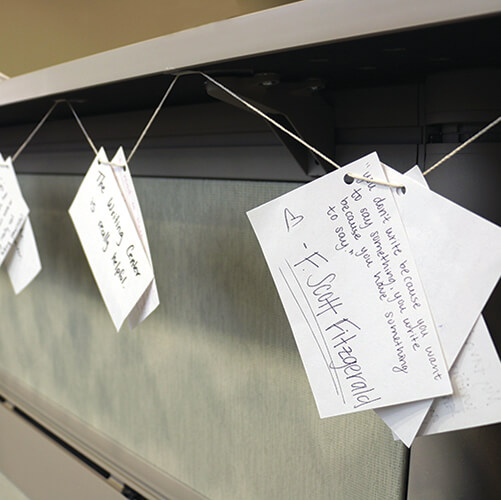 Welcome to Freshman Composition at UAB!
Our first year composition courses are designed to promote your success as a writer both inside and outside of the classroom.
Our small, hands-on classrooms immerse you in processes of writing and provide you with an important set of tools and strategies for writing in academic, professional, and public contexts. You will learn how to analyze a variety of different print and visual texts, explore interesting academic research questions, use sources effectively and ethically, use rhetorical strategies to persuade others, and write in a variety of different genres and mediums.
Rather than a lecture or “drills and skills” class, each of our courses promotes your development as a writer by actively engaging you in writing and revising your work. You will receive consistent feedback on your work from the instructor and your peers that provides important guidance for revision. You will also develop a portfolio of your work throughout the semester that gives you the opportunity to revise your work and reflect upon your progress.
Our Course Goals
The design of each of our courses is informed by scholarly research on writing from composition studies and rhetoric. Our program’s goals or outcomes follow those outlined by the Council of Writing Program Administrators. Please visit their site for more information.
Ultimately, a central goal of our writing program is to treat each student not simply as a student but as a writer. As writing teachers, we want our students, whatever their major or discipline, to see themselves as confident, effective, and adaptable writers.
Questions?
If you questions regarding Freshmen Composition, please contact Lilian Mina, Director of Freshman English, at