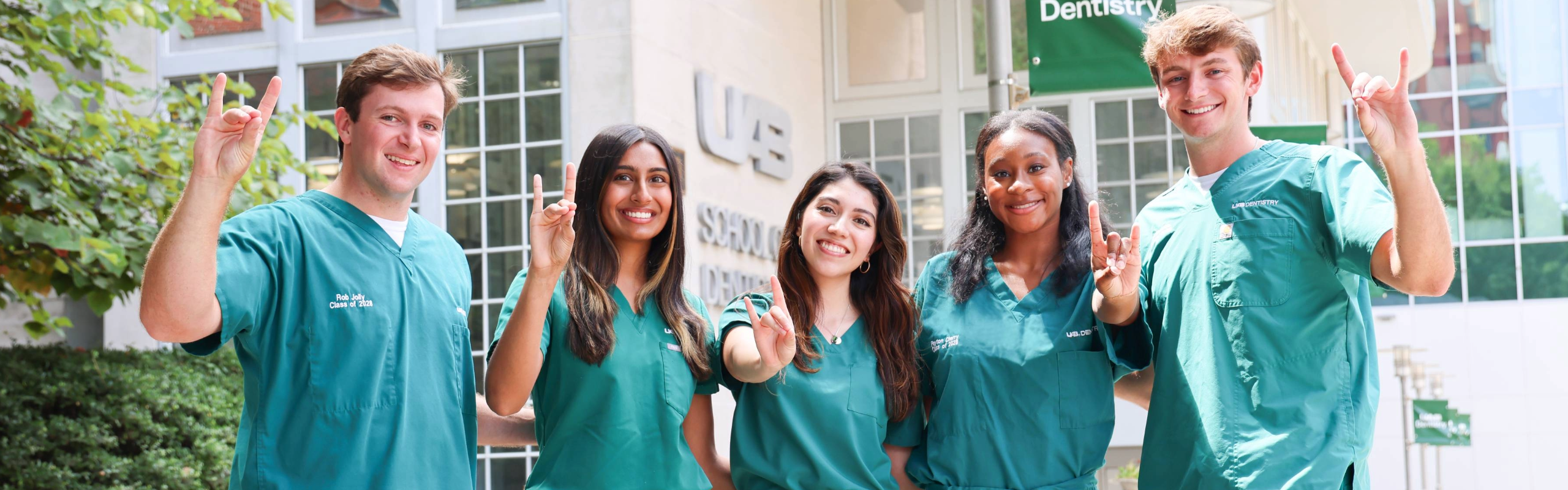
 Part of UAB’s Early Medical, Dental, and Optometry School Acceptance Programs (EMSAP), the Early Dental School Acceptance Program (EDSAP) offers highly qualified students an enriched UAB undergraduate experience in preparation for dental school.
How it works
Once accepted to the program, students spend four years at UAB as an undergraduate and an additional four years in dental school. As undergraduates, they enjoy maximum flexibility to explore the humanities, neurosciences, social sciences, or any other major. Then, after successful completion of program requirements and graduation from an undergraduate program at UAB, EDSAP assures their admission to the UAB School of Dentistry.
Program highlights
It is important that students develop skills beyond the classroom. In addition to more than 250 campus organizations that offer leadership, community service, and cultural immersion activities, program highlights include opportunities for students to become involved in research and patient care, as well as participate in program meetings and activities.
Is this program for you?
To be considered for EDSAP, students must meet the following requirements:
- Minimum high school GPA of 3.5 and a minimum composite ACT score of 30 or SAT score of 1360.
- Four years of English, four years of mathematics, one year of chemistry or physics, and one year of biology in high school.
- U.S. Citizen or Permanent Resident.
- Must attend UAB for undergraduate studies.
Timeline for admissions
To be considered for EDSAP, students must be admitted to UAB as first-time freshmen and have submitted all EDSAP materials, including teacher recommendation letters, by midnight on November 15 of their senior year of high school. To apply for EDSAP, visit UAB EMSAP Application Process.
UAB School Dentistry will review completed applications once the Nov. 15 application deadline closes. Applicants will be notified in December of their status. Students selected for interviews will receive an invitation by email in mid-January.
Questions
For questions about EDSAP, contact
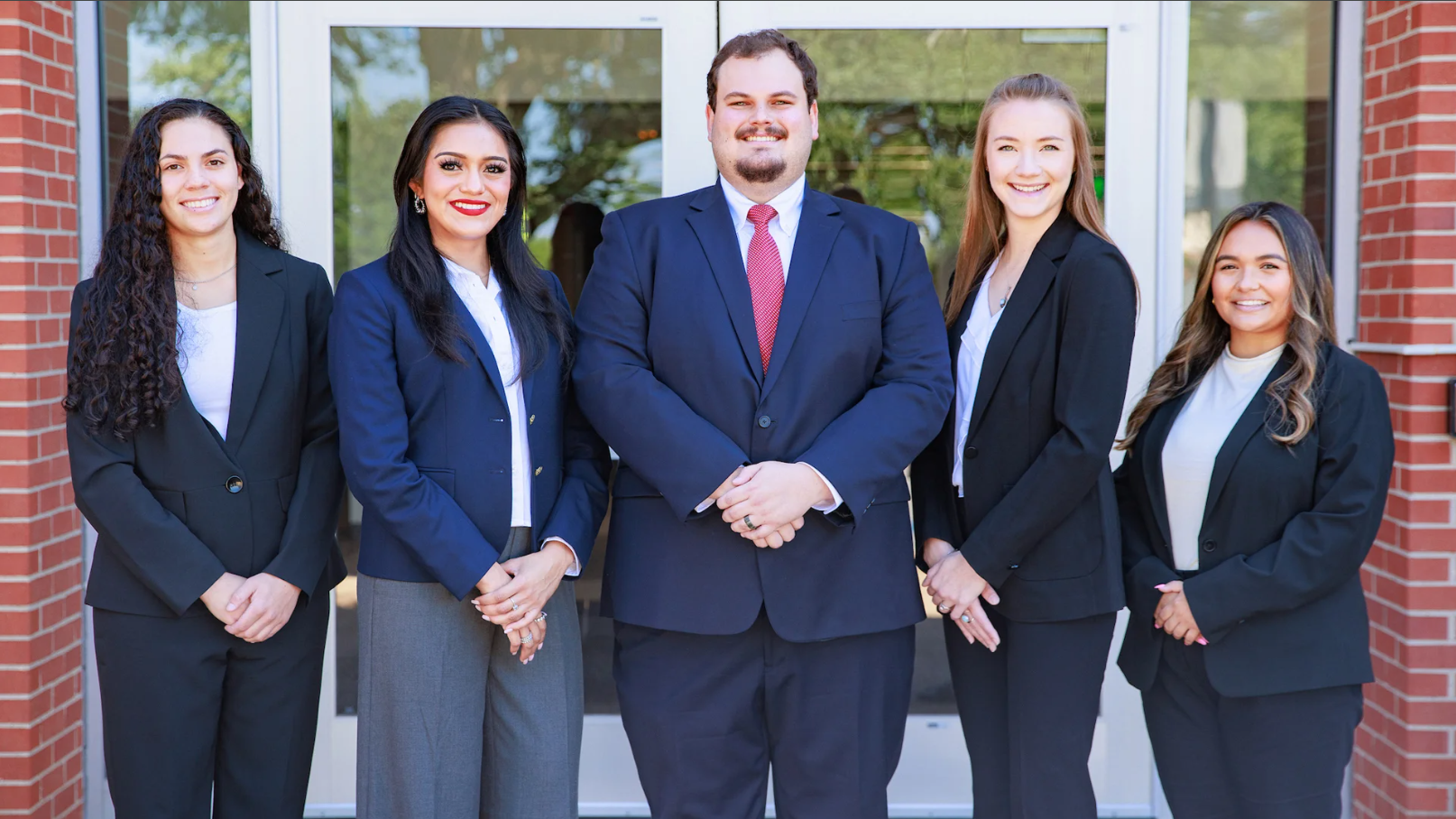 Alabama Rural Dental Scholars program second cohort (2024-2025). Photo credit: The University of AlabamaThis five-year pathway program is operated in conjunction with the UA College of Community Health Sciences (CCHS). The Rural Dental Scholar (RDS) Program is a separate admissions pathway accessed via the ADEA AADSAS application system. Applicants must indicate on their AADSAS application to UAB SOD that they are applying for this program.
The RDS program targets applicants from rural areas in Alabama who intend to practice dentistry in a rural community. To be considered, applicants to the Rural Dental Scholar program should have a minimum 17 DAT, 3.30 overall undergraduate GPA, and 3.0 BCPM GPA. Applicants must meet at least one of the following criteria:
- lived in a rural area for at least eight years
- graduated from a high school located in a rural area.
This program is for Alabama residents only and is appropriate for applicants with rural ties and intentions to practice rural.
The RDS program helps scholars build a strong biomedical science foundation and become educated about issues in rural health. This program begins with a one-year Rural Health Master’s program delivered by UA CCHS in Tuscaloosa, AL. During this year, students engage in biomedical science courses designed to adequately prepare scholars for a rigorous dental school curriculum. Scholars also benefit from study skills/test taking development in addition to a clinical/practitioner mentor component and extensive education about rural healthcare.
Scholars accepted into this program receive a conditional offer to UAB SOD. To matriculate at UAB SOD in July immediately following master’s completion, scholars must earn a minimum 3.5 GPA in the master’s program and fulfill all associated program requirements, including shadowing rotations.
A Time-Honored Tradition. With a Uniquely UAB Twist.
25th Annual White Coat Ceremony - Class of 2027
Date: Friday, August 8, 2025
Time: 4:00p.m.
Location: Alys Robinson Stephens Center (1200 10th Avenue South, Birmingham, Alabama)
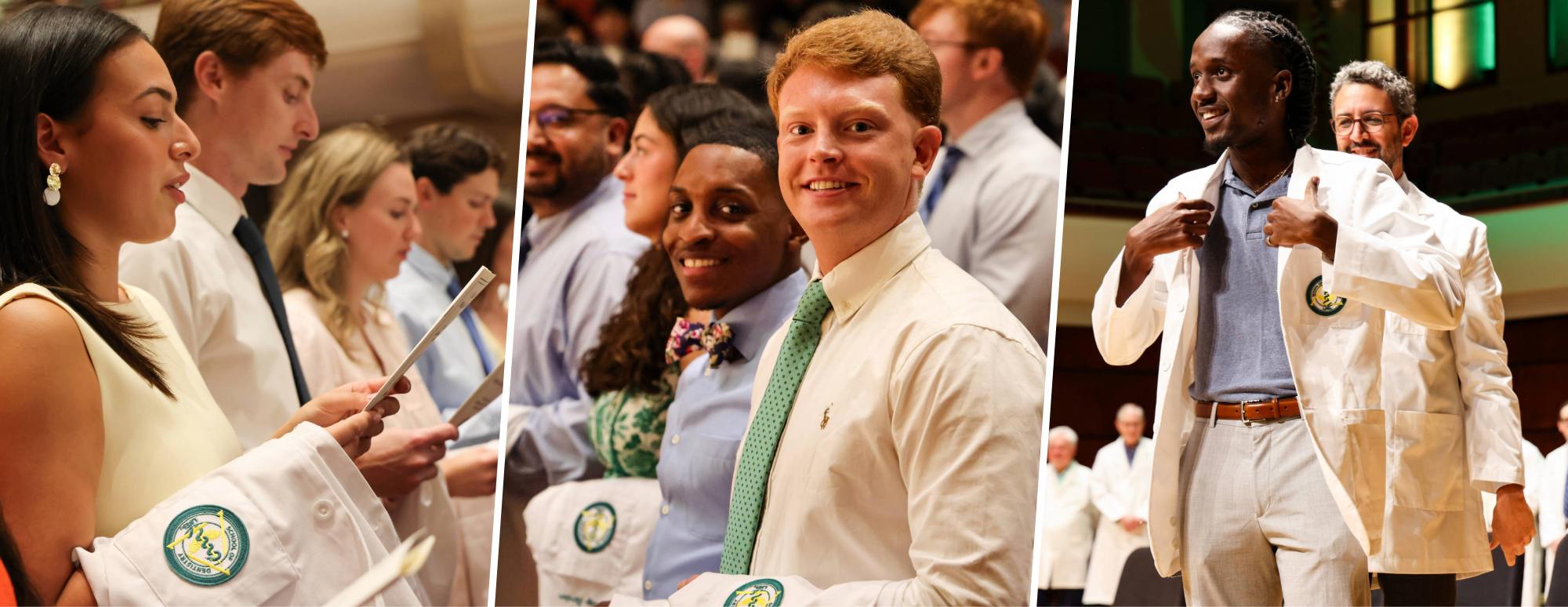
Each August, third-year D.M.D. students mark a major milestone on the path to becoming dentists: receiving their white coats. The White Coat Ceremony celebrates their transition into the clinical phase of training.
Held the same day as Family Day, the ceremony features faculty placing personalized white coats – provided by the UAB School of Dentistry Alumni Association – on each student. Students then make their way through a circle of faculty, stopping for handshakes and well wishes as family and friends cheer and applaud.
A uniquely UAB twist – or two – makes the occasion especially memorable. The program includes a reading of the school’s version of The Dentist’s Pledge. Students then sign the pledge and receive a lapel pin from the Alumni Association. An alumni representative also offers brief remarks.
As the event concludes, faculty line the exit, cheering and applauding as students make their way into the lobby. This distinctive UAB tradition adds a personal, celebratory touch that highlights the strong community between students and faculty.
A Moment to Remember. The UAB Way.

74th Annual Commencement Ceremony
Date: Saturday, May 30, 2026
Time: 12:00 noon
Ticketed event by invitation only.
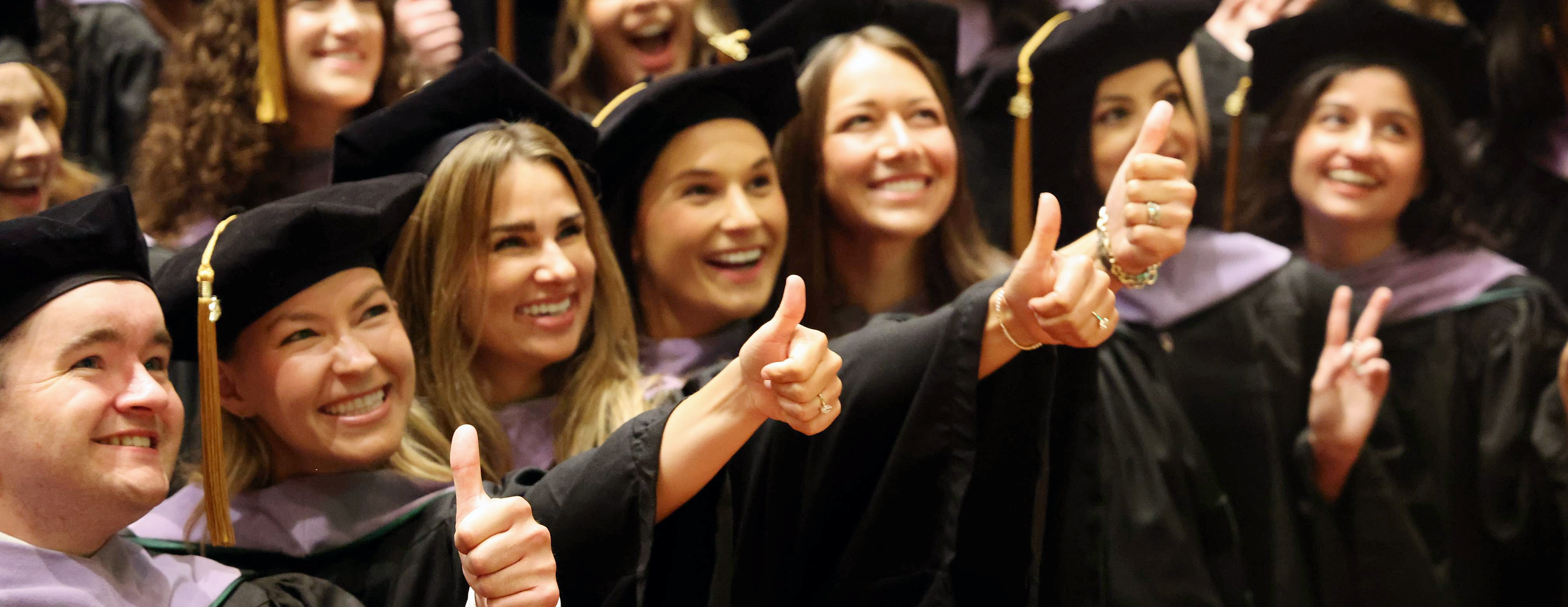
Commencement at the UAB School of Dentistry marks the culmination of four years of study, clinical training, and personal growth. Held each spring, the ceremony marks the official transition from student to dental professional, blending academic tradition with modern touches and a celebratory spirit that reflects the UAB experience.
With family and friends cheering them on, graduates are hooded by faculty, receive diplomas, and hear remarks from the dean and leaders in organized dentistry. In recent years, a military commissioning has honored those entering the armed forces – a tradition that sets UAB apart.
The ceremony concludes with a special rendition of The Dentist’s Pledge, followed by a walk through a line of applauding faculty – a powerful new tradition unique to UAB that symbolizes the support and mentorship that shaped their journey.
From the first day in the lab to the final walk across the stage, commencement captures the spirit of UAB: rigorous, rewarding, and rooted in a commitment to improving oral health, one patient at a time.
 The Blaze to D.M.D. program offers conditional acceptance for selected students enrolled in the UAB Master’s in Biomedical & Health Sciences Program (MSBHS) who commit to pursuing a D.M.D. degree at UAB.
This partnership between the School of Health Professions and the School of Dentistry (SOD) allows students to experience an organ-based, integrated curriculum modeled after the first two years of dental school. Students interact with and learn from faculty who teach in professional programs at UAB and will earn a Master of Science in Biomedical Health Sciences.
Application Process
There is no direct application to the Blaze to D.M.D. program. Candidates for the Blaze to D.M.D. program are identified during the regular UAB SOD admissions cycle via the American Association of Dental Schools Application Service (AADSAS). Preference is given to Alabama residents. Students who successfully complete all elements of the master’s program will be accepted to the School of Dentistry for the following academic year.
During the application screening, interview, and committee review processes, members of the UAB SOD Admissions Committee will identify suitable applicants and coordinate with MSBHS personnel regarding candidate selection. Students selected for the Blaze to D.M.D. program will be required to complete the UAB graduate school application process.
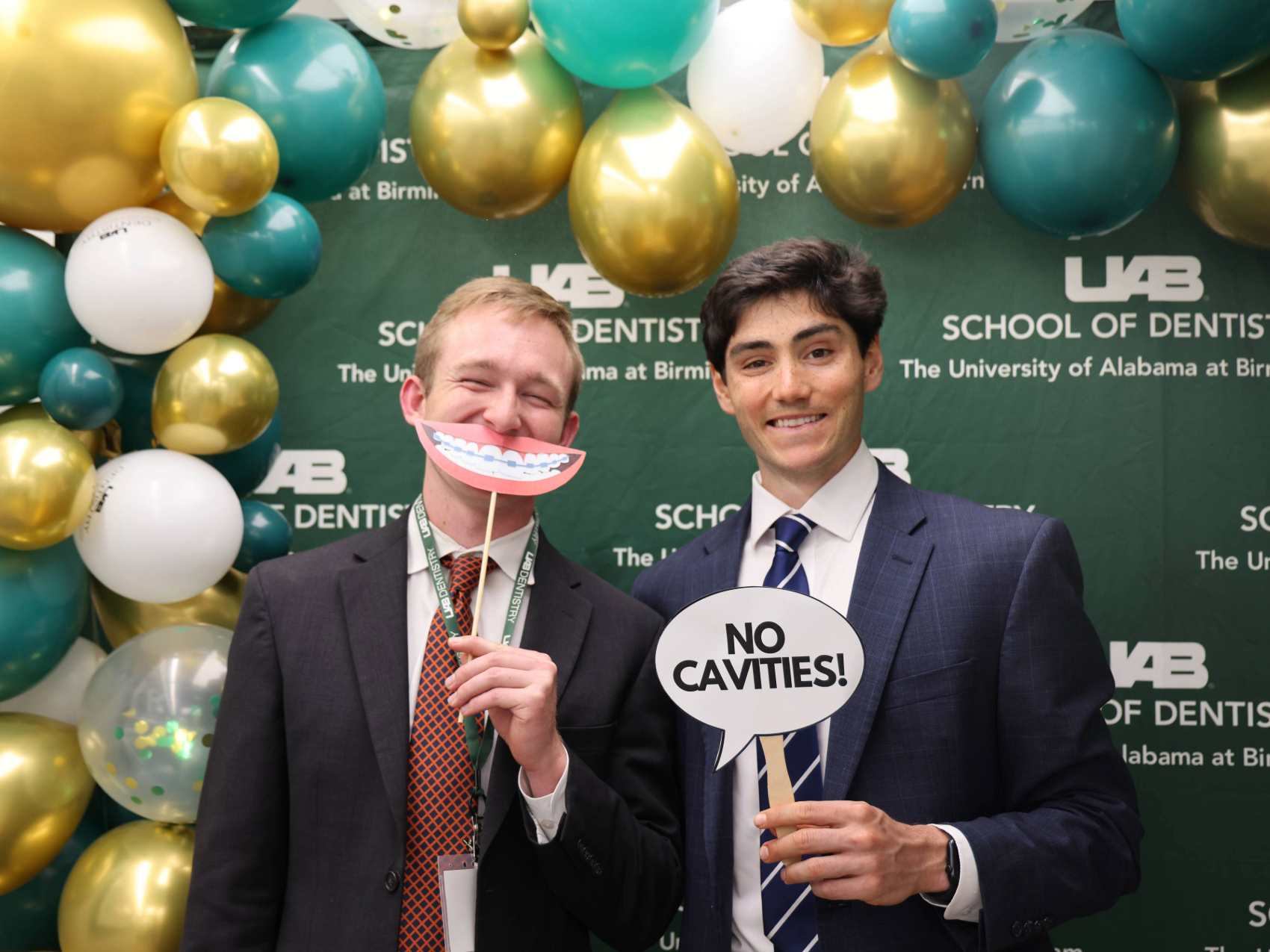


Welcome Day for the Class of 2030 will be held on campus on Friday, April 17, 2026. This day for incoming first-year (D1) students is an opportunity for them to meet their classmates, engage with UAB School of Dentistry faculty and staff, and review important orientation information. They will also have the opportunity to be sized for their new UAB green scrubs and sit for their composite photos!
Class of 2030
Campus Visits
If you have been accepted and wish to schedule an on-site visit, please contact us by email at
Academic Calendar
Please view our 2025-2026 Academic Calendar by clicking the link below.
Payments
Been accepted and looking to make a payment? Entering D1 students may make their payments here:
In the heart of UAB’s academic medical center sits one of the nation’s premier schools of dentistry. With a world-class faculty and state-of-the-art facilities and technology, the UAB School of Dentistry is consistently among the top ranked in research funding. Students and residents work within a collaborative health care setting and have a variety of opportunities to engage with the practice community throughout their academic pursuits.
Find My Programs

D.M.D. Program
Our predoctoral (DMD) dental education program provides robust clinical experiences and exposure to oral health research to help you prepare for a career as a general dentist or use as a foundation for other career options within oral health.
Our predoctoral dental education program is accredited by the Commission on Dental Accreditation.

M.S. Degree in Dentistry
If you’re interested in academic dentistry, then we have options for you! If you hold a B.S., a B.A. with a science major, or a D.M.D., D.D.S, or B.D.S. degree, you'll have the opportunity to earn an M.S. in Dentistry with a focus on Dental Biomaterials or Oral Biology. Those with a D.M.D., D.D.S, or B.D.S. degree who have been accepted to a postdoctoral residency program in Orthodontics, Pediatric Dentistry, Endodontics, Periodontology, or Prosthodontics can apply in order to pursue an M.S.

D.M.D./Ph.D. Program
Are you interested in the academic side of dentistry? Check out our innovative, integrated clinician-scientist program.

D.M.D./M.B.A. Program
When you own a practice, you’re both a dentist and an entrepreneur. Get a jump start on setting up your own dental practice with an extra foundation in business.

International Dentist Program (IDP)
Our IDP program offers non-US trained dentists the opportunity to earn a DMD degree through this 2.5 year program.
Rural Dental Scholar Program
The Rural Dental Scholar Program helps scholars build a strong biomedical science foundation and become educated about issues in rural health. This program begins with a one-year Rural Health Master’s program delivered by UA CCHS in Tuscaloosa, AL. During this year, students engage in biomedical science courses designed to adequately prepare scholars for a rigorous dental school curriculum.
Early Dental School Acceptance Program
Part of UAB’s Early Medical, Dental, and Optometry School Acceptance Programs (EMSAP), the Early Dental School Acceptance Program (EDSAP) offers highly qualified students an enriched UAB undergraduate experience in preparation for dental school.
Blaze to D.M.D. Program
The Blaze to DMD Program is an 11-month pathway designed for students who have the potential to succeed in dentistry and need more academic preparation in basic sciences before entering predoctoral dental education.
Pathway Programs
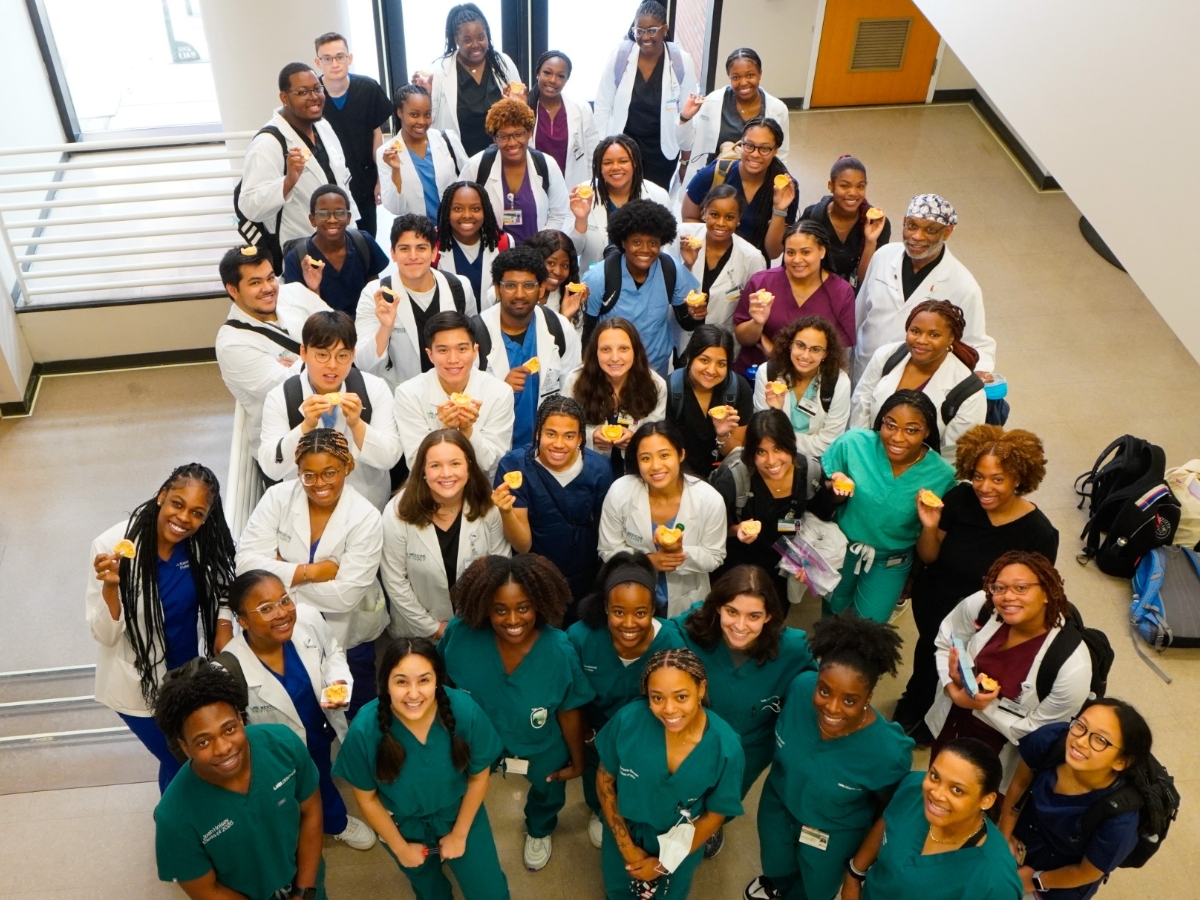
Pathway programs provide coursework and educational experiences to students belonging to communities underrepresented in the health professions. These programs can help provide an avenue from undergraduate to predoctoral dental education.

Endodontics
Endodontists help patients retain their natural teeth through procedures such as root canals, root surgery, and the management of traumatic tooth injuries.
Our advanced dental education program in endodontics is accredited by the Commission on Dental Accreditation.

Oral & Maxillofacial Surgery
Oral & Maxillofacial Surgeons diagnose and surgically treat a wide range of diseases and conditions, including cleft lip and palate; facial injuries; and head, neck and oral cancers, among other conditions.
Our advanced dental education program in oral & maxillofacial surgery is accredited by the Commission on Dental Accreditation.

Orthodontics
Orthodontics extends beyond straightening children’s teeth with braces. Orthodontists utilize fixed and removable dental devices to correct teeth and jaw irregularities in people of any age.
Our advanced dental education program in orthodontics is accredited by the Commission on Dental Accreditation.

Periodontics
Periodontists treat the gums and other tissue and underlying bones that support the teeth. They also place and repair dental implants.
Our advanced dental education program in periodontics is accredited by the Commission on Dental Accreditation.

Pediatric Dentistry
Pediatric dentists have the opportunity not only to treat children for a range of conditions and diseases related to oral health, from cavities to dental caries, but also to educate patients and their parents about why dental care is so important.
Our advanced dental education program in pediatric dentistry is accredited by the Commission on Dental Accreditation.

Prosthodontics
Prosthodontists replace missing teeth with fixed or removable appliances, such as dentures, bridges and dental implants. A prosthodontist can also specialize in temporomandibular disorders, among other areas.
Our advanced dental education program in prosthodontics is accredited by the Commission on Dental Accreditation.

Maxillofacial Prosthetics
A subspecialty of Prosthodontics, Maxillofacial Prosthetics focuses on patients with defects or disabilities that were present when born or developed due to disease or trauma. Maxillofacial Prosthodontists, often working cooperatively with other related specialties, develop prostheses that can replace missing areas of bone or tissue and restore oral functions such as swallowing, speech, and chewing.
Our advanced dental education program in maxillofacial prosthetics is accredited by the Commission on Dental Accreditation.

General Practice Residency (GPR)
The General Practice Residency (GPR) program can help you sharpen your skills and knowledge in dentistry and expand your career options and scope of practice. GPR residents functions as part of an interdisciplinary health care team that provides life-altering treatment for medically compromised patients in a hospital setting.
Our advanced dental education program in GPR are accredited by the Commission on Dental Accreditation.
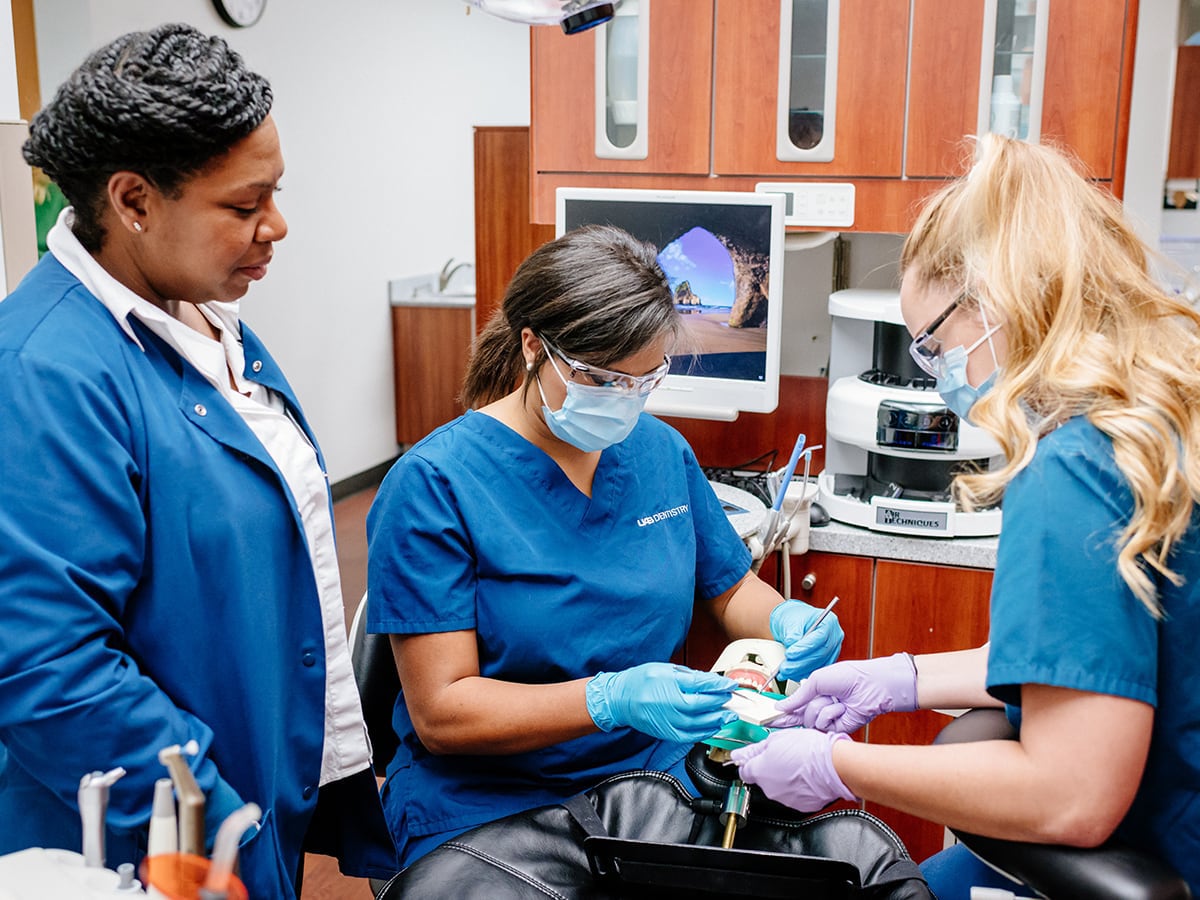
Dental Assisting
Are you a people person? Interested in a career in healthcare? Want to help people smile? If your answer is yes, a career in dental assisting might be right for you. Our yearlong program offers a broad range of clinical experiences and helps position graduates to serve as part of an oral health team.
Accredited by the American Dental Association (ADA) Commission on Dental Accreditation (CODA), our progressive four-year curriculum is designed to prepare students to practice the science and art of dentistry while introducing the various aspects of specialty care.
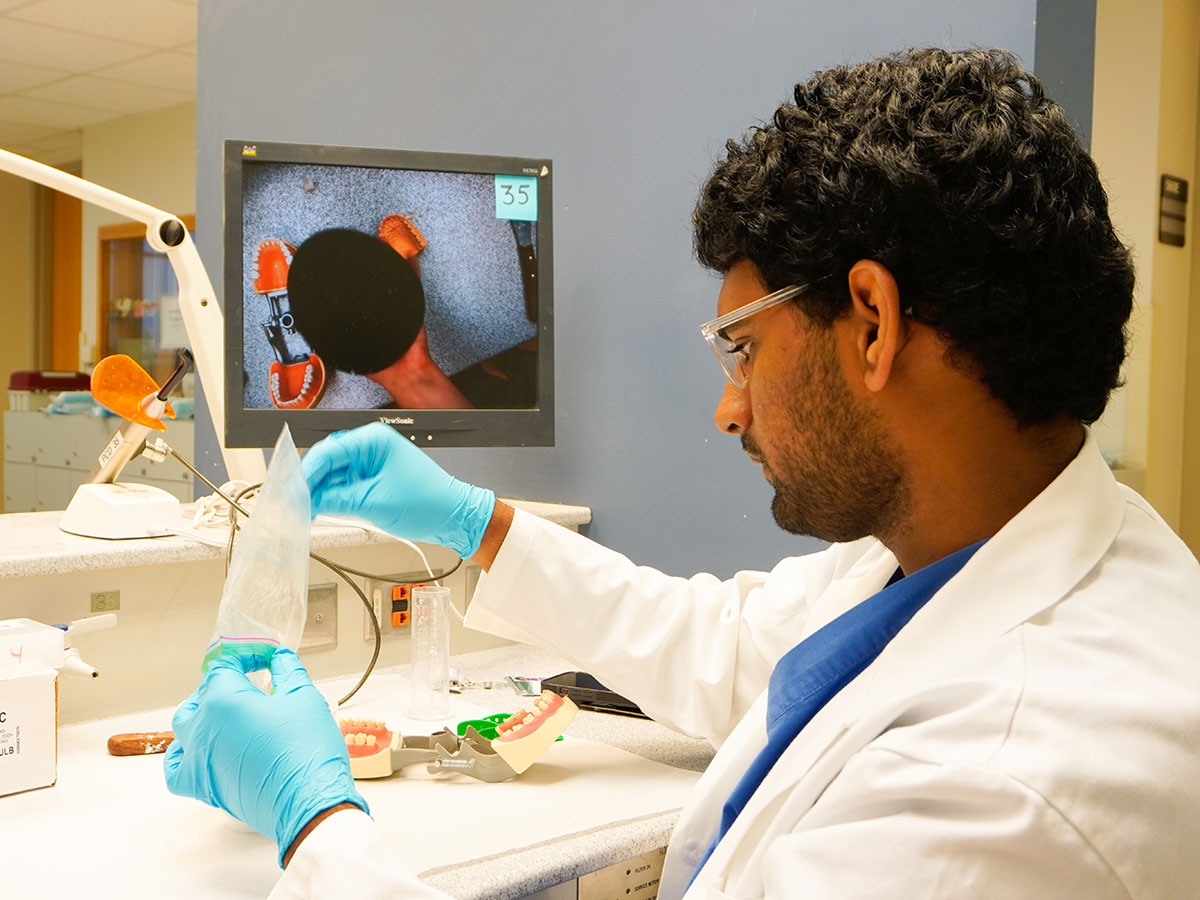
The early curriculum focuses on preparing the student for the supervised delivery of dental care through our holistic approach of integrating the behavioral, biomedical, and clinical sciences. We believe that early clinical activities are essential for student development. As such, our students participate in clinical activities beginning with their first term. In addition, our biomedical science education is among the top in the nation. It is organized by organ system to better help students make the vital connection between biomedical science knowledge and clinical practice. Major time is devoted to the biomedical sciences with emphasis on integrating this knowledge into clinical care as well as the preclinical dentistry laboratory where students master the hands-on component of dental care.
As students progress, our curriculum focuses on preparation for the independent practice of dentistry through robust clinical experiences. Dental care is based on a comprehensive care model. This means that each student is responsible for treating the total needs of the patient, typically involving several disciplines. Emphasis is placed on appropriate treatment planning, noninvasive interventions where possible, and compassionate, person-centered care. We take pride in the quality of clinical work our dental students produce. By having all major dental specialties within the school and through our diverse and abundant patient population, our students are afforded a tremendous quality and variety of clinical experiences.
Our curriculum is continuously reviewed and courses and content change yearly to keep abreast of the ever-evolving field of dentistry. Major themes are woven throughout our four-year curriculum including principles of communication, ethics, evidence-based practice, special patient care, core dental delivery skills, and others. A synopsis of the curricular themes for each term can be found in our current course catalog found in our DMD Program Resources.
In addition to the D.M.D. degree, we offer several joint degree opportunities including our D.M.D./Ph.D. and D.M.D./M.B.A. programs.
-
Interested in Research?
Are you interested in the academic side of dentistry? In about seven years, our innovative, integrated clinician-scientist training D.M.D./Ph.D. program will provide the academic coursework and opportunity for skills building needed for a career in academia and dentistry.
-
Interested in the Business Side of Dentistry?
UAB's dual degree in dentistry and business administration provides additional business coursework and experiential opportunities for students who plan to pursue careers with both clinical and administrative responsibilities, perhaps opening their own practices.
-
Are You a Foreign-Trained Dentist?
The International Dental Program (IDP) offers non-US trained dentists the opportunity to earn a D.M.D. degree from the University of Alabama at Birmingham School of Dentistry. Following an intensive 6-month preparatory term, qualified students merge with traditional students to complete the final two years of the D.M.D. curriculum.
-
Interested in practicing in a rural community? There are plenty of pros.
Small town life has many unique advantages. The local dentist is viewed as a pillar of the community, benefitting from stronger connections. They face less practice saturation and less competition, while incurring relatively low overhead costs. And they can develop a broad range of clinical skills by engaging in a wide variety of procedures. Small town dentists make a huge difference by being a big fish in a small pond.
Request More Information