UAB Magazine Online Features
Renaissance Dean
Rodney Nowakowski Adds Optometry Dean to a Long and Colorful Resume
By Grant Martin
 Rodney Nowakowski is
the first alumnus of the
UAB School of Optometry to
serve as the school's dean. Current and future students of the UAB School of Optometry are likely to know Rodney Nowakowski, O.D., Ph.D., as their dean, since Nowakowski was named the school’s fifth dean in early 2011.
To others, Nowakowski may always be remembered as a teacher, considering his more than 35 years as a UABSO faculty member. But throughout those same years, there are also those who knew Nowakowski primarily as their optometrist, a student, a geneticist, a musician, or an airplane pilot. And when Nowakowski casually mentions his earlier stints as a lifeguard, a soldier, and an instructor of ballroom dancing, one may legitimately wonder if there ever has been a dean with a resumé quite so colorful.
“I’m the archetypical jack of all trades, master of none,” Nowakowski jokes. “I just have a passion for learning new things.” That passion may have been evident earlier in Nowakowski’s life, but there was a brief period when he was a college dropout working as a lifeguard on South Florida beaches with precious little on his resume that would suggest he could one day be dean of the most prestigious optometry school in the world.
Shattering the Stone Belt
Innovative Ideas on Preventing and Treating Kidney Stones
By Matt Windsor
 Kidney stones form when calcium, oxalate, and other substances build up in the urine. When stones exceed five millimeters in size, they can get stuck between the kidneys and bladder, bringing intense pain. The Southern diet and climate help explain why the Southeast is the "Stone Belt of America," says UAB researcher Dean Assimos. The pain has been described as a knife in the back, a body blow, and “the closest thing a man will come to experiencing childbirth.” Whatever the analogy, kidney stones are enormously painful. They often leave victims writhing on the ground.
“They can be excruciating,” says Dean Assimos, M.D., the new chair of the UAB Department of Urology. He speaks from personal experience, having survived two stones himself. And if you live in the South, you’re more likely to know just what he’s talking about.
“The Southeast is the Stone Belt of America,” says Assimos, an internationally renowned expert who specializes in the removal of large stones and preventive measures to avert stone formation. His research group is currently investigating the preventive powers of fish oil supplements and a common gut bacterium. The investigators are also trying to unravel the reasons why stones develop in the first place.
Diet, the hot climate, and genetic factors may be the driving forces behind the high levels of stone formation in the South, Assimos explains. (See "Preventing Stones.") “However, the prevalence of kidney stone formation is also increasing across the country,” he says.
The number of Americans with kidney stones has almost doubled since 1994, according to a study presented at the American Urological Association meeting in May 2012. Researchers speculate that rising obesity rates are a key factor. Whatever the cause, more cases of kidney stones create a burden on the medical system, Assimos says, because treating them usually results in significant health-care expenditures.
Turning Data into Discoveries
Health Informatics Advances Research and Health Care
By Tara Hulen
 The combination of electronic health records and other digital advances in medicine will improve patient care, speed research, and create thousands of new jobs, say UAB experts. What if a cure for cancer already exists, but it is buried on a hard drive in a research lab?
Every year, drug companies test untold thousands of new compounds, clinicians turn up intriguing clues from patient tests, and investigators reveal novel targets to attack disease. “But that data needs to be analyzed, and the quantity of it is overwhelming,” says Jonas Almeida, Ph.D., director of UAB’s new Division of Informatics. The division was formed in 2011 to develop new methods to extract meaning from research findings—and give clinicians access to new tools for care.
In July 2012, the UAB team launched a first-of-its-kind medical app known as ImageJS. The program runs in an ordinary Internet browser, which means that it can be used anywhere and won’t be blocked by hospital security software. "We created a new kind of computational tool that promises to make patient data more useful where it's collected,” Almeida says. (Learn more about ImageJS in this story from UAB News and download a copy in the Google Chrome Web Store.)
In its first iteration, ImageJS allows pathologists to drag laboratory slides into the browser to get a quick analysis of cancer cell growth. New modules are already in the works that let the software tackle other tasks, and Almeida says he hopes clinicians will adapt the code to expand its capabilities still further. The lessons learned developing this app have since inspired an ongoing initiative in the Division of Informatics for data mining of the Cancer Genome Atlas, he adds. This NIH public repository of patient and tumor data has generated over 300,000 data files, a number that doubles approximately every seven months.
Preventing Depression?
UAB Researchers Say Diet Plays a Key Role
By Matt Windsor
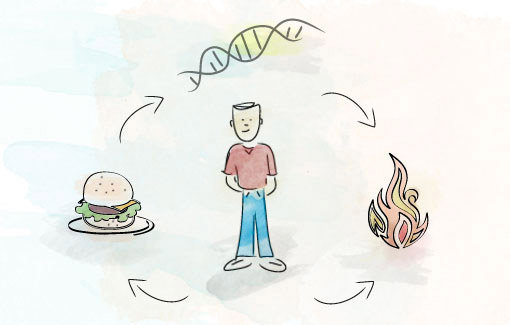 Depression is linked with diet (especially consumption of omega-6 fatty acids, such as those found in the typical Western diet) and inflammation, as well as genetics. UAB researchers are investigating dietary interventions as a way to prevent depression in at-risk children.
Investigators at UAB are pursuing several exciting new ways to treat depression by targeting the neurotransmitter glutamate. (See more in part 1 of this story here.) But there is a limit to what medicines can do, cautions Richard Shelton, M.D., professor and vice chair of research in the UAB Department of Psychiatry and director of UAB’s new Mood Disorders Program. “I don’t think we can just ‘drug all our problems away,’” he says. “Another very exciting element in our research program is a search for preventive treatments.”
Obesity and Depression
Food is a major factor. “Diet-associated obesity is a key risk factor for becoming depressed,” Shelton says, “but not for the reason that most people assume. Interestingly, it does not appear to be related to how people feel about how they look. Even in cultures where extra weight is not a big deal, obesity is still associated with depression.”
In fact, obesity itself may not be the prime factor. “It seems that it’s not as much about the weight you gain as what you eat,” Shelton says. “Abdominal obesity is certainly associated with a higher risk of depression, but the balance of fatty acids in the diet seems to be even more important.” Countries that have a very high content of omega 3-rich fish in their diets have very low rates of depression, Shelton explains. In countries where people eat a lot of omega-6 fatty acids in red meat and fried foods, like the United States, depression is much more prevalent.
