The university logo may appear in three applications:
Core Logo
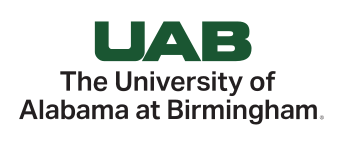
The core university logo includes the monogram paired with “The University of Alabama at Birmingham” wordmark. This is the preferred logo to represent the university.
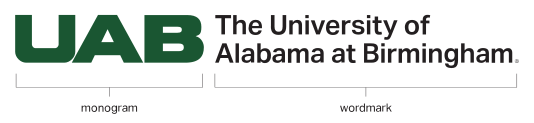
Core University Separated
A secondary option is to prominently display the monogram and include the university wordmark in a different location (within the same design).
Monogram
The monogram may stand alone when space is limited or for special use cases in merchandise and marketing.
Usage Guidelines
The core university logo may only appear in standard, centered, or horizontal layouts in full-color, UAB green, black, or white. See Color Adjustments section below for additional details.
Note: gray box represents a white logo on a dark-colored background.

Full Color (preferred)

Black

Green

White
Full Color (preferred)

Black
Green

White

Full Color (preferred)

Black

Green

White
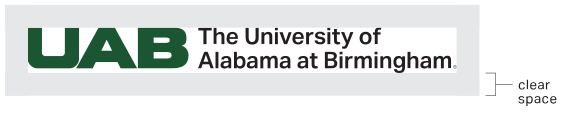
The logo must be surrounded by clear space that is at least one half the height of the UAB monogram.
The logo must never be reduced below 90 pixels wide.
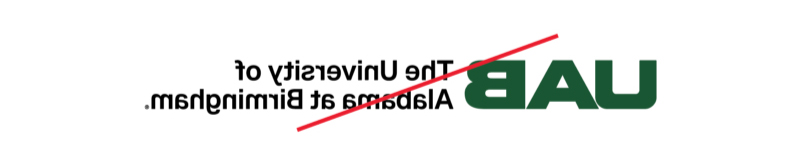
The logo may only appear in full color (green monogram with black wordmark), all black, all white, or all UAB green. Alternative colors are not permitted.




Monogram
The monogram may only appear in UAB green, black, white, or metallic gold (such as metallic ink or foil stamp). Alternative colors are not permitted.
Note: gray box represents a white logo on a dark-colored background.


Usage Guidelines
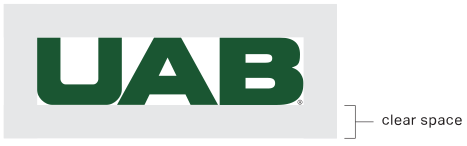
The monogram must be surrounded by clear space that is at least one half the height of the mark itself when used smaller than 3.5”. When monogram is used larger than 3.5”, clear space can be reduced to one third the height of the monogram.
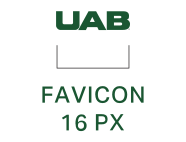
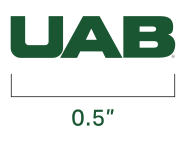
The monogram may be reduced to favicon size (16px by 16px). In print, digital, and other use cases, the size must not be reduced below half an inch.
The monogram may never be stretched, rotated, curved, flipped, filled with imagery, edited with visual effects, or otherwise altered in any way other than as presented in this guide.
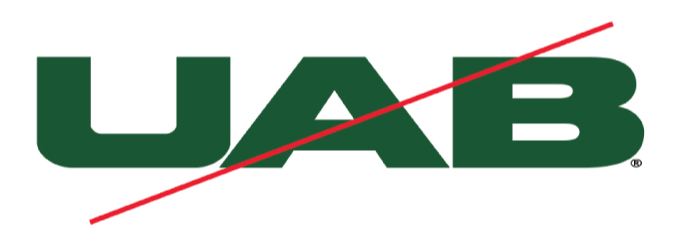
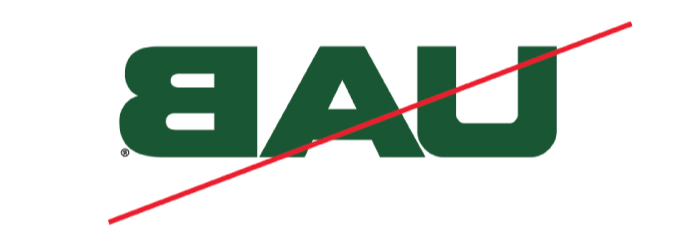
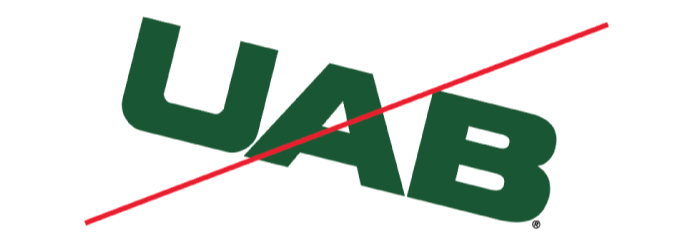
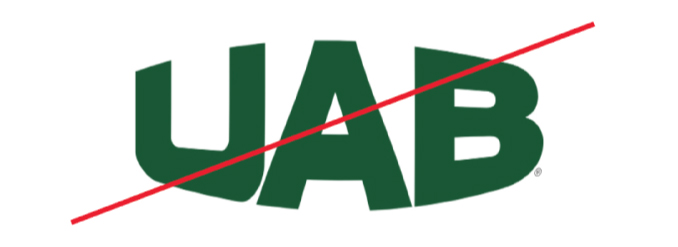
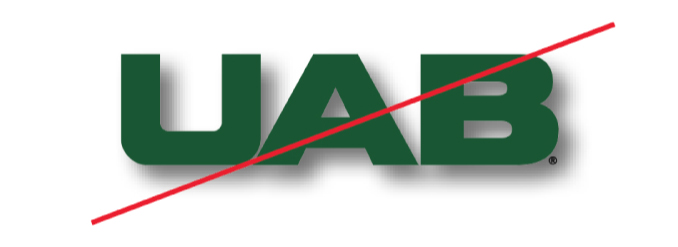
Wordmark
For imprint spaces that cannot accommodate the core university logo or UAB monogram, the wordmark may be displayed as an alternative way to brand using simple typography of our university name in standard, centered, or horizontal formats. The wordmark may only appear in standard, centered, or horizontal layouts in UAB green, black, or white. For branding applications, download the wordmark (image file) that includes the registration mark ® instead of typing the university name in various fonts.
Note: gray box represents a white logo on a dark-colored background.
Usage Guidelines









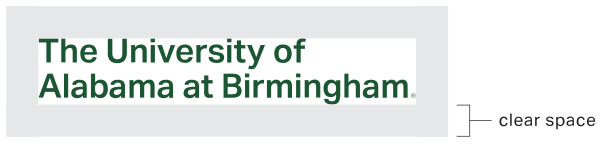
The wordmark must be surrounded by clear space that is at least one half the height of the mark itself.
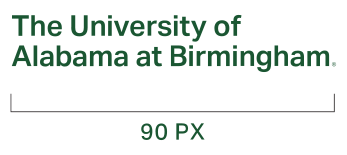
The wordmark must never be reduced below 90 pixels wide.
The wordmark may only appear in UAB green, black, or white. Alternative colors are not permitted.
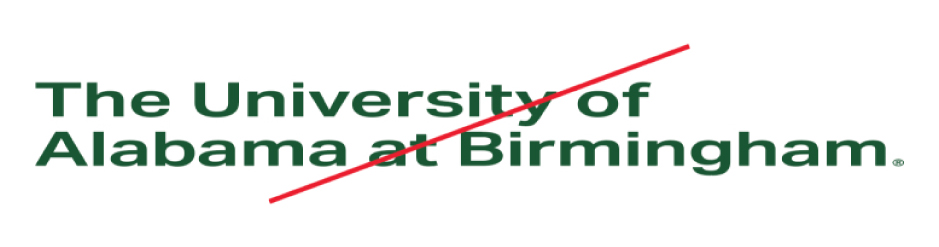
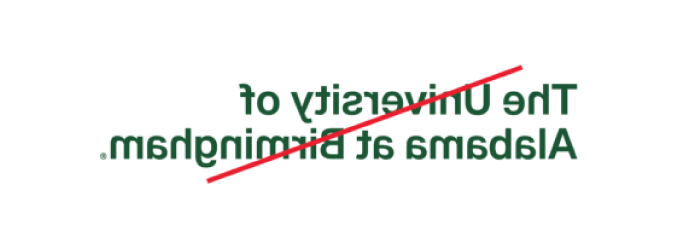
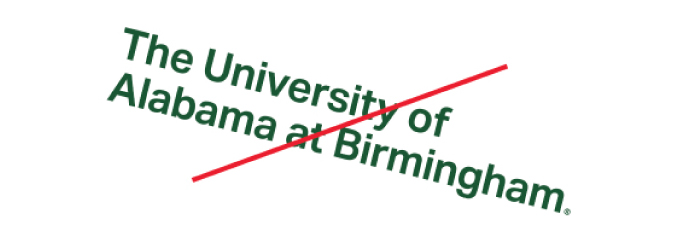
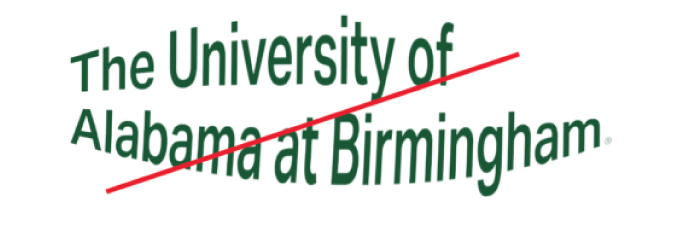
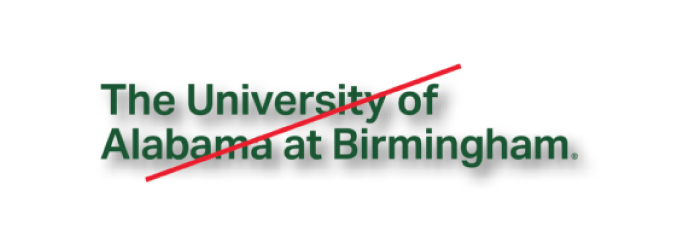
The wordmark may never be stretched, rotated, curved, flipped, filled with imagery, edited with visual effects, or otherwise altered in any way other than as presented in this guide.
-
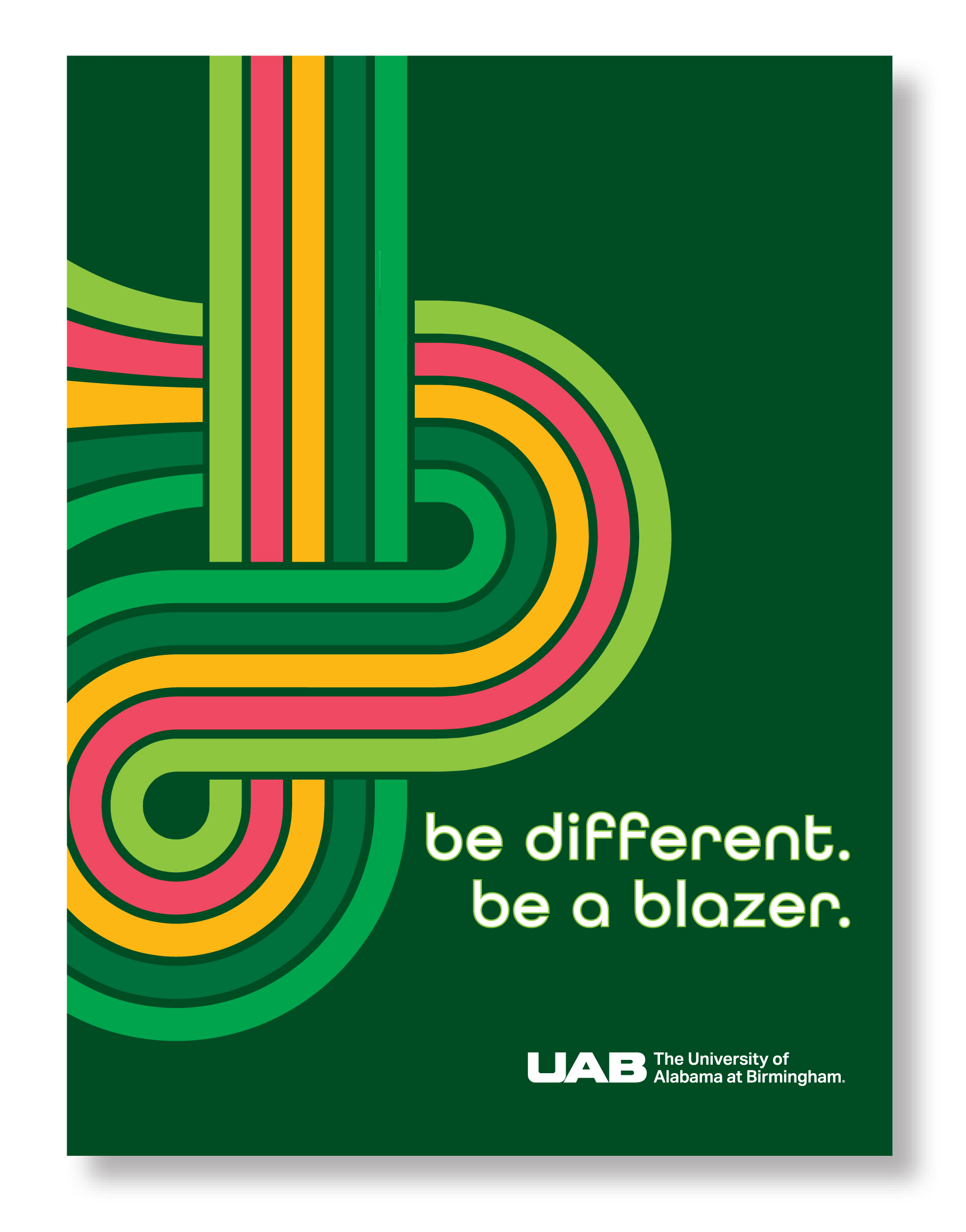
Display the core university logo
-
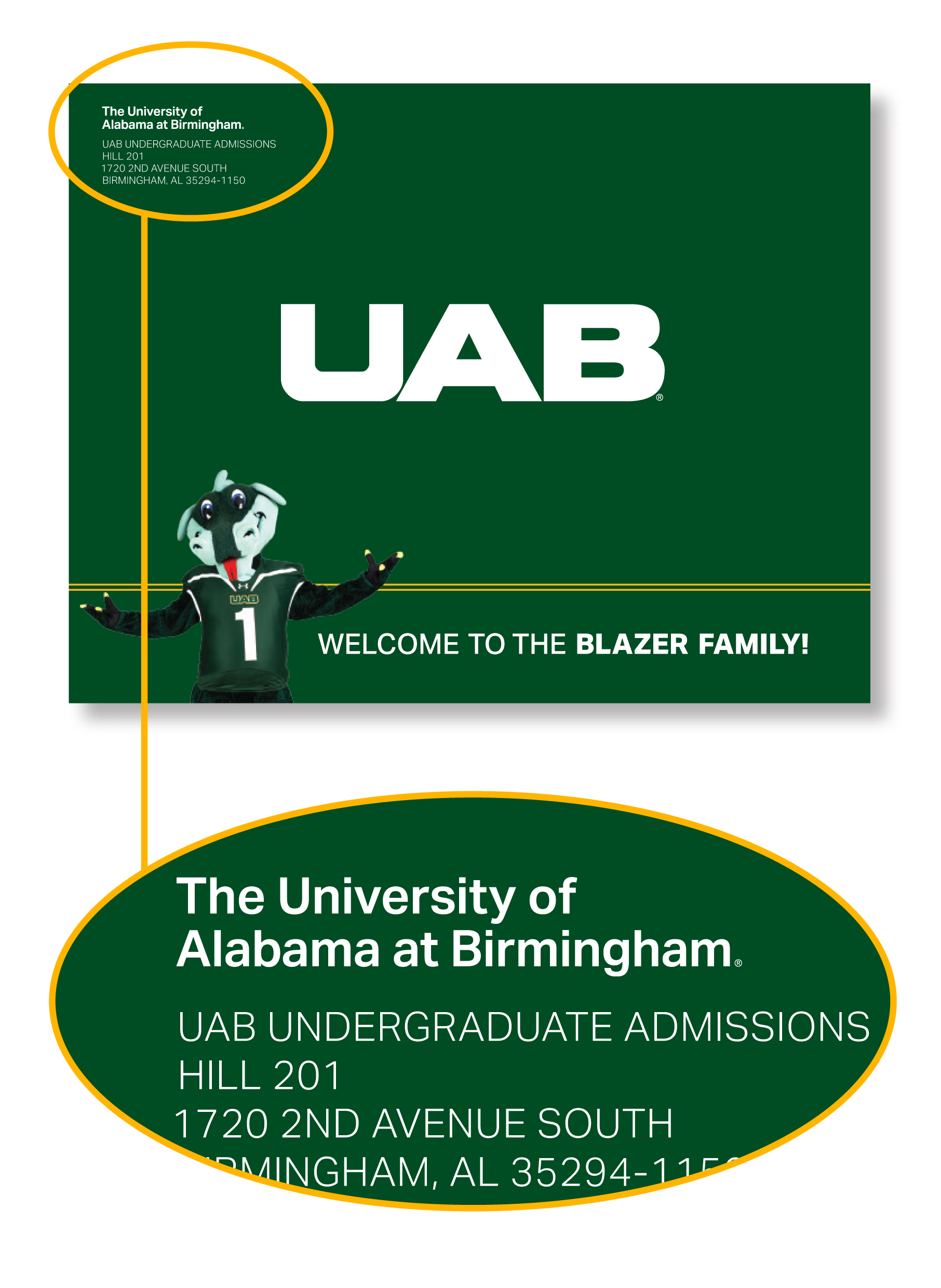
Display the core university separated logo with the monogram in one space (e.g. front or top) and the wordmark in another space (e.g. bottom or back)
-
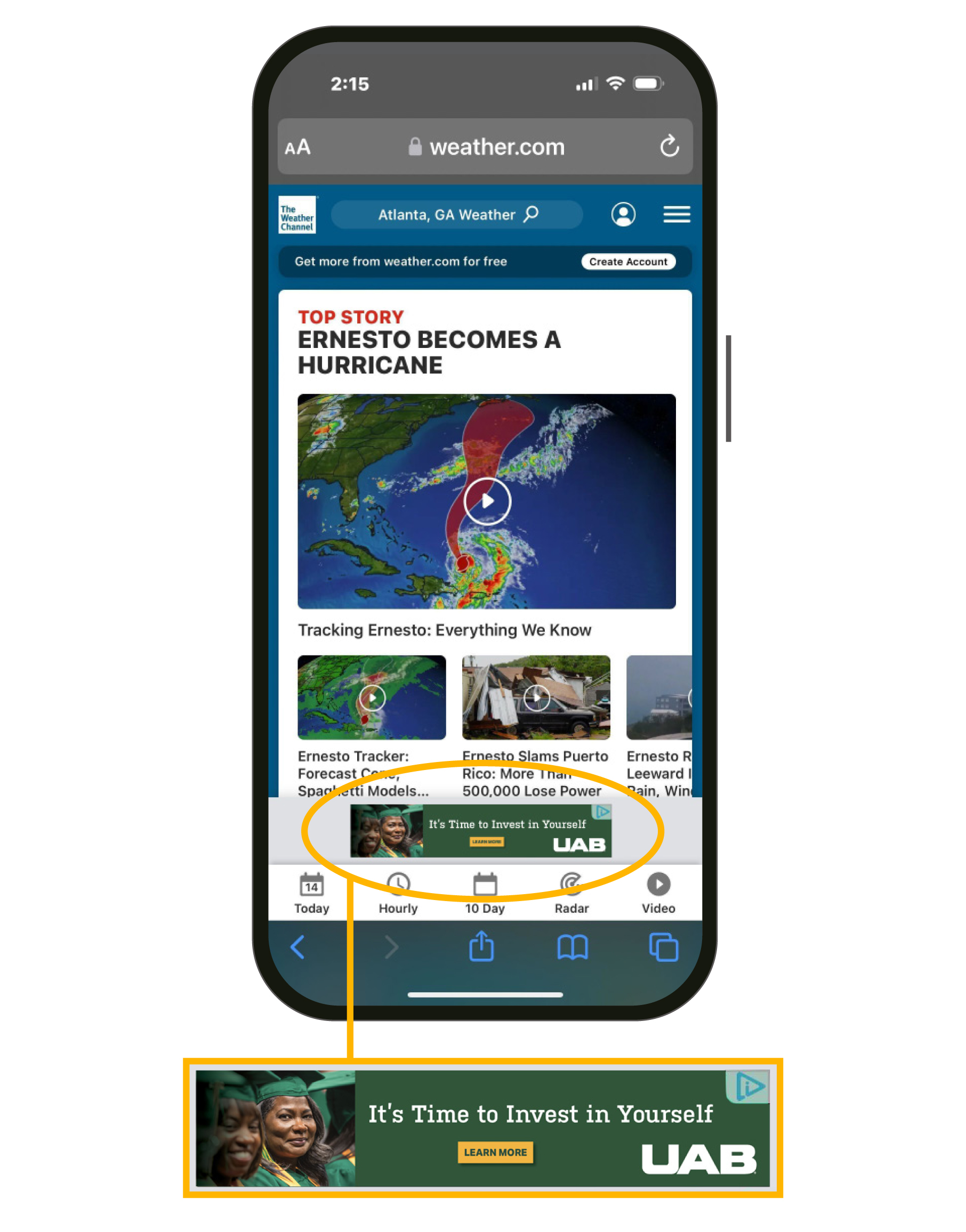
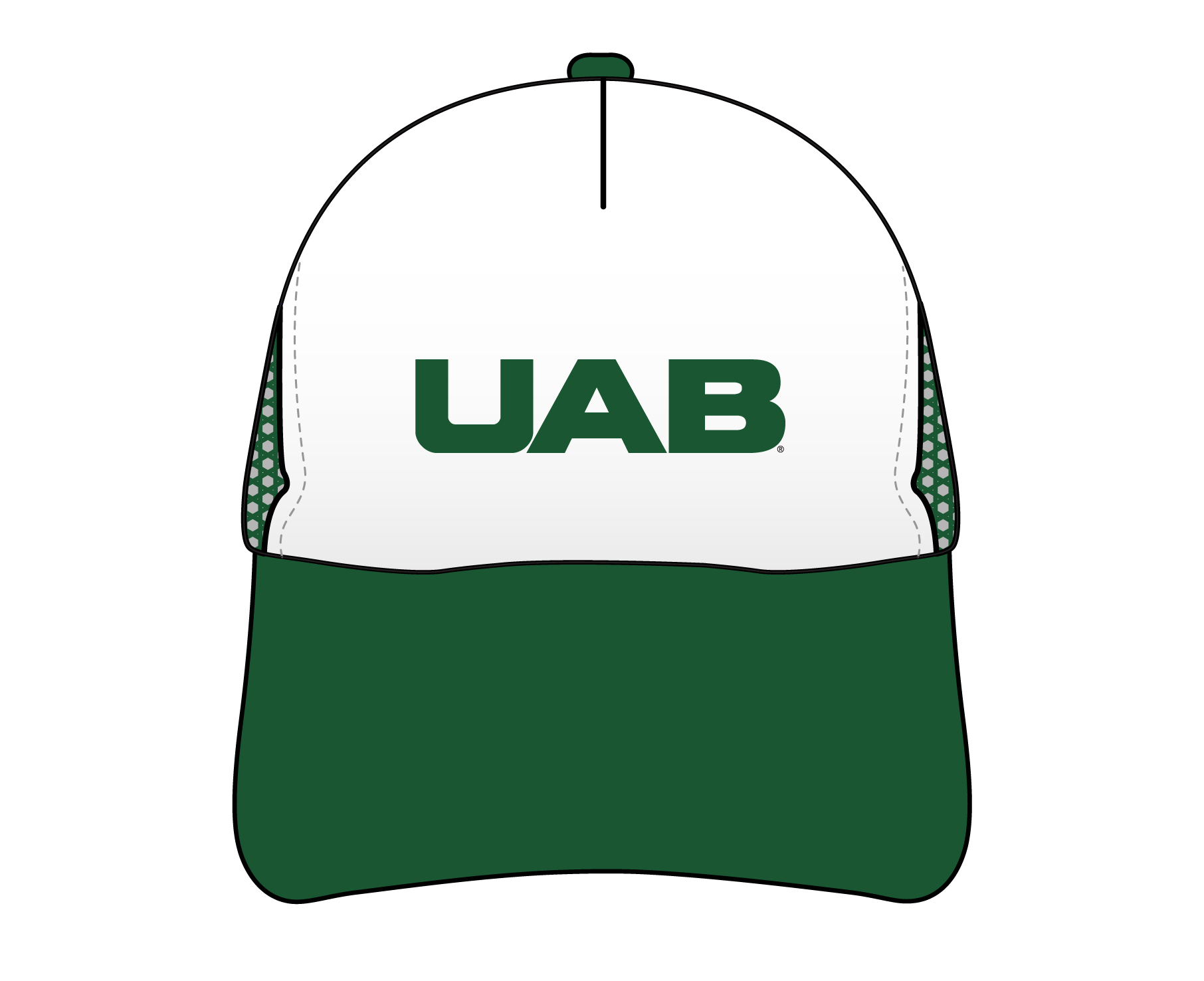
Display the monogram
University Seal, Badges, and Anniversary Marks
Usage Guidelines
Note: gray box represents a white logo on a dark-colored background.
The university seal is a registered trademark reserved for official and ceremonial uses only, as determined by the Office of Marketing and Communications. Examples include diplomas, legal documents, commencement programs, policy manuals, formal invitations, certificates, and awards. Contact
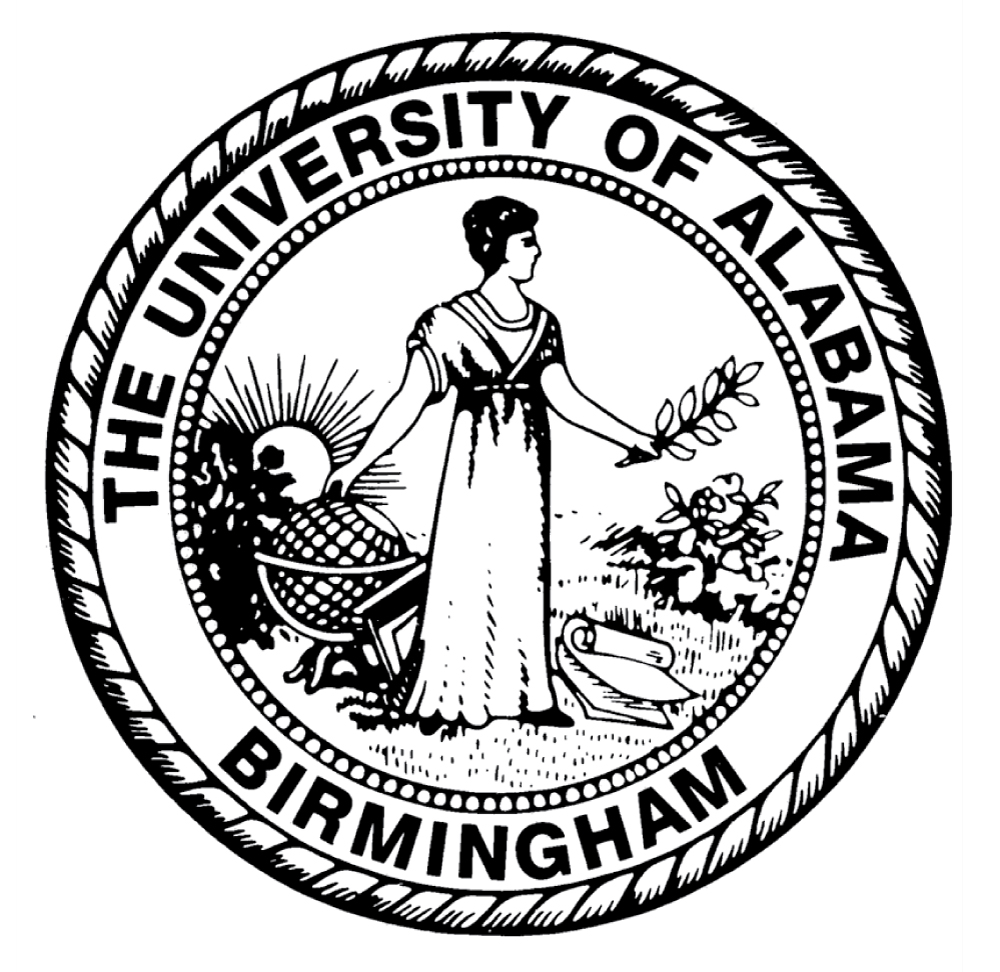
The university badge may be used in instances when the university seal is not applicable. It may appear in UAB green, black, or white.



Anniversary marks were established in 2019 to present a consistent, shared look for UAB units celebrating their 10th, 25th, 30th, 50th, 75th, and 100th anniversaries. Using anniversary marks helps increase awareness of UAB’s history of innovation and achievement among students, employees, donors, partners, advocates, and the public.
A unit’s year of establishment (e.g. “EST. 1969”) should be added to the mark’s bottom banner to provide context. Contact